Advancing Care for Thumb CMC Arthritis at UTHealth Houston
Thumb carpometacarpal (CMC) arthritis is one of the most common and functionally limiting forms of hand arthritis. It affects an estimated 1 in 5 adults aged 50 or older, with higher rates among women. Because the thumb provides 40% to 50% of overall hand function, pain and weakness at this joint can significantly affect daily life. Patients often struggle with gripping, pinching, typing, texting, and work-related tasks.
Many patients improve with nonsurgical treatment. Others continue to experience pain that interferes with daily activities. Traditional surgical options can relieve pain, but they often involve tradeoffs. Procedures such as trapeziectomy (removing the trapezium bone from the wrist) may require lengthy recovery periods, result in prolonged weakness, and permanently alter thumb anatomy. These factors can delay a patient’s return to normal function.
A New Approach Focused on Recovery and Function
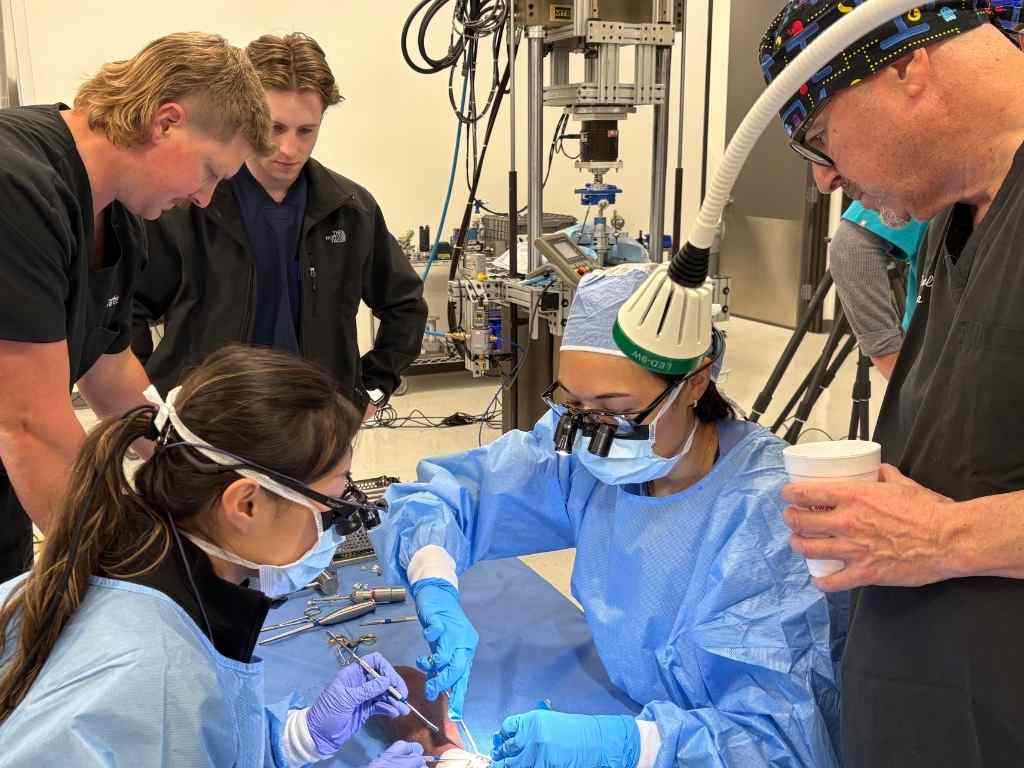
UTHealth Houston hand surgeons practice a new thumb CMC arthritis procedure during hands-on training. From left: Joanne Zhou, MD; Hannah Dineen, MD; and visiting surgeon Adil Trabelsi, MD.
To expand treatment options and improve patient outcomes, a group of UTHealth Houston (external link) hand surgeons recently completed advanced surgical training at the CORIT lab, generously hosted by Medartis. The course focused on the Touch® system, a newer surgical option for thumb CMC arthritis.
Surgeons in Europe have used this technique successfully for more than 10 years. It was introduced in the United States recently. This session marked one of the first formal U.S. training programs for the technique.
Two experienced European surgeons traveled to Houston to lead the course. Joris Duerinckx, MD, and Adil Trabelsi, MD, have performed thousands of these procedures together. During the hands-on training, they shared technical guidance, real-world experience, and practical insights into patient outcomes and recovery.
Early participation in this training places UTHealth Houston among a small group of academic medical centers nationwide, alongside institutions such as Mayo Clinic and Emory University, with early experience in evaluating and offering this approach.
Matching Treatment to Patient Needs
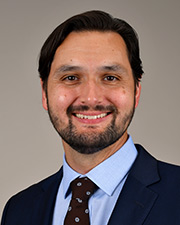
James Saucedo, MD, associate professor and program director, Hand Surgery Fellowship
According to James Saucedo, MD, treating thumb CMC arthritis requires an individualized approach.
“One size does not fit all,” Saucedo said.
Patients may use their thumbs differently and place varying demands on their hands at work and at home. Surgeons must weigh a number of factors when discussing treatment options.
“Ultimately, we are trying to balance pain relief, strength, function, and time to recovery,” Saucedo said. “Some options do well in one area but fall short in others.”
Newer approaches like the Touch system aim to address these challenges by:
-
Providing durable pain relief
-
Preserving more natural thumb biomechanics
-
Reducing downtime and postoperative discomfort
-
Helping patients return to daily activities sooner while removing less bone
Hannah Dineen, MD, said patients with thumb CMC arthritis often report weakness with pinch and frustration with long recovery timelines.
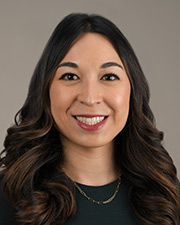
Hannah Dineen, MD
“Newer surgical approaches like this one can help patients recover faster and get back to their activities sooner,” Dineen said, “while preserving the anatomy of the thumb.”
Training Designed to Protect Patients
Hands-on cadaver lab training allows surgeons to evaluate new techniques in a controlled, low-risk setting before offering them to patients. Both surgeons emphasized that this approach improves confidence, safety, and preparedness in the operating room.
“These labs allow us to learn lessons and avoid pitfalls that others have already encountered,” Saucedo said. “That way, our patients benefit from all the procedures that came before them.”
Dineen noted that the course stood out for its transparency and practical focus.
“The instructors were honest, insightful, and willing to share their own tips and tricks,” she said. “It went well beyond what you could learn from a manual.”
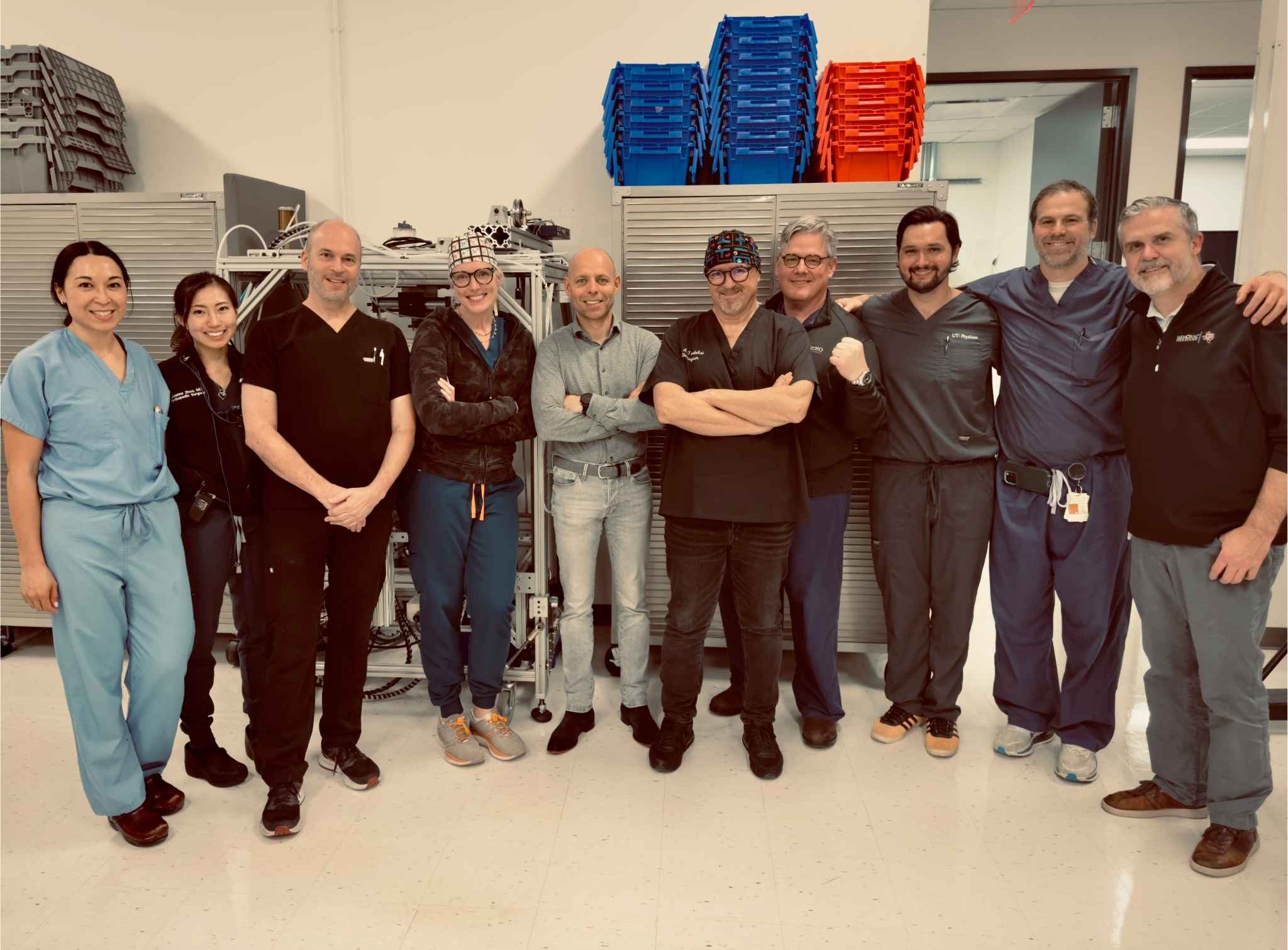
Several members of the UTHealth Houston hand surgery team attended the training, reflecting a shared commitment to collaboration, education, and high-quality patient care.
Looking Ahead
Careful patient selection remains essential when considering any emerging surgical technique. Surgeons evaluate how patients use their hands, the forces placed through the thumb, and what patients may find most challenging during recovery.
For Saucedo, learning from surgeons who were initially skeptical of the technology left a lasting impression. Over time, their experience with patient recovery and the durability of outcomes changed their perspective.
“This is the heart of academic medicine,” Saucedo said. “We teach and learn from each other so we can safely deliver the latest advances in care to our patients.”
With early access to expert training and growing clinical interest, UTHealth Houston hand surgeons continue to advance care for patients with thumb CMC arthritis, keeping patient safety, outcomes, and functional recovery at the center of every decision.
Patients interested in learning whether they may be candidates for this procedure can request an appointment to see one of our hand surgeons by clicking here (external link) or calling 713-486-7500.
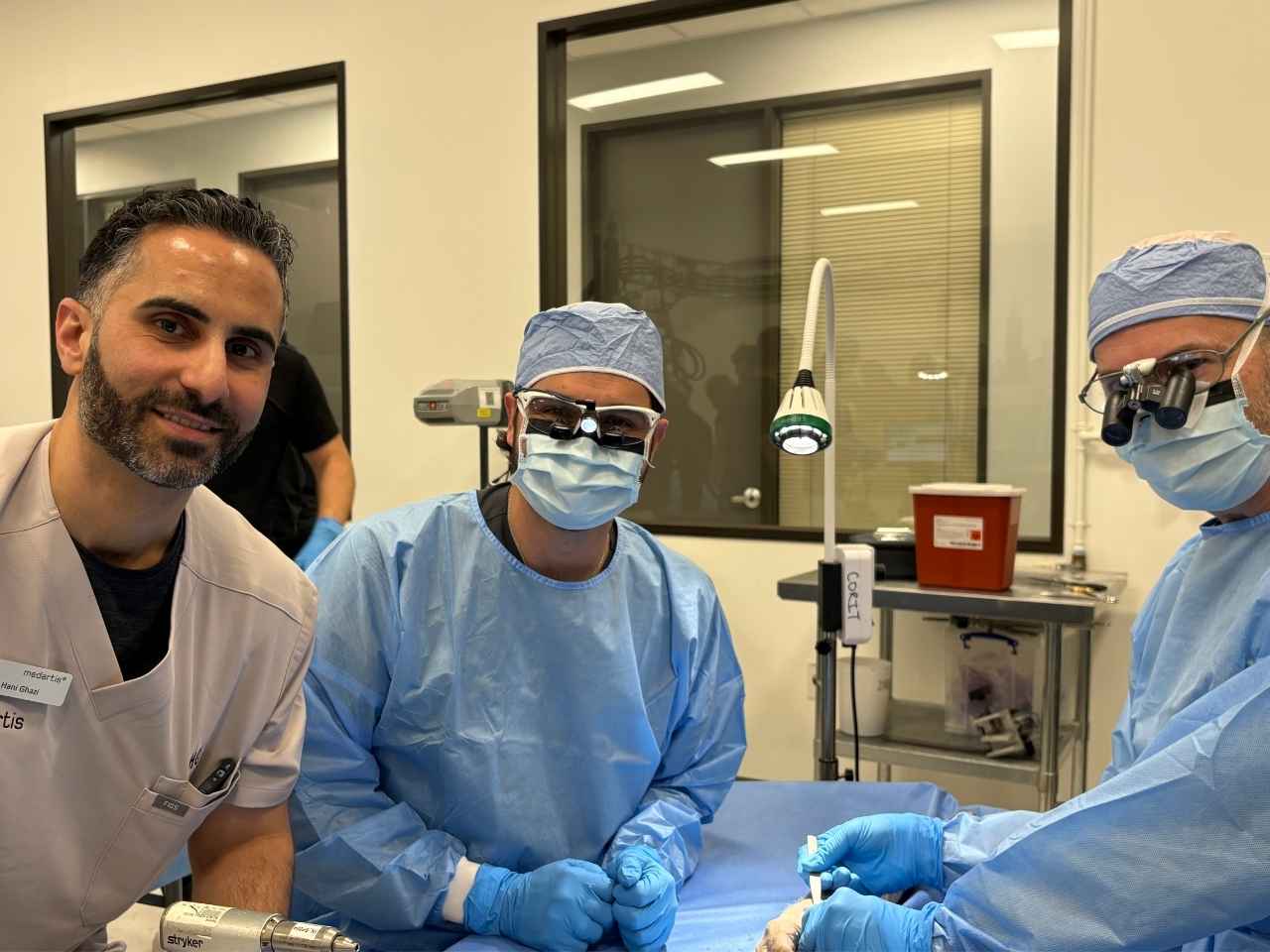
A Medartis representative, left, works with UTHealth Houston hand surgeons James Saucedo, MD, and Dean Smith, MD, during hands-on training focused on thumb CMC arthritis.