Spondylosis vs. Spondylolisthesis: What’s the Difference?
Spondylosis vs. Spondylolisthesis
Spondylosis and spondylolisthesis are two of the most common causes of back and neck pain. While the terms sound similar, they describe very different spine conditions. Understanding the difference is important because each condition develops differently and may require a different treatment approach.
Both conditions can cause pain, stiffness, and nerve-related symptoms such as numbness or weakness. However, the underlying issue—degeneration versus instability—plays a key role in symptom progression and treatment.
What’s the Difference?
Spondylosis is a gradual, age-related condition that affects the discs, joints, and bones of the spine. Over time, normal wear and tear can lead to disc thinning, bone spurs, and reduced flexibility. This process is similar to that seen in other joints with arthritis.
Spondylolisthesis, on the other hand, involves spinal movement and can be caused by a number of factors, including arthritis. It occurs when one vertebra slips forward over the one beneath it. This shift can narrow the space around nearby nerves, leading to pain, numbness, or weakness—especially during certain movements or activities.
“I often explain to patients that spondylosis is a degenerative process, while spondylolisthesis involves abnormal movement of the bones in the spine,” said Adam Park, MD, orthopedic spine surgeon with UTHealth Houston (external link) and UT Physicians. (external link) “That distinction helps guide both diagnosis and treatment.”

To help patients better visualize these conditions, spine specialists like Dr. Park often use graphics or diagrams, such as those found below.
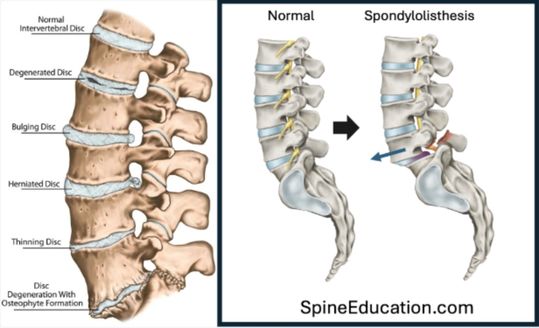
Illustration comparing degenerative spine changes (spondylosis) and vertebral slippage (spondylolisthesis).
“Because symptoms can overlap, it can be difficult to tell the difference without a proper evaluation and imaging.” Dr. Park adds.
The chart below highlights how these conditions compare across common categories, including symptoms, causes, and risk factors.
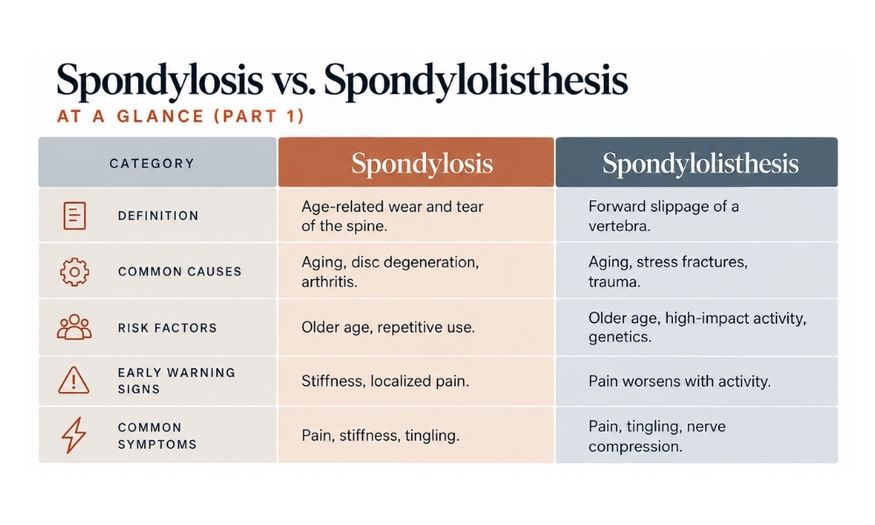
While the first section focuses on how these conditions develop and present, the next section outlines when to seek care and what treatment may involve.

What These Differences Mean
Although spondylosis and spondylolisthesis can cause similar symptoms, the reason behind the pain is different. Spondylosis is driven by gradual degeneration, whereas spondylolisthesis involves spinal instability.
“When a vertebra shifts, it can place pressure on nearby nerves, which is why patients with spondylolisthesis may notice symptoms with certain movements,” Dr. Park said.
This distinction is important because it helps guide treatment. Many patients with either condition improve with conservative care such as physical therapy, medications, and activity modification. However, in cases where symptoms persist or worsen—especially when nerve compression is involved—more advanced treatments may be needed.
When to Seek Care for Back Pain
Back pain is common, but certain symptoms should not be ignored. If your pain lasts longer than a few weeks or begins to interfere with daily activities, it may be time to see a spine specialist.
Seek prompt medical attention if you experience:
- Pain that radiates into the arms or legs
- Numbness, tingling, or weakness
- Difficulty with balance or coordination
Emergency care is recommended for:
- Loss of bowel or bladder control
- Progressive or severe weakness
Early evaluation can help identify the cause of your symptoms and prevent the condition from worsening.
Final Thoughts
Spondylosis and spondylolisthesis are common spine conditions, but they are not the same. Understanding the difference can help you recognize symptoms earlier and seek appropriate care.
If you experience persistent back or neck pain, you can request an appointment with Dr. Park (external link) or with one of our spine specialists by calling our spine clinic at 713-486-0910.