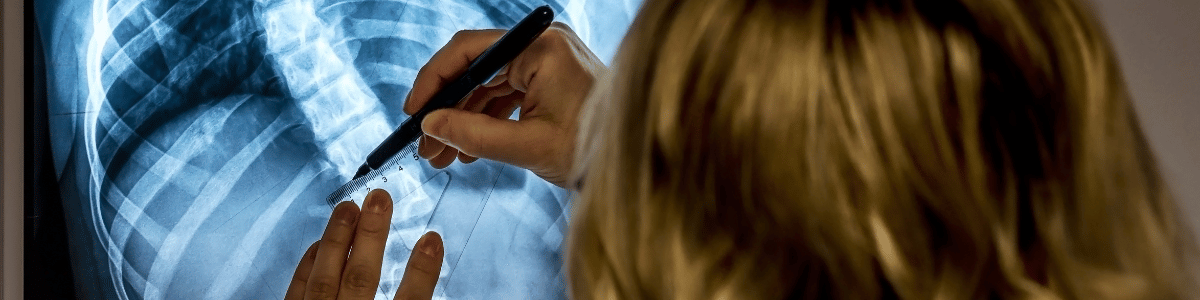
Adolescent Idiopathic Scoliosis
Overview
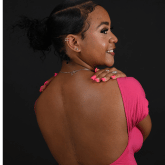
Adolescent Idiopathic Scoliosis patient
Adolescent idiopathic scoliosis (AIS) is a spinal condition that develops during adolescence, typically between ages 10 and 18. It causes an abnormal sideways curvature of the spine along with rotation of the vertebrae.
The term “idiopathic” means there is no single known cause. Researchers continue to study the factors that contribute to AIS, including possible genetic and biological influences. Scoliosis can also run in families.
AIS is the most common type of scoliosis in adolescents. Although it can affect all children, girls have a greater risk of curve progression.
What Are the Signs and Symptoms of Adolescent Idiopathic Scoliosis?
Many adolescents with scoliosis do not experience significant symptoms. Instead, a parent, pediatrician or school screening may first notice changes in posture or body symmetry.
Signs of adolescent idiopathic scoliosis may include:
- Uneven shoulders
- One shoulder blade appears more prominent
- Uneven waist or hips
- A rib prominence, especially when bending forward
- The body appears to lean to one side
Some adolescents may also experience back discomfort. Severe spinal curves can have a greater effect on overall function and, in uncommon advanced cases, may affect cardiopulmonary function.
What Causes Adolescent Idiopathic Scoliosis?
The exact cause of AIS is unknown. Research suggests that genetics and other biological factors may contribute to its development.
AIS can occur in multiple family members. However, having a family history does not necessarily mean a child will develop scoliosis.
How Is Adolescent Idiopathic Scoliosis Diagnosed?
Diagnosis begins with a medical history and physical examination. During the examination, an orthopedic specialist evaluates spinal alignment, shoulder and hip symmetry, trunk rotation and other signs of scoliosis.
Standing X-rays are commonly used to evaluate the spine. These images help specialists determine the location, pattern and severity of the spinal curve.
Growth and skeletal maturity are also important. An adolescent with significant growth remaining may have a greater opportunity for a scoliosis curve to progress.
Imaging for Adolescent Scoliosis
Imaging allows orthopedic specialists to evaluate spinal alignment and monitor changes over time.
You can learn more about EOSedge low-dose imaging for scoliosis here.
How Is Adolescent Idiopathic Scoliosis Treated?
Treatment for adolescent idiopathic scoliosis depends on several factors. These include the size and pattern of the curve, whether it is progressing, skeletal maturity and the amount of growth remaining.
Treatment may include observation, bracing or surgery.
Observation
Smaller or stable scoliosis curves may only require monitoring. Follow-up examinations and imaging allow the orthopedic team to determine whether the curve is changing as the adolescent grows.
Bracing
Bracing may be recommended for certain adolescents who are still growing and have a curve at risk of progression.
The primary goal of a scoliosis brace is to reduce the risk of the curve worsening during growth. The type of brace and recommended wear schedule depend on the individual patient and curve.
Scoliosis Surgery
Surgery may be considered for adolescents with larger or progressive curves when continued progression is a concern.
The appropriate procedure depends on the curve pattern, skeletal maturity, remaining growth and other individual factors. The goals of scoliosis surgery are to improve spinal alignment, stabilize the spine and reduce the risk of further progression.
Surgical Treatment for Adolescent Idiopathic Scoliosis
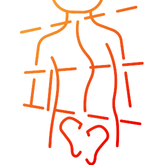
Adolescent Idiopathic Scoliosis line drawing
Posterior Spinal Fusion
Posterior spinal fusion with instrumentation is the established surgical treatment for many patients with adolescent idiopathic scoliosis who require surgery.
During posterior spinal fusion, the surgeon accesses the spine through an incision in the back. The spine is carefully realigned and stabilized using instrumentation, typically including rods and screws. A bone graft is placed along the treated area to promote fusion of the selected vertebrae.
Because the treated vertebrae fuse together, motion is reduced in that portion of the spine. The number of vertebrae included in the fusion depends on the location, size and pattern of the scoliosis curve.
Vertebral Body Tethering
Vertebral body tethering (VBT) is a non-fusion surgical option for select adolescents with idiopathic scoliosis who are still growing.
Instead of fusing the vertebrae, VBT uses a flexible tether attached to the vertebral bodies. The technique is designed to use the adolescent’s remaining growth to influence spinal alignment while preserving motion in the treated portion of the spine.
VBT is not appropriate for every patient. Skeletal maturity, remaining growth, curve size, flexibility and curve pattern are important factors when determining whether VBT may be an option.
Patients and families considering vertebral body tethering should discuss the potential benefits, limitations and possibility of additional surgery with their pediatric spine surgeon.
What Is the Prognosis for Adolescents With Scoliosis?
The outlook for adolescents with AIS varies according to curve severity, remaining growth and whether the curve progresses.
Many adolescents with smaller curves can be monitored without surgery. For curves at greater risk of progression, bracing may help control progression during growth. Larger or progressive curves may require surgical treatment.
Regular follow-up helps the orthopedic team monitor changes and determine whether treatment should be adjusted.
Emotional and Social Impact of Scoliosis
Scoliosis can affect more than spinal alignment. Some adolescents may have concerns about body image, appearance, wearing a brace, participating in activities or undergoing treatment.
Education, family support and open communication with the care team can help adolescents understand their condition and participate in treatment decisions.
Adolescent Scoliosis Care
Early evaluation can help determine the severity of a scoliosis curve, the risk of progression and whether treatment is necessary.
Our pediatric spine and scoliosis specialists evaluate each adolescent individually and develop a treatment plan based on the curve pattern, skeletal maturity, remaining growth and the needs and goals of the patient and family.
If your child has signs of scoliosis or has been diagnosed with adolescent idiopathic scoliosis, schedule an evaluation with our pediatric orthopedic team to learn more about available treatment options by calling 713-486-4880 or requesting an appointment online. (external link)