Dupuytren’s Contracture
Dupuytren’s contracture is a progressive hand condition that causes thickening of tissue beneath the skin of the palm. This process leads to finger bending and reduced hand function. Over time, affected fingers may curl toward the palm, making it difficult to straighten them fully. Early evaluation by an orthopedic hand specialist helps manage symptoms and preserve hand mobility.
What Is Dupuytren’s Contracture?
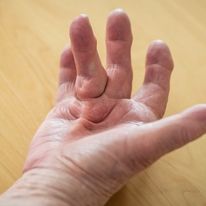
Dupuytren’s contracture develops when the fascia—a layer of connective tissue in the palm—thickens and tightens. As this tissue changes, it forms cords that pull one or more fingers into a bent position. The ring and little fingers are most commonly affected.
This condition usually progresses slowly over months or years.
Common Symptoms of Dupuytren’s Contracture
Symptoms often develop gradually and may include:
- Small lumps or nodules in the palm
- Thickened bands of tissue beneath the skin
- Fingers that bend toward the palm
- Difficulty placing the hand flat on a surface
- Reduced ability to grasp large objects
The condition is typically not painful, but it can significantly limit hand function as it progresses.
Causes and Risk Factors
The exact cause remains unclear, but several factors increase the risk of developing this hand condition:
- Family history or genetic predisposition
- Age over 50
- Male sex
- Diabetes
- Smoking or alcohol use
- Northern European ancestry
Dupuytren’s contracture is not caused by hand overuse or injury.
How is Dupuytren’s Contracture Diagnosed?
An orthopedic specialist usually diagnoses this condition through a physical exam. They evaluate nodules, cord formation, and finger movement.
The “tabletop test” is a common assessment. If you cannot place your hand flat on a table, the condition may be progressing.
Dupuytren’s Contracture Treatment Options
Treatment depends on the severity of the contracture and its impact on daily function.
Non-Surgical Treatment Options
- Observation for mild or early cases
- Collagenase injections to break down thickened cords
- Needle aponeurotomy (a minimally invasive procedure to release cords)
Surgical Treatment
For advanced cases, a surgical fasciectomy may be recommended. This procedure removes the thickened tissue to improve finger extension. Surgery is typically outpatient and followed by hand therapy to restore motion and strength.
When to See an Orthopedic Specialist
Seek medical evaluation if you notice lumps in your palm, progressive finger bending, or difficulty straightening your fingers. Early treatment can help maintain hand function and slow disease progression.
Expert Orthopedic Care at UTHealth Houston Orthopedics
Our orthopedic hand surgeons can provide comprehensive evaluation and personalized treatment, from conservative care to advanced surgical options. If you experience finger contracture or reduced hand mobility, you can request an appointment (external link)to explore personalized treatment options.