Mallet Finger
Mallet finger is a common hand injury that occurs when the tendon responsible for straightening the tip of the finger is damaged. As a result, it becomes impossible to fully extend the fingertip, causing it to droop.
Because early treatment can improve outcomes, prompt evaluation by an orthopedic specialist is important for restoring finger function and preventing long-term deformity.
What Is Mallet Finger?
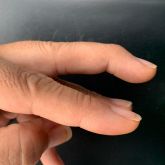
Mallet finger occurs when the extensor tendon that straightens the distal interphalangeal (DIP) joint is stretched or torn. In some cases, a small piece of bone may also be pulled away (avulsion fracture).
As a result, this injury typically affects the fingertip and results in a drooping appearance because the tendon can no longer straighten the joint.
Common Symptoms of Mallet Finger
Symptoms usually occur immediately after injury and may include:
- Inability to straighten the fingertip
- Drooping of the tip of the finger
- Pain and tenderness at the DIP joint
- Swelling and bruising
- Mild deformity of the finger
If you are unable to straighten your fingertip after an injury, it is important to seek an orthopedic evaluation.
Causes and Risk Factors
Mallet finger is typically caused by a forceful impact to the tip of the finger that suddenly bends it. Most commonly, this occurs during sports or other activities involving catching or contact.
- Sports injuries (such as baseball, basketball, or volleyball)
- A direct blow to the fingertip
- Jamming the finger during activity
Risk factors may include participation in sports or activities involving catching or impact.
An orthopedic specialist at UTHealth Houston can evaluate the injury and determine the appropriate treatment.
How Is Mallet Finger Diagnosed?
Diagnosis begins with a physical examination and a review of how the injury occurred. During the evaluation, orthopedic providers will assess the finger’s ability to extend and check for deformity.
Additionally, x-rays are performed to determine whether a fracture is present and to evaluate joint alignment. This imaging helps guide treatment and rule out more complex injuries.
Mallet Finger Treatment Options
Non-Surgical Treatments
Most cases of mallet finger can be successfully treated without surgery. Treatment options include:
- Continuous splinting of the fingertip in a straight position
- Wearing a splint full-time for several weeks
- Careful monitoring to ensure proper healing
To ensure proper healing, strict adherence to splinting is essential for optimal recovery.
Surgical Treatment
Surgery may be recommended in certain cases, such as:
- Large avulsion fractures involving the joint
- Joint misalignment or instability
- Failure of non-surgical treatment
Surgical options may include pinning or repair of the tendon and associated fracture.
Ultimately, the goal of surgery is to restore proper alignment and function of the finger.
When to See an Orthopedic Specialist
You should seek orthopedic care if you experience:
- Inability to straighten the fingertip
- Pain or swelling after a finger injury
- Visible deformity
- Symptoms that do not improve
Rather than waiting for symptoms to improve on their own, early treatment is important to prevent permanent deformity and loss of function.
Expert Orthopedic Care at UTHealth Houston Orthopedics
Our orthopedic hand surgeons can provide comprehensive evaluation and personalized treatment, from conservative care to advanced surgical options. If you’re unable to straighten your fingertip after an injury, you can request an appointment (external link) for an expert evaluation.