Champions of Clinical Learning Environment: Dean Atkinson, MD; Brandi Karnes, MD; and Kawal Bir, MD
The Office of Professionalism at McGovern Medical School congratulates Dean Atkinson, MD; Brandi Karnes, MD; and Kawal Bir, MD, on being honored as Champions of the Clinical Learning Environment.
Champions are identified through the Learning Environment Surveys, which are sent to students as an invitation to recognize faculty whose everyday actions have meaningfully shaped their clinical education.
The trio of educators helped the Louis A. Faillace, MD, Department of Psychiatry and Behavioral Sciences achieve a 100% satisfaction rating from medical students for an unprecedented third consecutive year.
“Sustaining this level of excellence over multiple years speaks to a strong culture of teaching collaboration and continuous improvement,” said Bindu Akkanti, MD, professor of internal medicine, Graham Distinguished Professor in Pulmonary Medicine, and assistant dean of Clinical Education. “It’s especially meaningful because it comes directly from our learners, whose experiences are the heart of everything we do. We remain dedicated to building on this success and continuing to provide an outstanding education experience for future physicians.”
This series spotlights these Champions of Clinical Learning Environment. Each issue will highlight educators who have made a lasting impression on third-year medical students during clerkship rotations by fostering clinical learning environments rooted in professionalism, compassion, and academic rigor.
Dean Atkinson, MD, assistant professor in the Louis A. Faillace, MD, Department of Psychiatry and Behavioral Sciences

How would you describe your teaching philosophy?
Overall, I believe that learning should be enjoyable and engaging, and I aim to provide students with the necessary scaffolding to build their own knowledge base in a creative and personalized way. Rather than emphasizing traditional lectures or rote memorization, I prefer a more constructivist and experiential learning style whenever possible.
Do you have a particular practice that has proved effective in your clinical teaching?
I have constructed numerous game-based teaching exercises which allow specific topics within psychiatry to be practiced in the classroom before moving into a clinical setting. When a student asks for help with a particular area, I work with them to distill out the essence of the knowledge gap, then design an exercise to train this area in isolation. Though I often use these same exercises with future students, I mostly enjoy creating new ones to fit the needs of each learner in real time.
What do you enjoy most about working with medical students during their training?
It is so rewarding to work with students pursuing a wide variety of medical specialties and to help them appreciate the crossover between psychiatric illness and other fields of medicine. Occasionally, this results in students realizing that they want to pursue a career in psychiatry after all! For those already interested in psychiatry, I feel privileged to have an early opportunity to help grow their fundamental knowledge and interviewing skills.
How do you foster a supportive learning environment for our students on their clerkship rotations?
On the first day, I go to the dry-erase board and draw out Amy Edmondson’s four quadrants of psychological safety. I explore with students what psychological safety really means and discuss the role of clinical expectations and accountability for learners. I also encourage them to speak up whenever they have any concerns at all and remind them that they may very well know something the rest of the team has overlooked. I make a point to give feedback regularly throughout each day as we go through rounds, highlighting both good technique as well as areas for continued improvement. When downtime happens, I break out the dry-erase markers and we play interactive educational games or have short “chalk talks” on relevant topics.
What advice would you give to new faculty or residents who are starting their clinical teaching journey?
Be flexible. The first few teaching methods you try might flop, and that’s okay. If you’re using a method that isn’t working, it’s not an efficient use of time for either you or the student. In general, try to personalize your teaching as much as possible to fit the individual learner. And remember, as much as you teach to your students, you will learn just as much from them. Finally, say “yes” to new teaching opportunities, even if they’re outside of your comfort zone. You never know what you might learn next.
Brandi Karnes, MD, assistant professor in the Louis A. Faillace, MD, Department of Psychiatry and Behavioral Sciences

How would you describe your teaching philosophy?
Empowerment is the core feature of my teaching philosophy. I want to empower learners to feel capable of accomplishing whatever challenges they may face in their careers in medicine. To achieve this requires several steps: setting clear expectations, establishing psychological safety, carefully pushing them into the learning zone utilizing active learning techniques, and being there as a support when they need it to prevent them from reaching the panic zone.
Do you have a particular practice that has proved effective in your clinical teaching?
I provide clear expectations about the learner’s role, who is there for support when needed, and that they will be involved in routine feedback. Learners on my team expect to actively engage in daily pre-interview “pre-briefs” and post-interview debriefs. I emphasize learner self-reflection, utilizing Socratic questioning to understand their knowledge, thought process, and guide them to discover their own conclusions. To model vulnerability and humility, combating the false belief that attendings “know everything,” I openly share when I am unfamiliar with a clinical decision, and how I go about filling that knowledge gap.
What is a memorable moment or teaching success story from working with third-year medical students?
Once, a medical student referred to my psychiatry rotation as “learning accelerated” because of the challenge and growth they experienced with their newfound autonomy. I tell my learners that even though you may sometimes feel you are in the deep end learning to swim, I’m right beside you with a life raft when you need it. You just have to ask! I instill in learners that they are capable of managing challenging and unexpected situations, utilizing self-discovery to flourish into independent learners.
Kawal Bir, MD, assistant professor in the Louis A. Faillace, MD, Department of Psychiatry and Behavioral Sciences
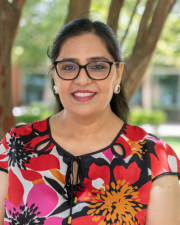
How would you describe your teaching philosophy?
My teaching philosophy centers on creating a learning environment that is safe, collaborative, and deeply human. Psychiatry provides a unique opportunity to teach not only diagnostic and therapeutic skills, but also empathy, communication, and self-awareness. I aim to model curiosity and humility — showing students that it’s OK not to have all the answers, as long as we remain open to learning from our patients and each other. I encourage students to approach every patient encounter with respect and genuine interest, recognizing that each story teaches us something about the mind, resilience, and healing.
Do you have a particular practice that has proved effective in your clinical teaching?
One approach that has worked well is engaging students in reflective discussions after patient encounters. We take time to talk about what went well, what was challenging, and what emotions the experience brought up. This helps normalize the emotional complexity of clinical work and fosters empathy and self-awareness. I also make it a point to give students space to lead interviews under supervision, building their confidence while ensuring they feel supported and valued as part of the team.
What do you enjoy most about working with medical students during their training?
What I enjoy most is guiding students as they grow into confident, compassionate clinicians. Whether it’s helping them formulate the right questions, gather collateral information, or demonstrating how to lead a sensitive psychiatric interview, I love watching them absorb and apply those subtle nuances in their own encounters. Over the course of the rotation, it’s remarkable to see their confidence build day by day. The most rewarding moments are when I realize they no longer need as much guidance — that they are independently conducting thoughtful, patient-centered interviews. In those moments, I feel a deep sense of fulfillment, knowing I’ve played a small part in helping them find their footing as future physicians.
How has teaching shaped your own clinical practice or professional growth?
My mother is a teacher, and I often think that teaching carries many of the same emotions a parent feels toward their child. You want your students to explore, to make mistakes, to discover their own strengths — but you also want to guide and protect them so their growth feels supported rather than overwhelming. For me, teaching is not just a role but a calling. It gives my clinical work depth and meaning, and I would feel incomplete without it. Each student teaches me something new; their curiosity and insight keep me engaged, humble, and young at heart.
Teaching has also made me a more reflective and intentional clinician. My students’ questions push me to stay current and think critically about my own approach to patient care. It has strengthened my communication skills — both with patients and colleagues — by reminding me to express complex ideas with clarity and compassion. Ultimately, teaching keeps me grounded in the values that make psychiatry so meaningful: empathy, connection, and lifelong learning. Through my students, I am continually reminded to approach psychiatry, and life itself, with the same sense of wonder and openness that I hope to inspire in them.
How do you foster a supportive learning environment for students on their clerkship rotations?
I prioritize psychological safety, ensuring students feel comfortable asking questions, expressing uncertainty, and sharing their perspectives. I try to model respect for every member of the care team and encourage students to do the same. By creating a culture of openness, I hope students feel empowered to take initiative and see themselves as valued contributors to patient care, not just observers.
What advice would you give to new faculty or residents who are starting their clinical teaching journey?
Start with empathy — for your students as much as for your patients. Remember what it felt like to be in their shoes, balancing excitement with uncertainty. Meet them where they are, and then guide them; you’ll be amazed at how they take off when given support and trust. Your words, your actions, and the way you handle every patient encounter or difficult family conversation leave a lasting impression. Students remember not just what you say, but how you respond. So be mindful, be intentional, be patient, and lead by example. The lessons they learn from observing your compassion and professionalism will have a far greater impact than words alone. Above all, let your passion for teaching and patient care show — because that genuine enthusiasm inspires learners more than anything else.