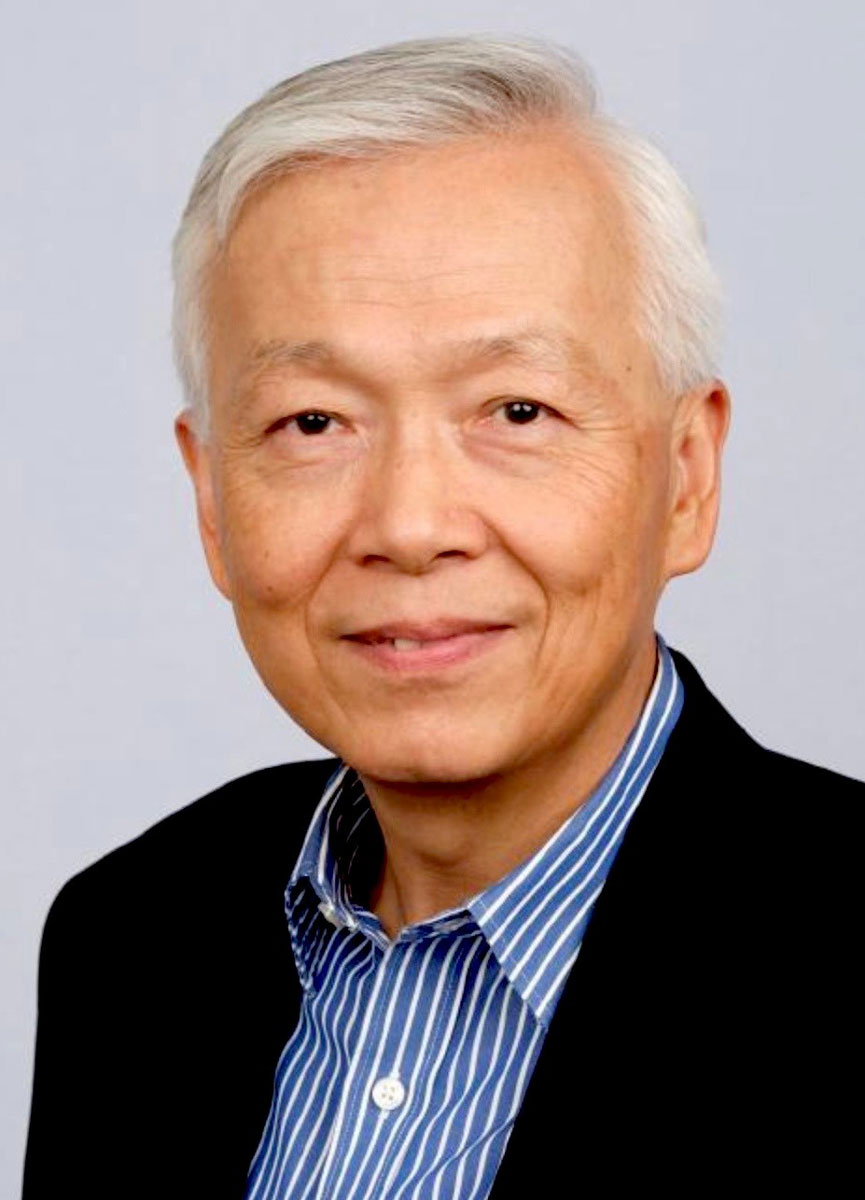
Xiaodong C. Cheng, PhD
- Vice Chair
- Professor
- Walter and Mary Mischer Distinguished Professor in Molecular Medicine
Biography
Dr. Cheng received his bachelor’s degree from Peking University in Beijing, China, and his master’s degree from Shanghai Institute of Biochemistry, Chinese Academy of Science, before coming to Texas to obtain his PhD at the University of Texas Medical Branch in Galveston (UTMB). He completed his postdoctoral studies with Dr. Susan Taylor at UC San Diego and then returned to UTMB in 1999 to start his own laboratory. In December 2013, Dr. Cheng joined the faculty of the Department of Integrative Biology and Pharmacology at the McGovern Medical School at UTHealth. Dr. Cheng is a member of the Brown Foundation Institute of Molecular Medicine for the Prevention of Human Diseases (IMM), a part of the Texas Therapeutics Institute. Dr. Cheng is a fellow of the American Association for the Advancement of Science (AAAS) and the American Society for Pharmacology and Experimental Therapeutics (ASPET).
Areas of Interest
Research Interests
Our laboratory investigates intracellular signaling mechanisms involving the second messenger cAMP. We employ a multidisciplinary strategy that integrates biochemistry, biophysics, cell biology, pharmacology, and chemical biology to elucidate the structure and function of exchange proteins directly activated by cAMP (EPAC). Our objectives include dissecting the complex signaling pathways mediated by EPAC proteins and developing pathway-specific probes to facilitate their targeted modulation for the treatment of human diseases.
We have pioneered the development of EPAC-selective inhibitors and EPAC-knockout mouse models to examine the physiological roles and clinical significance of this critical signaling protein family. Recently, we discovered a novel, noncanonical function of EPAC1 whereby it enhances cellular SUMOylation by promoting the formation of nuclear condensates enriched in SUMOylation machinery. At present, our research focuses on advancing second-generation isoform-specific EPAC inhibitors and agonists and on investigating their therapeutic applications across a range of human diseases, including cancer, chronic pain, and infectious disorders.
Publications
REFERENCES
- Cheng, X., Liu, H., Zhang, W., Yang, W., and Mei, F. C. (2025) Roles of EPAC signaling in vascular remodeling. Pharmacological Reviews. 77(5):100078. doi: 10.1016/j.pharmr.2025.100078.
- Pochynyuk, O., Pyrshev, K., and Cheng, X. (2025) Multifaceted Roles of Epac Signaling in Renal Functions. Biochemical J. 482(10):553-68. doi: 10.1042/BCJ20253103.
- Yang, W., Mei, F. C., Lin, W., Lee, J. E., Nie, S., Bley, C. J., Hoelz, A. and Cheng, X. (2025) A SUMO-interacting motif in the guanine nucleotide exchange factor EPAC1 is required for subcellular targeting and function. J. Biol. Chem. 301(6):110279. doi: 10.1016/j.jbc.2025.110279.
- Yang, W., Mei, F. C., Lin, W., White, M. A., Li, L., Li, Y., Pan, S. and Cheng, X. (2024) Protein SUMOylation promotes cAMP-independent EPAC1 activation. Cellular and Molecular Life Sciences. 81(1):283. doi: 10.1007/s00018-024-05315-y2024.
- Yang, W., Xia, F., Mei, F. C., Shi, S., Robichaux, W. G., Wei, Lin, Zhang, W., Liu, H. and Cheng, X. (2023) Upregulation of Epac1 promotes pericyte loss by inducing mitochondrial fission, ROS production, and apoptosis. Investigative Ophthalmology & Visual Science. 64(11):34.
- Cheng, X., Yang, W., Wei Lin. And Mei, F. C. (2023) Paradoxes of cellular SUMOylation regulation: a role of biomolecular condensates? Pharmacological Reviews. 75(5):979-1006.
- Cheng, X. (2023) Protein SUMOylation and Phase Separation: Partners in Stress? Trends in Biomedical Sciences. 48:417-419.
- Yang W, Robichaux WG, Mei FC, Lin W, Li L, Pan S, White MA, Chen Y and Cheng X. (2022). Epac1 regulates cellular SUMOylation and promotes the formation of SUMO-activating nuclear condensates. Science Advances. 8:eabm2960.
- Liu H, Mei FC, Yang W, Wang H, Wong E, Toth E, Luo P, Li Y-M, Zhang W and Cheng X. (2020). Epac1 inhibition ameliorates pathological angiogenesis through coordinated activation of Notch and suppression of VEGF signaling. Science Advances. 6: eaay3566.
- Robichaux, W. G., Mei, F. C., Yang, W., Wang, H, Sun H, Zhou Z, Milewicz DM, Teng BB and Cheng X. (2020). Epac1 (Exchange Protein Directly Activated by cAMP 1) Upregulates LOX-1 (Oxidized Low-Density Lipoprotein Receptor 1) to Promote Foam Cell Formation and Atherosclerosis Development. Thromb. Vasc. Biol. 40:e322-e335. doi: 10.1161/ATVBAHA .119.314238. [ATVB Editor’s Pick]
- White, MA, Lin W and Cheng X. (2020). Discovery of COVID-19 inhibitors targeting the SARS-CoV2 Nsp13 helicase. J Phys Chem Lett. 11:9144-9151. doi: 10.1021/acs.jpclett.0c02421.
- Cherezova A, Tomilin V, Buncha V, Zaika O, Ortiz PA, Mei FC, Cheng X, Mamenko M and Pochynyuk O. (2019). Urinary concentrating defect in mice lacking Epac1 or Epac2. FASEB J. 33: 2156-2170.
- Robichaux WG and Cheng X. (2018). Intracellular cAMP Sensor EPAC: Physiology, Pathophysiology and Therapeutics Development. Physiological Reviews. 98:919-1053.
- Yang W, Mei FC and Cheng X. (2018). EPAC1 regulates endothelial Annexin A2 cell surface translocation and plasminogen activation. FASEB J. 32:2212-2222.
- Hu Y, Robichaux WG, Kim ER, Mei FC, Wang H, Tong Q, Xu M, Chen J, and Cheng X. (2016). Role of exchange protein directly activated by cAMP isoform 1 in energy homeostasis: regulation of leptin expression and secretion in white adipose tissue. Molecular Cellular Biology. 36:2440-1250. [MCB Spotlight article]
- Singhmar P, Huo X, Eijkelkamp N, Berciano SR, Baameur F, Mei FC, Zhu Y, Cheng X, Hawke D, Mayor Jr, F, Murga C, Heijnen CJ, and Kavelaars A. ( 2016). A critical role for Epac1 in inflammatory pain controlled by GRK2-mediated phosphorylation of Epac1. Proc Acad Natl Sci USA. 113:3036-3041.
- Ye N, Zhu Y, Chen H, Liu Z, Mei FC, Wild C, Chen H, Cheng X,* and Zhou J.* (2015). Structure-Activity Relationship Studies of Substituted 2-(Isoxazol-3-yl)-2-Oxo-N’-Phenyl-Acetohydrazonoyl Cyanide Analogues: Identification of Potent EPAC Antagonists. J Med Chem. 58:6033-6047.
- Zhu Y, Chen H, Boulton S, Mei F, Ye N, Melacini G, Zhou J*, and Cheng X.* (2015). Biochemical and Pharmacological Characterizations of ESI-09 Based EPAC Inhibitors: Defining the ESI-09 “Therapeutic Window.” Scientific Reports. 5:9344.
- Almahariq M, Mei FC, Wang H, Cao AT, Yao S, Soong L, Sun J, Cong Y, Chen J, and Cheng X. (2015). Exchange Protein Directly Activated by cAMP (EPAC1) Modulates Regulatory T Cell-Mediated Immune Suppression. Biochem J, 465:295-303.
- Almahariq M, Chao C, Mei FC, Hellmich MR, Patrikeev I, Motamedi M, and Cheng X. (2015). Pharmacological Inhibition and Genetic Knockdown of EPAC1 Reduce Pancreatic Cancer Metastasis in vivo. Mol Pharm, 87:142-149. [Faculty1000 recommended paper] http://f1000.com/prime/725232154 (external link)
- Almahariq M, Mei F, and Cheng X. (2014). cAMP Sensor EPAC Proteins and Energy Homeostasis. Trends Endocrinol. Metabol, 25(2):60-71.
- Tao T, Mei F, Agrawal A, Peters CJ, Ksiazek T, Cheng X*, and Tseng C-T.* (2014). Blocking of Exchange Proteins Directly Activated by cAMP (Epac) Leads to Reduced Replication of Middle East Respiratory Syndrome-Coronavirus. J Virology, 88:3902-10.
- Almahariq M, Tsalkova T, Mei FC, Chen H, Zhou J, Sastry SK, Schwede F, Cheng X. (2013). A novel EPAC-specific inhibitor suppresses pancreatic cancer cell migration and invasion. Mol Pharm, 83,122-128.
- Gong B*, Shelite T, Mei F, Ha T, Xu G, Chang Q, Hu Y, Wakamiya M, Ksiazek TG, Boor PJ, Bouyer R, Popov V, Chen J, Walker DH, and Cheng X* (2013). Exchange protein directly activated by cAMP plays critical role in fatal rickettsioses. Proc Acad Natl Sci, USA, 110:19615-19620.
- Yan J, Mei FC, Cheng HQ, Lao DH, Hu Y, Wei J, Patrikeev I, Hao D, Stutz SJ, Dineley KT, Motamedi M, Hommel JD, Cunningham KA, Chen J*, and Cheng X*. (2013). Enhanced leptin sensitivity, reduced adiposity and improved glucose homeostasis in mice lacking of exchange protein directly activated by cAMP isoform 1. Mol Cell Biol, 33:918-926. [MCB Spotlight and Cover Figure article] (external link)
- Chen H, Tsalkova T, Mei FC, Cheng X*, and Zhou J.* (2013). Identification and characterization of small molecules as potent and specific EPAC antagonists. J Med Chem, 56:952-962.
- Tsalkova T, Mei FC, Li S, Chepurny OG, Liu T, Woods VL Jr, Holz GG, and Cheng X. (2012). Isoform-specific antagonists of exchange protein directly activated by cAMP. Proc Acad Natl Sci, USA, 109:18613-18618.
- Tsalkova T, Gribengo AV, and Cheng X. (2011). Exchange protein directly activated by cAMP isoform 2 (Epac2) is not a direct target of sulfonylureas. Assay Drug Develop Tech, 9:88-91. [Faculty1000 selected paper] (external link)
- Li S, Tsalkova T, White MA, Mei FC, Liu T, Wang D, Woods VL Jr*, and Cheng X*. (2011). Mechanism of intracellular cAMP sensor Epac2 activation: cAMP-induced conformational changes identified by amide hydrogen/deuterium exchange mass spectrometry (DXMS). J Biol Chem, 286:17889-17897. [JBC Paper of the Week, Cover Figure article] (external link)