Meniscus Tears in Soccer
Soccer Injuries Explained: Meniscus Tears | Symptoms, Treatment & Prevention
To the casual fan, a World Cup highlight might look effortless—a perfectly timed cut past a defender, a quick change of direction to create space or a sliding challenge to win possession.
To orthopedic sports medicine specialists, those same moments reveal the tremendous forces passing through the knee.
The explosive cuts, pivots and sudden changes of direction that make soccer exciting are also the exact movements most associated with meniscus tears, one of the most frequent knee injuries in the sport.

Jessica Traver, MD
Few physicians understand that reality better than Jessica Traver, MD, orthopedic sports medicine surgeon with UTHealth Houston (external link). Before becoming a surgeon, Traver was an elite soccer player herself, competing at the NCAA Division I level at Tulane University and later earning induction into the Tulane Athletics Hall of Fame.
Drawing on both her medical expertise and firsthand experience on the pitch, Traver explains what players, parents, coaches and fans watching the matches should know about meniscus tears in soccer.
What Is the Meniscus?
The meniscus is a C-shaped piece of cartilage inside the knee. Each knee contains two menisci that sit between the femur, or thigh bone, and tibia, or shin bone.
Many people think of the meniscus as simply a cushion, but it plays a much larger role in keeping the knee healthy and functioning properly.
“The meniscus is a really important structure inside the knee joint,” Traver said. “Its primary job is to be a stabilizer of the knee and, more importantly, a shock absorber.”
In addition to helping absorb forces during running, jumping and cutting, the meniscus protects the cartilage surfaces of the knee. Healthy cartilage helps prevent the wear and tear that can eventually lead to arthritis.
Because of its critical role in both knee function and long-term joint health, preserving the meniscus whenever possible is a major treatment goal.
Why Are Meniscus Tears Common in Soccer?
Soccer places unique demands on the lower extremities.
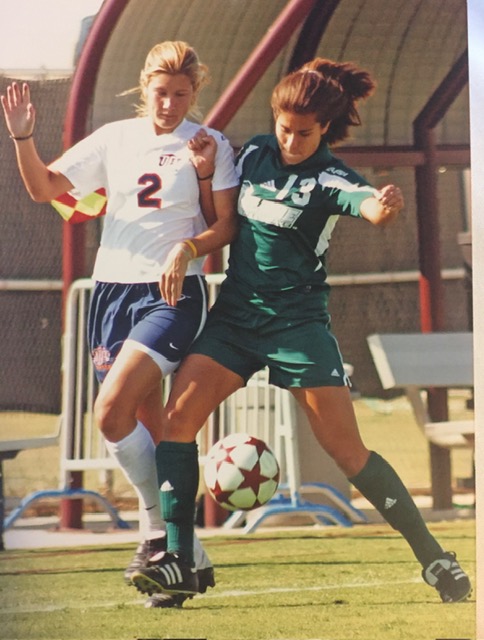
Jessica Traver, MD, playing soccer in college
Players repeatedly sprint, stop, pivot, cut and react to opponents in fractions of a second. These rapid changes in direction create rotational forces that can stress the meniscus.
According to Traver, meniscus injuries in young athletes often occur when the foot is planted while the body twists in another direction.
Slide tackles, collisions, and other contact situations can also increase the risk of injury.
While meniscus tears can occur in noncontact situations, the combination of speed, contact and rotational movement makes soccer players particularly susceptible.
Meniscus Tear vs. ACL Tear: Can You Tell the Difference?
When a player grabs their knee after a sudden twist or awkward landing, fans often assume the worst: an ACL tear.
However, meniscus tears and ACL injuries can look remarkably similar in the moments immediately following an injury.
Both injuries may cause:
- A popping sensation
- Rapid swelling
- Pain
- Difficulty bearing weight
- Limited range of motion
In some cases, athletes can even sustain both injuries simultaneously.
“It can be difficult for athletes to tell the difference right away because the symptoms overlap significantly,” Traver said.
One symptom that may be more characteristic of a meniscus tear is a feeling that the knee is locking, catching or becoming mechanically stuck during movement.
Warning Signs Athletes Should Never Ignore
Athletes are often praised for toughness and perseverance. But playing through pain isn’t always the right decision.
“As a former athlete, I know there’s this mantra of ‘no pain, no gain’ and that playing through pain is a badge of honor,” Traver said. “The challenge is knowing when that pain is something you shouldn’t play through.”
Players should seek medical evaluation if they experience:
- Significant swelling after an injury
- Inability to bear weight
- Difficulty fully straightening or bending the knee
- Persistent pain
- Locking or catching sensations inside the joint
These symptoms may indicate a meniscus tear or another significant knee injury that requires treatment.
Do All Meniscus Tears Require Surgery?
Not necessarily. Treatment depends on several factors, including the athlete’s age, activity level, tear location and tear pattern.
Some smaller tears can heal without surgery, particularly in younger athletes and in areas of the meniscus with better blood supply.
Nonoperative treatment may include:
- Temporary activity modification
- Bracing
- Physical therapy
- Strengthening exercises
- Progressive return-to-sport programs
More complex tears, especially those that have shifted out of place or are preventing normal knee movement, may require surgery.
“When possible, we aim to preserve and repair the meniscus because it plays an important role in protecting the knee over time,” Traver said.
The Mental Side of Recovery
For many athletes, the greatest challenge of a meniscus injury is not physical. It’s also psychological.
Time away from competition can affect an athlete’s confidence, identity and sense of purpose within a team.
As a former Division I soccer player, Traver understands that reality firsthand.
“It’s our job to treat the whole athlete and not just their knee joint,” Traver added.
Athletes often tie a significant part of their identity to their sport. When injury suddenly removes that outlet, the impact can extend far beyond the knee.
“The mental component of an athlete’s rehab is just as important, if not more important, than their physical therapy,” Traver said.
Research has shown that athletes who remain engaged with teammates and maintain a connection to their team environment often experience a smoother return-to-play process.
Returning to Soccer After a Meniscus Tear
Recovery timelines vary considerably depending on the severity of the injury and whether surgery is required.
For smaller injuries treated without surgery, recovery may take only a few weeks. Larger tears that require surgical repair may require four to six months before returning to competition.
Recovery generally progresses through several phases:
- Reducing pain and swelling
- Restoring range of motion
- Rebuilding strength
- Returning to running
- Reintroducing cutting and pivoting movements
- Returning to soccer-specific activities
“Our goal is to get athletes back into their jerseys and onto the field as quickly as possible, but we want to do so safely,” Traver said.
A structured rehabilitation plan helps ensure athletes are physically and mentally prepared to return to competition while reducing the risk of reinjury.
Can Meniscus Tears Be Prevented?
Although not every injury can be prevented, preparation plays a critical role in reducing risk.
Proper warmups, strength training, neuromuscular training and movement mechanics all contribute to healthier knees.
Programs such as FIFA 11+ (external link), an internationally recognized injury-prevention program developed specifically for soccer players, have demonstrated benefits in reducing lower-extremity injuries and improving movement quality.
Traver believes prevention deserves as much attention as recovery.
She encourages soccer players to consistently focus on maintaining strength in the hips, quadriceps, and hamstrings and to perform appropriate warm-up exercises before practices and matches.
Listening to Your Body
World Cup athletes spend years preparing for the opportunity to compete on soccer’s biggest stage. Players at every level share that same passion for staying on the field and helping their team succeed.
But determination should never come at the expense of long-term health.
A small injury that receives prompt attention may heal with conservative treatment. Ignoring warning signs can allow a manageable injury to become a much bigger problem.
For players, parents, and coaches, understanding the signs of a meniscus tear—and seeking evaluation when symptoms arise—can help protect both today’s performance and knee health for years to come.
After all, every sprint, cut, tackle and game-winning play begins with a healthy knee.
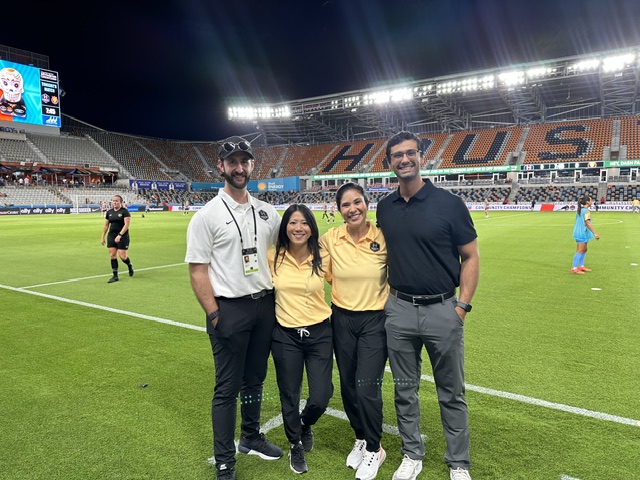
Jessica Traver, MD, stands alongside colleagues from the Houston Dash NWSL (Photo provided by Dr. Traver)
Experiencing knee pain after a soccer injury? Request an appointment with Jessica Traver, MD (external link), or one of the sports medicine specialists at UTHealth Houston for a comprehensive evaluation and a personalized treatment plan.