Ankle Sprains in Soccer
Soccer Injuries Explained: Ankle Sprains – When “Just a Rolled Ankle” Isn’t So Simple
Ankle injuries have already become part of the story of the 2026 FIFA World Cup™. Germany lost defender Nico Schlotterbeck for the remainder of the tournament after he suffered a serious ankle ligament injury against Côte d’Ivoire. At the same time, Mexico forward Santiago Giménez was diagnosed with another sprained right ankle on the same joint that previously required surgery. France captain Kylian Mbappé also briefly raised concerns after sustaining an ankle injury during the knockout stage.¹–³
For soccer fans, these moments are a reminder that one of the sport’s most common injuries can range from a minor setback to a tournament-ending diagnosis. While many ankle sprains heal with proper treatment, others can lead to lingering instability and recurrent injuries if not managed correctly.

Matthew Camarillo, MD
Matthew Camarillo, MD, orthopedic sports medicine surgeon with UTHealth Houston (external link), explains what happens when a player “rolls an ankle,” when it’s time to seek medical attention, and why proper rehabilitation is essential for a safe return to play.
Why are ankle sprains so common in soccer?
Quick cuts. Explosive acceleration. Sudden stops. Sharp changes in direction. Soccer demands all of these movements, often while players are dribbling, passing or challenging an opponent for the ball.
“It’s an extremely dynamic sport,” Camarillo says. “There’s so much stopping, starting and changing direction. Unlike many other sports, everything revolves around your feet, so you see both contact and non-contact ankle injuries.”
Unlike sports where contact primarily occurs between players, soccer places constant stress on the feet and ankles. The combination of rapid movement, physical contact, uneven footing and twisting motions makes ankle sprains one of the game’s most frequent injuries.
Field conditions and footwear also play an important role. Natural grass, artificial turf and even worn cleats can affect how the foot interacts with the playing surface, influencing injury risk.
What happens when you “roll” your ankle?
Most ankle sprains happen when the foot rolls inward, causing the ligaments on the outside of the ankle to stretch beyond their normal limits. This is known as an inversion ankle sprain.
“When people say they rolled their ankle, they’re usually talking about the foot turning inward and stretching the ligaments on the outside of the ankle,” Camarillo says.
The ligament most commonly injured is the anterior talofibular ligament (ATFL). Depending on how the foot is positioned and the amount of force involved, other ligaments can also be injured. Camarillo estimates that roughly 80% to 90% of rolled ankles are inversion injuries.
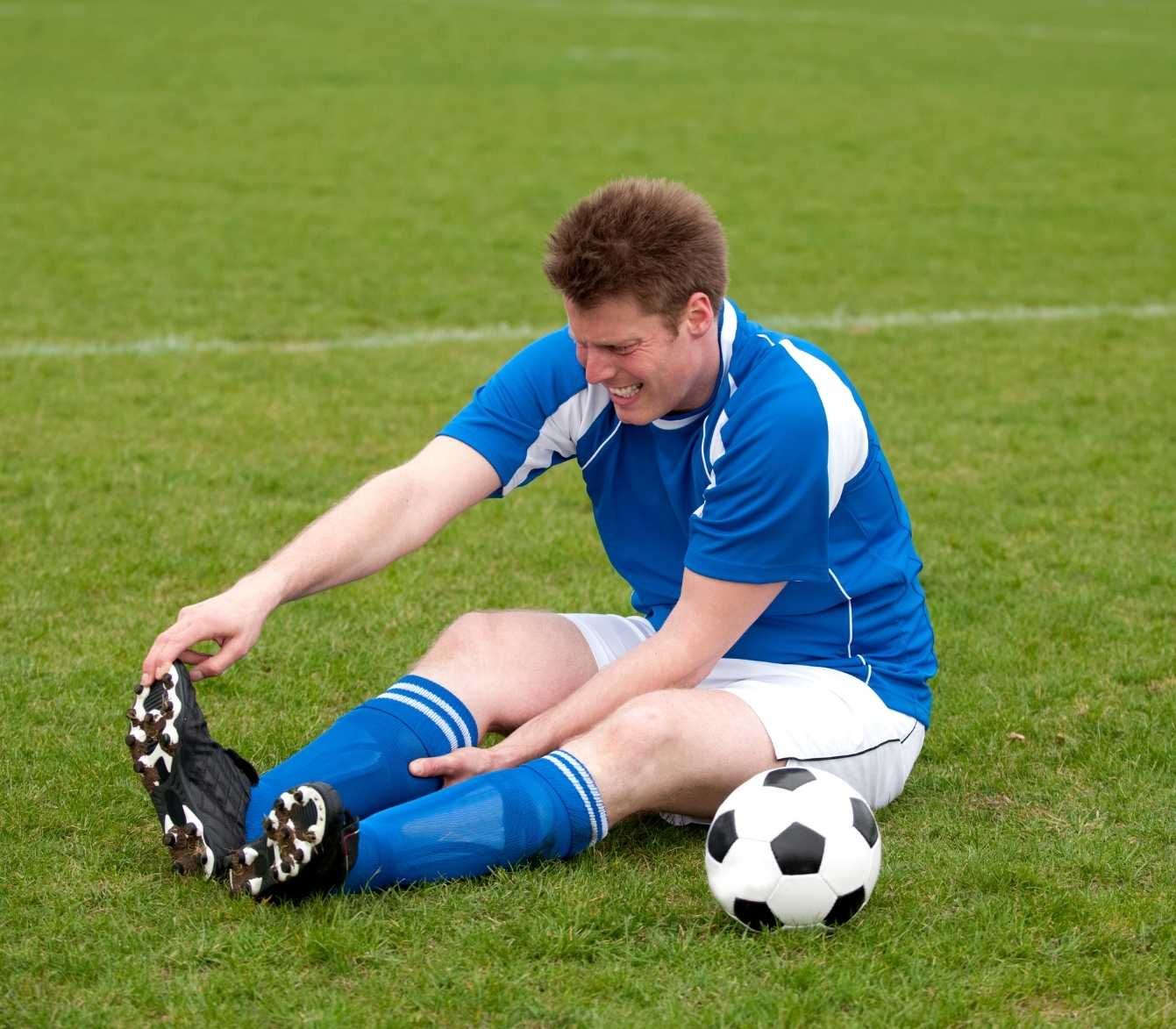
Ankle sprains are among the most common injuries in soccer. Proper rehabilitation can help prevent chronic ankle instability and recurring injuries.
Are there different types of ankle sprains?
Yes. Like other ligament injuries, ankle sprains are classified by severity.
- Grade 1: The ligament is stretched but not torn.
- Grade 2: The ligament is partially torn.
- Grade 3: The ligament is completely torn.
As the grade increases, recovery generally takes longer.
“A lot of people hear ‘complete tear’ and immediately think surgery,” Camarillo says. “That’s not necessarily true with ankle ligaments.”
Even many complete ligament tears can heal successfully without surgery when treated appropriately.
When should a doctor evaluate an ankle sprain?
Many mild ankle sprains improve with appropriate treatment, but some symptoms suggest a more serious injury.
Camarillo recommends seeking medical evaluation if an athlete experiences:
- Significant swelling, especially if the foot no longer fits comfortably in a shoe
- Inability to bear weight
- Tenderness directly over the ankle bones
- Pain extending above the ankle
- Persistent pain or swelling that does not improve
For children and adolescents, the threshold for evaluation should be even lower.
“In younger athletes whose bones are still growing, what looks like an ankle sprain can sometimes be a fracture,” Camarillo says. “If things don’t seem right, it’s important to have the injury evaluated.”
Why do ankle sprains keep happening?
One ankle sprain often leads to another—not because the ankle is permanently weak, but because athletes frequently return to play before it has fully recovered.
“We think the number one risk factor for chronic ankle instability is not rehabbing the injury appropriately,” Camarillo says.
Proper rehabilitation restores more than strength. It also improves range of motion and proprioception—the body’s ability to sense the ankle’s position during movement.
If those abilities are not fully restored, the ligaments may heal in a stretched position, making the ankle less stable and more susceptible to future sprains.
“The tissue never heals back with the same stability if you don’t allow it to recover properly,” Camarillo says. “That’s what leads to chronic instability.”
“One of the biggest mistakes athletes make is returning to play too soon without properly rehabbing the injury.” — Matthew Camarillo, MD.
What does a safe return to play look like?
Returning to soccer should not be based on how many days have passed since the injury. Instead, it should be based on how the ankle functions.
Before returning to play, athletes should have:
- Little or no swelling
- Full range of motion
- Normal ankle strength
- No pain or feelings of instability
- The ability to run, cut and change direction without symptoms
Treatment has also changed over the years.
“We’re much more aggressive now about starting rehabilitation early,” Camarillo says. “We still need time for the ligaments to heal, but we can begin working on range of motion, reducing swelling and restoring strength much sooner than we used to.”
Rather than prolonged immobilization, today’s treatment focuses on early rehabilitation while allowing the injured ligaments adequate time to heal.
Can ankle sprains be prevented?
No injury can be prevented entirely, but players can significantly lower their risk.
Camarillo recommends:
- Strengthening the muscles around the ankle
- Performing balance and proprioception exercises
- Maintaining hip strength, especially the hip abductors
- Using resistance bands to strengthen the ankle throughout the season
- Wearing the appropriate cleats for the playing surface
Research continues to explore how footwear affects injury risk. Different cleat designs are intended for natural grass and artificial turf, and worn or poorly fitting cleats may contribute to instability during cutting and pivoting movements.
Are ankle braces better than tape?
For athletes with a history of ankle sprains, additional support can reduce the risk of another injury.
Although athletic tape is commonly used, Camarillo says ankle braces often provide more consistent support.
“Tape gradually loosens during a soccer match,” he says. “An ankle brace can be tightened before the game and again at halftime, making it a more functional option for many athletes.”
Don’t underestimate an ankle sprain.
Because ankle sprains are so common, they are often dismissed as minor injuries.
“Everyone thinks it’s ‘just an ankle sprain,'” Camarillo says. “But if we don’t take the time to manage it correctly, something that seems minor can become a much bigger problem later that season or even years down the road.”
Whether you’re watching the world’s best players compete in the FIFA World Cup or playing in your own weekend league, the takeaway is the same: don’t ignore a rolled ankle. Early evaluation when needed, proper rehabilitation and a gradual return to play can help prevent chronic ankle instability and keep athletes on the field.
Don’t let an ankle sprain become a chronic problem
Persistent pain, repeated ankle sprains or lingering instability shouldn’t be ignored. Early evaluation and the right treatment plan can help you recover safely and get back to the activities you enjoy.
Request an appointment with Matthew Camarillo, MD (external link), or one of UTHealth Houston’s orthopedic sports medicine or foot and ankle surgeons online or by calling 713-486-9800.
References
- Deutscher Fußball-Bund (German Football Association). Medical update: Nico Schlotterbeck ruled out after a medial collateral ligament injury to the left ankle. 2026 FIFA World Cup.
- Federación Mexicana de Fútbol. Medical update: Santiago Giménez diagnosed with recurrent right ankle sprain following World Cup competition. 2026.
- Post-match reports and sports medicine analyses following France’s FIFA World Cup quarterfinal versus Morocco, describing Kylian Mbappé’s injury as a minor ankle sprain/high ankle mechanism.