Groin Pain in Soccer
Soccer Injuries Explained: Understanding Groin Pain
When Colombia defeated Ghana in the Round of 32 at the 2026 FIFA World Cup™, the celebration was accompanied by heartbreaking news. Just eight minutes into the match, striker Jhon Córdoba suffered a left adductor tear complicated by an associated hamstring strain that took him out of the tournament.
While dramatic ACL tears and ankle sprains often dominate headlines, groin pain and hip injuries are among the most common conditions affecting soccer players at every level. For some players, it’s a mild muscle strain. For others, it can be the first sign of a more complex hip problem.

David Maldonado, MD
“Most people think about knee injuries when they think about soccer,” said David R. Maldonado, MD, orthopedic surgeon specializing in hip arthroscopy and advanced hip preservation at UTHealth Houston (external link). “But hip injuries are actually very common, and fortunately, most of them can be treated without surgery.”
Groin pain isn’t a diagnosis—it’s a symptom.
Many athletes assume groin pain means they pulled a muscle. According to Maldonado, that’s not always the case.
“There are two major causes when we have hip or groin pain,” he said.
The first involves the hip joint itself, most commonly:
- Femoroacetabular impingement (FAI), also known as hip impingement
- Labral tears
These conditions typically develop gradually.
“Most of the time these are chronic injuries,” Maldonado said. “Players have often been experiencing symptoms for a long time, and the pain doesn’t go away.”
The second category involves injuries to the muscles and tendons surrounding the hip, including:
- Adductor (groin) strains
- Hip flexor strains
Unlike hip impingement or labral tears, these injuries often occur suddenly during a sprint, a forceful kick or a quick change of direction.
Understanding the difference is important because treatment and recovery can vary significantly depending on the underlying cause.
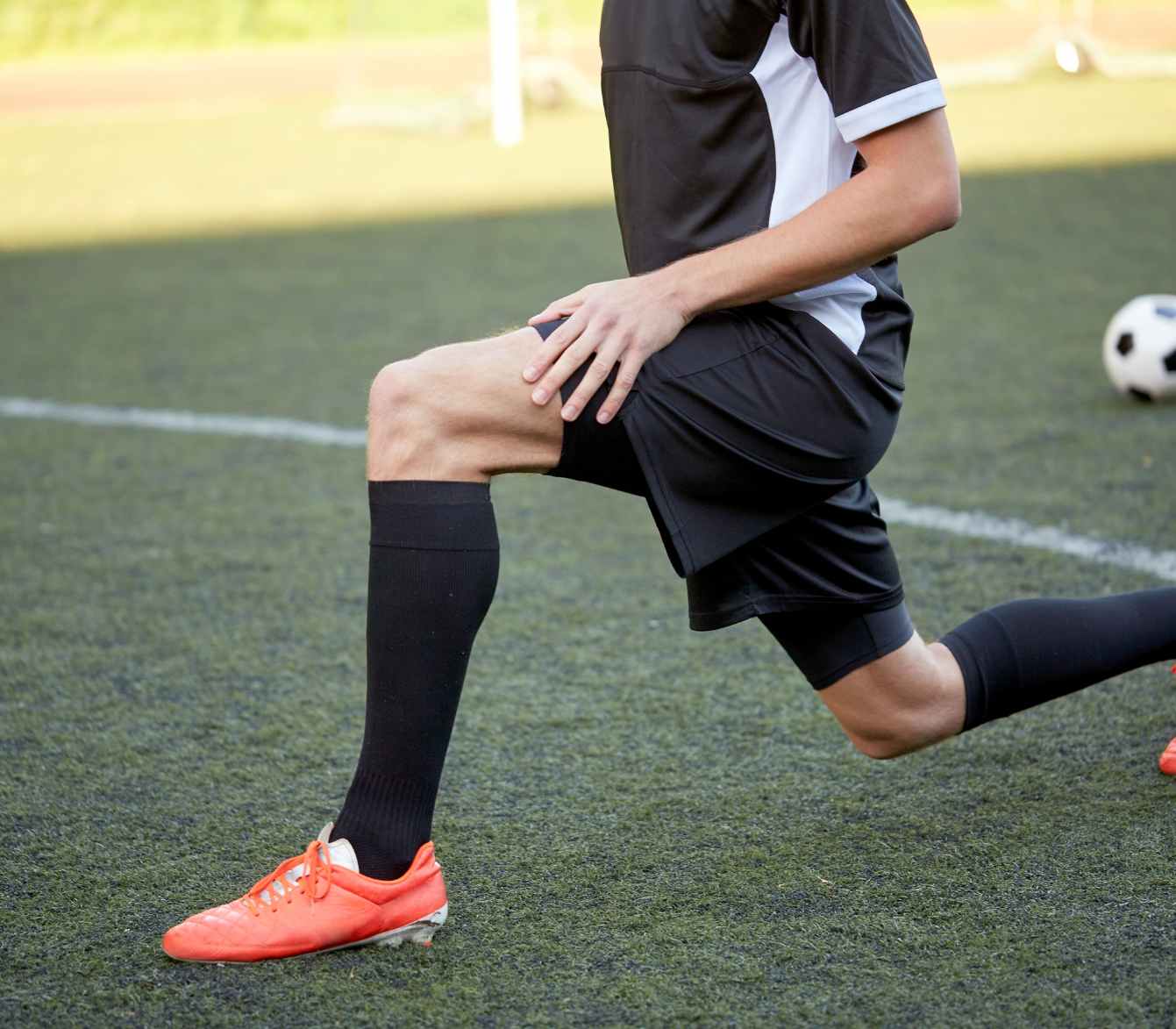
Groin pain is one of the most common complaints among soccer players. While many cases are caused by muscle strains, persistent pain may also signal an underlying hip injury.
Why is groin pain so common in soccer?
Few sports place as much stress on the hips as soccer.
Players repeatedly sprint, accelerate, decelerate, cut, pivot and strike the ball with force for 90 minutes—or as long as 120 minutes during knockout matches that extend into extra time.
“Soccer is a very demanding sport,” Maldonado said. “The cutting, pivoting and the level of training these players do throughout the year are some of the reasons we see so many hip and groin injuries.”
Unlike many other sports, substitutions are limited, meaning athletes often continue playing while fatigued. As muscles tire, the hip and groin become increasingly vulnerable during explosive movements such as kicking, sprinting and rapidly changing direction.
What are the warning signs athletes shouldn’t ignore?
Soccer players are known for playing through pain. But persistent groin pain should never be dismissed.
According to Maldonado, one symptom stands above the rest.
“Pain in the groin area that doesn’t go away and doesn’t let you perform at the level you’re used to performing shouldn’t be ignored.” — David Maldonado, MD.
Pain that continues despite rest, returns every time you play or limits your ability to sprint, kick or change direction deserves evaluation by a sports medicine specialist.
Ignoring chronic symptoms can allow an underlying hip condition to worsen and prolong recovery.
How are groin pain and hip injuries treated?
Treatment begins with an accurate diagnosis.
Many muscle and tendon injuries respond well to conservative treatment, including:
- Rest
- Physical therapy
- Activity modification
- Platelet-rich plasma (PRP) injections in selected patients
Hip impingement and labral tears are also usually treated without surgery initially through physical therapy and, in some cases, injections.
“When physical therapy, rest and injections aren’t enough for the soccer player to continue performing the way they want, surgery may be the next step,” Maldonado said.
The good news is that most hip and groin injuries improve without surgery when diagnosed early and managed appropriately.
How long does recovery take?
Recovery depends on the specific injury.
Minor muscle or tendon strains may require only several weeks away from soccer while completing rehabilitation.
For more complex injuries, recovery takes longer.
Athletes who require surgery for hip impingement or a labral tear generally need about six months before returning to unrestricted play at their previous level of competition.
Regardless of the diagnosis, a structured rehabilitation program is critical to restoring strength, flexibility and sport-specific movement before returning to competition.
Can groin pain and hip injuries be prevented?
While no injury is completely preventable, strengthening the muscles that support the hip can significantly reduce the risk.
Maldonado recommends that recreational athletes, in particular, make hip conditioning part of their regular training routine by focusing on:
- Core strengthening
- Glute strengthening
- Hip stability exercises
“Those exercises may be the most boring part of training,” Maldonado said, “but they’re also the most important things you can do to reduce your risk of injuries around the hip.”
Strong core and hip muscles help absorb the forces created during cutting, pivoting and kicking while improving stability throughout the pelvis and lower body.
The bottom line.
Groin pain is one of the most common complaints among soccer players—but it’s also one of the most misunderstood.
While many cases are caused by muscle strains, persistent groin pain may signal an underlying hip condition that won’t improve without proper treatment.
The good news is that most groin and hip injuries can be treated successfully, especially when they’re diagnosed early. Whether you’re competing on a professional stage or playing in a local league, listening to your body—and seeking medical evaluation when pain doesn’t go away—can help you recover faster and stay in the game.
Don’t ignore persistent groin pain.
If groin or hip pain is affecting your game—or simply isn’t improving with rest—it may be time for an evaluation.
You can request an appointment with David R. Maldonado, MD (external link), or one of our orthopedic sports medicine specialists today.
References
- Federación Colombiana de Fútbol. Official medical update: Jhon Córdoba diagnosed with a left adductor tear following Colombia’s Round of 32 match against Ghana at the 2026 FIFA World Cup™. July 2026.