One patient, two cataract surgeries: making a case for office-based care
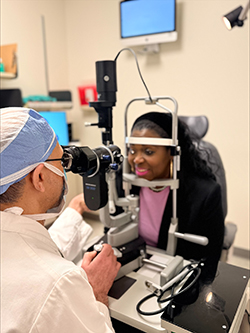 When Evonne Aboderin needed cataract surgery in December 2024, her ophthalmologist, Ahmad Kheirkhah, MD, performed it in a traditional ambulatory surgical center (ASC). The results were excellent. Fast forward to July 2025, when Evonne’s other eye required treatment. This time, Kheirkhah suggested the new office-based surgical suite at UTHealth Houston Robert Cizik Eye Clinic. Trusting him, she agreed to the more convenient option.
While both surgeries succeeded, her experience with office-based surgery (OBS) was different.
“Everything moved so fast in the ASC. I was surrounded by unfamiliar people, getting instructions from six different staff members,” Evonne recalls. “By the time I saw my doctor, I was overwhelmed.”
By contrast, OBS felt smooth and more personal. “From reception to surgery, everybody knew me and called me by name. I had no anxiety at all.”
Kheirkhah also sees meaningful advantages with OBS. “Cataract surgery is typically short. In most OBS cases, we use only anesthetic eye drops and oral medication, avoiding IV sedation. That creates a calmer patient experience and a more controlled setting for surgeons.”
While OBS isn’t for every patient — those with complex medical needs may be better served in an ASC — it is becoming a preferred option. The Cizik Eye Clinic’s OBS facility recently received accreditation from the Joint Commission, demonstrating the clinic’s commitment to the highest level of patient care and patient safety.
“Patients benefit from the familiarity of the office, and the cooperation we get often leads to better outcomes,” Kheirkhah says.
For Evonne, the choice is clear: “The OBS team treated me like family. The surgery? I didn’t even know it happened, and recovery was so fast. I would choose OBS every time.”