ACL Injuries in Soccer
Soccer Injuries Explained: ACL Tears. What Fans, Players, and Parents Need to Know.

Bonnie Gregory, MD
Bonnie Gregory, MD, assistant professor and orthopedic sports medicine surgeon at UTHealth Houston (external link) and team physician for the Houston Dash, explains why ACL tears happen, how heat and fatigue affect injury risk, and what athletes can do to stay healthy during the world’s biggest soccer tournament.
The countdown is over.
The FIFA World Cup 2026™ kicks off June 11 and puts Houston at the center of the global soccer stage as the world’s most-watched sporting event arrives in North America. Through July 19, the world’s elite players will compete for soccer’s ultimate prize while millions of fans follow every goal, save, and dramatic moment.
For Houston, the tournament represents more than a series of matches. It showcases a city that has fully embraced the beautiful game. Home to Major League Soccer’s Houston Dynamo and the National Women’s Soccer League’s Houston Dash, Houston has become an important soccer hub supported by a passionate and diverse fan base.
While fans focus on tactics, star players, and championship dreams, sports medicine professionals work to keep athletes healthy throughout one of the world’s most physically demanding tournaments.
That challenge is especially significant in Houston.
Houston’s summer heat and humidity test even the fittest athletes. Players arriving from Europe, South America, Africa, and Asia must adapt to new opponents and travel schedules. They must also adjust to environmental conditions that can place additional stress on the body.
“The athletes are undergoing rigorous training regimens to prepare for the World Cup, but their bodies can only acclimate at a certain rate,” Gregory said. Players competing in the South will encounter heat and humidity that may differ dramatically from conditions in their home countries.
For Gregory, who has spent years caring for professional soccer players in Houston’s climate, the concern extends beyond heat illness and dehydration. Fatigue, travel demands, shortened recovery windows, and environmental stress can all increase the risk of injury.
Few injuries in soccer are more feared than a tear of the anterior cruciate ligament (ACL).
What Is an ACL Injury?
An ACL injury occurs when the anterior cruciate ligament, one of the major stabilizing ligaments in the knee, stretches or tears. ACL injuries in soccer often occur during cutting, pivoting, sudden changes of direction, or awkward landings.
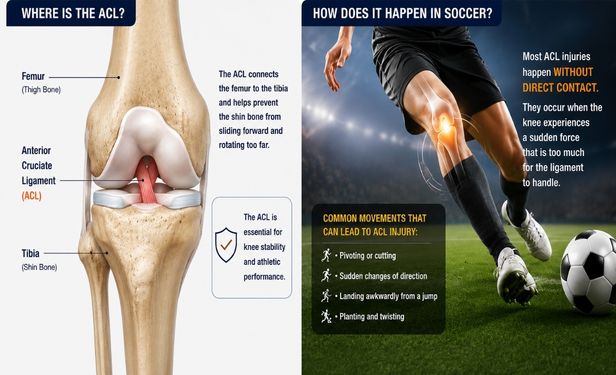
The ACL is one of the knee’s primary stabilizing ligaments. In soccer, most ACL injuries occur without direct contact and are often linked to cutting, pivoting, sudden changes of direction, or awkward landings. (AI-generated image)
Why ACL Injuries Are Common in Soccer
Few injuries strike fear into athletes like an ACL tear. The ACL is one of the knee’s primary stabilizing ligaments. It plays a critical role in controlling movement during running, cutting, pivoting, and landing.
“ACL injuries are really important to discuss because they’re very obvious injuries that happen on the field,” Gregory said. “The fans see it, the players know it, because it’s a substantial injury to the knee.”
Soccer places extraordinary demands on the lower body. Players sprint, decelerate, change direction, jump, land, and battle for possession throughout a match. Those movements place soccer among the sports with the highest rates of ACL injuries.
“We hear a lot about female soccer athletes having ACL injuries, but male soccer athletes are also at risk of sustaining these injuries,” Gregory said. “Soccer is one of the sports in which most ACL injuries happen because of the movements athletes are making on the field.”
Most ACL Tears Are Non-Contact Injuries.
Many fans assume ACL tears happen during collisions. In reality, most occur without direct contact. “The vast majority of ACL injuries are non-contact injuries,” Gregory said.
A player may plant a foot to change direction. They may try to avoid a defender, land awkwardly after a jump, or have a cleat catch in the turf. In a split second, forces act on the knee faster than the surrounding muscles can respond.
“Oftentimes in soccer, a player changes direction at the last moment,” Gregory added. “Their brain moves faster than their body moves.”
When muscles are unable to protect the joint adequately, the ACL can tear.
Houston Heat, Humidity, and Injury Risk
As World Cup teams train and compete in Houston, environmental conditions will play a critical role.
From an orthopedic perspective, heat and humidity can contribute to fatigue, dehydration, cramping, and recovery challenges. Those factors can increase the risk of both soft-tissue and joint injuries.
“The more fatigue the body is under, the more stress it undergoes, and the less recovery it has in between, the more likely injuries are to happen,” Gregory said.
That risk extends beyond ACL injuries. Hamstring strains, quadriceps, calf, and ankle injuries, and meniscus tears are also common in soccer and can sideline players for significant periods during a tournament, where every match matters.
Hydration, nutrition, sleep, recovery protocols, and acclimatization strategies all play a role in reducing injury risk and helping athletes perform at their highest level.
Can ACL Injuries Be Prevented?
No program can completely prevent ACL injuries in a contact sport. However, experts agree that injury risk can be reduced.
“It’s hard to prevent knee injuries in a contact sport,” Gregory said. “Even when you have the best-laid plans, and you’re the fittest and strongest athlete, contact can still happen.”
Programs such as FIFA 11+ (external link) help reduce injury risk through structured warmups, strength training, balance exercises, and neuromuscular training.
The goal is to improve communication between the brain, muscles, and joints so athletes can react more efficiently during competition.
Do All ACL Tears Require Surgery?
Not necessarily. “ACL injuries are almost like snowflakes,” Gregory said. “Each one is unique, just like each athlete and patient is unique.” Physicians base treatment decisions on multiple factors, including injury severity, the athlete’s age and activity level, and whether other structures in the knee have been damaged.
Some lower-grade injuries can be managed without surgery through physical therapy, strengthening programs, and bracing. However, younger athletes and elite competitors often require surgical reconstruction to return to sports that involve cutting and pivoting movements safely.
Recovery and Return to Play
Returning to the field after an ACL injury involves much more than biological healing. “Readiness to return to sport after any injury is a multifactorial decision,” Gregory said.
Athletes must rebuild strength, restore range of motion and stability, regain endurance, and perform sport-specific movements at game intensity.
They must also demonstrate they can tolerate the physical demands of a full match. Mental readiness is equally important. “The patients need to be mentally ready to get back to sport,” Gregory said.
Sports medicine specialists often use tools such as the ACL Return to Sport after Injury (ACL-RSI) scale to measure an athlete’s confidence and psychological readiness to return to sport. Research shows that athletes who lack confidence in their previously injured knee may face a higher risk of reinjury even after physical recovery is complete.
A Lasting Legacy Beyond the World Cup
As Houston welcomes the world, Gregory hopes the tournament inspires more people to embrace soccer and appreciate the science behind athlete health and performance.
“It’s the beautiful game for a reason,” she said. “It’s lovely to watch. It’s fun to watch.”
Advances in sports medicine continue to improve outcomes for athletes at every level, from youth players to professionals competing on the world stage. “ACL injuries are not a death sentence to your athletic career or your knee,” Gregory said. “We can get athletes back to the sports they appreciate and love.”
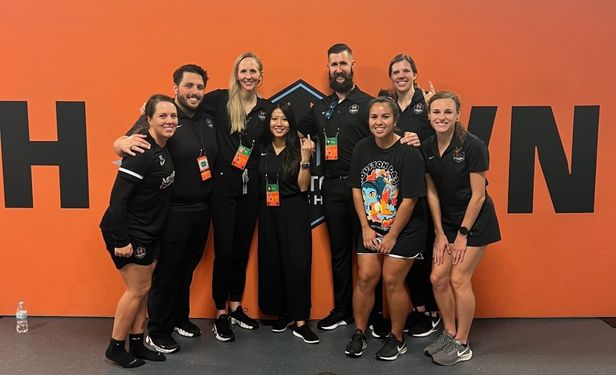
Bonnie Gregory, MD, orthopedic sports medicine surgeon and team physician for the Houston Dash, stands alongside fellow members of the club’s medical and performance staff. (Photo provided by Dr. Gregory)
Need an Evaluation for an ACL Injury?
ACL injuries in soccer can affect athletes of all ages, from youth players to elite competitors. If you’re experiencing knee pain, recovering from a knee injury, or dealing with instability or swelling, you can request an appointment with Bonnie Gregory, MD, (external link) or connect with one of our sports medicine specialists.