Chronobiology in Lifestyle, Gut, & Organ Damage
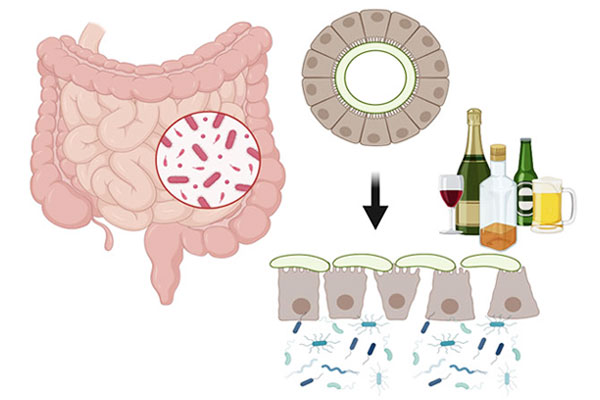
Lifestyle factors such as sleep patterns, diet, light exposure, and physical activity are key regulators of the circadian system, which coordinates physiological processes across the body. Disruptions in these behaviors can alter clock gene expression and desynchronize central and peripheral rhythms. The gut microbiome also follows diurnal oscillations that are shaped by feeding and sleep cycles, creating a bidirectional relationship with host circadian biology. Persistent circadian misalignment contributes to metabolic dysfunction, immune dysregulation, and increased risk of chronic disease.
Our Goal:
- Develop a comprehensive computational framework to identify lifestyle-associated enterotypes as distinct dysbiosis signatures predictive of chronic disease risk.
- Validate findings in diverse, real-world population cohorts to ensure robustness and translational relevance.
- Establish a systematic framework for defining lifestyle-induced dysbiosis and enable scalable precision diagnostics and preventive strategies.
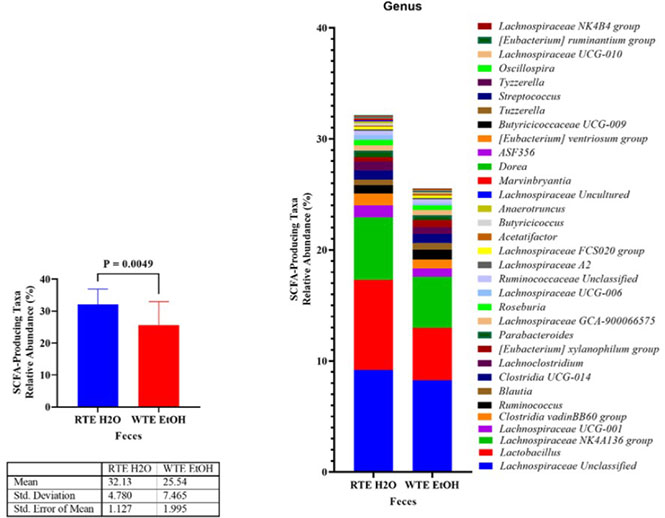
Tran L, Shaikh M, Engen PA, Naqib A, Frausto DM, Ramirez V, Gasteier M, Bogin Z, Lawrence K, Zhang L, Song S, Green SJ, Bishehsari F, Forsyth CB, Keshavarzian A, Swanson GR. Impact of peripheral circadian misalignment and alcohol on the resiliency of intestinal barrier and microbiota (external link). Gut Microbes. 2025 Dec;17(1):2509281. doi: 10.1080/19490976.2025.2509281. Epub 2025 Jun 4. PMID: 40464220; PMCID: PMC12143687.
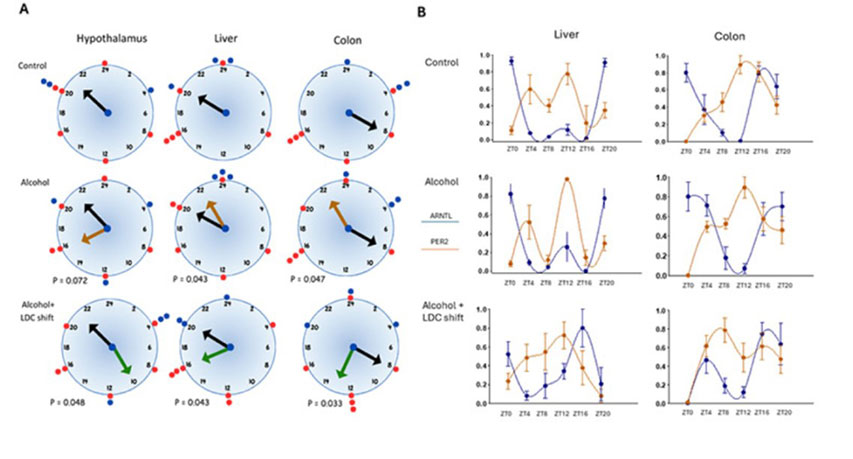
Santovito LS, Shaikh M, Sharma D, Forsyth CB, Voigt RM, Keshavarzian A, Bishehsari F. Effect of Alcohol on Clock Synchrony and Tissue Circadian Homeostasis in Mice (external link). Mol Nutr Food Res. 2024 Aug;68(16):e2400234. doi: 10.1002/mnfr.202400234. Epub 2024 Aug 9. PMID: 39126133; PMCID: PMC13182161.