





Pushing the Boundaries of Innovation to Improve Children’s Lives
Department of Pediatrics Expands Its Clinical Research Footprint with Koenig Appointment
When Mary Kay Koenig, MD, joined the faculty of McGovern Medical School at UTHealth Houston in 2007, one of her many goals was to expand research conducted in the Division of Child and Adolescent Neurology beyond the lab to end-stage testing of new medications and therapies. She accomplished that goal, and in September 2022, was appointed associate vice chair for clinical research in the Department of Pediatrics, expanding her leadership beyond the division to support all industry-sponsored clinical research in the department.
Koenig, professor and Endowed Chair of Mitochondrial Medicine and founding director of the Center for the Treatment of Pediatric Neurodegenerative Disease, was appointed by Mary E. Aitken, MD, MPH, FAAP, chair of the Department of Pediatrics, whose goal was to extend the clinical research operations model Koenig used in her center to the entire department, to centralize research efforts, and better use research resources for the benefit of patients. Since Koenig’s appointment, the Pediatric Neurology Clinical Research Program has launched 13 new research studies currently in various stages of development, along with providing support during startup, including budget negotiations, for six additional studies in the department.
“Our goal is to provide cutting-edge therapeutic investigational options to any patient who would like to participate in a clinical trial,” Koenig says. “We have continued to enroll study participants at a higher pace than other academic centers, and have successfully activated 13 new clinical trials since January 2023. Most are endstage trials conducted before FDA approval or they are post-approval follow-up trials. Some trials are Phase 4 studies investigating the safety of drugs, and others are investigating the efficacy of medications. Some of our studies in the startup process are super exciting – for instance, we’re investigating treatment of the symptoms of autism with neuroactive medications that have the potential to alter the neural connections to improve patient symptoms.”
From a research standpoint, the Department of Pediatrics has more than doubled its clinical trials since last year. “By this time next year, we expect to have 13 more studies started,” Koenig says. “We’ve doubled the size of our Child Neurology Residency Program and now have twice as many people working in the research group as we had last year.”
During the 2022-23 academic year, the Pediatric Neurology Clinical Research Program successfully obtained U.S. Food and Drug Administration approval and opened an extended access program for patients with ataxia telangiectasia, who otherwise would not have access to treatment options. The department moved UTHealth Houston to the top enrolling institution for an international clinical trial for patients with neurofibromatosis Type 1 and expanded its research endeavors to include mitochondrial disease, pediatric stroke, Tourette’s syndrome, autism, epilepsy, and spinal muscular atrophy.
“We’re doing studies with gene therapy and other modalities that are cutting edge and will continue to keep our finger on the pulse of advanced medicine,” she says. “We encourage our clinicians to participate in research and have made it easier for them to provide their patients with access to clinical trials.”
In addition to growing its research and clinical staff to include a research support assistant, a fourth research coordinator, a full-time occupational therapist, and a clinical/research nurse to support the stroke clinic and research initiatives, the Pediatric Neurology Clinical Research Program has expanded its infrastructure to include lab equipment for sample processing as well as temperature-controlled chambers for investigational product storage and dispensing.
William Guerra, senior program manager for research, now serves as the administrative lead for the program, and Chassity Butler, financial analyst, oversees financial management of clinical trials.
“Last year we recruited a pediatric stroke specialist, Dr. Stuart Fraser, who joined us as director of the Program for Pediatric Stroke and Cerebrovascular Disease at the Institute for Stroke and Cerebrovascular Disease at UTHealth Houston. Physicians with this type of subspecialty training are few and far between,” Koenig says.
“Dr. Fraser is the UTHealth Houston site principal investigator for the International Pediatric Stroke Study, which consists of more than 150 participating children’s hospitals worldwide that collaborate to improve understanding and treatment of children with cerebrovascular disease. Our academic teaching hospital, Memorial Hermann-Texas Medical Center, was the first in Texas to earn The Joint Commission’s Comprehensive Stroke Center certification, the highest quality standard for stroke care in the United States at the time, and now we’re advancing our pediatric stroke program to a higher level as well.”
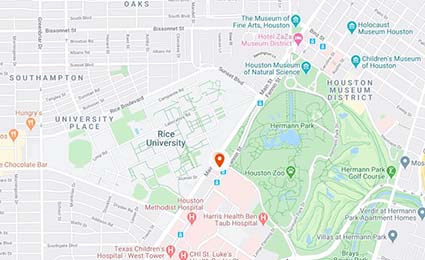
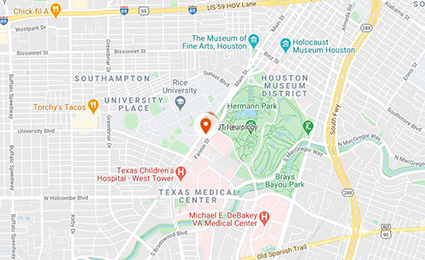
The Pediatric Neurology Clinical Research Program will soon open its doors to a new research suite for outpatients on the 15th floor of the UTHealth Houston Professional Building in the Texas Medical Center, where study participants can experience a more tailored research visit. The space includes five examination rooms and a therapy suite dedicated to physical and occupational therapy.
“It’s common for participants to spend a half day here for a clinical trial,” Koenig says. “These are comfortable, nicely furnished, quiet rooms with a waiting area away from the busy pediatric clinic. We are grateful to people who choose to participate in trials that help us move medicine forward.”
“I’ve spent the last 15 years working to develop this type of research program, and we feel the program’s future is bright,” she adds. “Research driven by curiosity and the desire to help others propels humanity forward and in pediatric neurology we’re advancing rapidly. Our goal is to offer children and adolescents the most leading-edge treatments so they don’t have to look elsewhere.”