Soto Lab Personnel
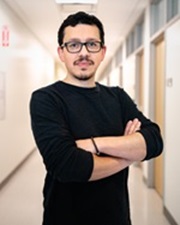
Santiago Ramirez, DVM – Senior Research Scientist
Education & Training
B.S. Cell and Molecular Biology – Universidad de Chile, Santiago, Chile (2007)
DVM Veterinarian Medical Doctor – Universidad de Chile, Santiago, Chile (2012)
Research Interests & Experience
Dr. Ramirez is a DVM and Senior research associate at the Mitchell Center for Alzheimer’s Disease and Related Brain Disorders at The University of Texas Health Science Center at Houston, McGovern Medical School. Dr. Ramirez has developed his research background by integrating cell and molecular biology with the pathophysiology of human diseases using in vitro, ex-vivo, and in-vivo models. As Post Graduate researcher, he has experience in vascular diseases, prion diseases, toxicology, and drug delivery. As an animal model expert and skilled experimental surgeon, he is devoted to the study of neurodegenerative diseases related to misfolding proteins, aging, mitochondrial diseases, and traumatic brain injury.
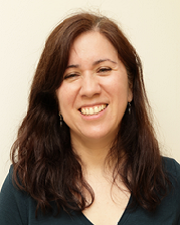
Sofia Elizabeth Sepulveda Contreras, Ph.D. – Project Manager
Education & Training
B.S. Medical Technologist (Tecnólogo Médico) – Universidad de Chile (2005)
Ph.D. Biomedical science – Faculty of Medicine, Universidad de Chile (2013)
Research Interests & Experience
In the past, Dr. Sepulveda Contreras has studied different diseases including multiple sclerosis, ulcerative colitis, Crohn’s disease, and Chagas disease. Now in Dr. Claudio Soto’s Lab, her focus has shifted to mainly Alzheimer’s disease (AD) research with trying to understand the role of different cells during the development and progression of AD. Additionally, Dr. Sepulveda Contreras is continuing her search for more representative cellular models for AD studies. In this regard, she is working with iPSC derived cells, like microglia, neurons and astrocytes, and with 3D models like cerebral organoids. Dr. Sepulveda Contreras would like to make discoveries that contribute to the development of effective therapies for the treatment of AD.
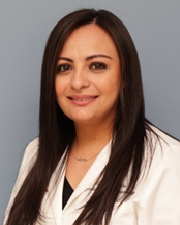
Michelle Pinho – Senior Research Associate/Lab Manager
Education & Training
B.S. Biological Sciences – University of Texas at El Paso (2015)
Research Interests & Experience
After 5 years of clinical experience, Michelle shifted her focus to translational science. She focuses on developing biochemical assays for early detection of misfolded proteins in biological fluids for neurodegenerative diseases including Alzheimer’s disease (AD), Parkinson’s Disease (PD), and Cerebral Amyloid Angiopathy (CAA).
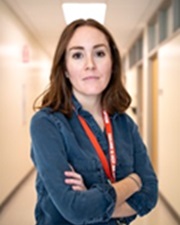
Camila Gherardelli Brooks, Ph.D. – Postdoctoral Research Fellow
Education & Training
B.S. Biotechnology – Mayor University (2013)
M.S. Cellular Biology and Neuroscience – The University of Kaiserslautern (2016)
Research Interests & Experience
Camila received her Bachelor of Science degree in Biotechnology from Mayor University in 2013 and master’s degree in cellular biology and neuroscience in 2016 from the University of Kaiserslautern. Along the way, she became increasingly interested in the molecular mechanisms that lead to neurodegeneration, particularly in Alzheimer’s disease. After graduating, Camila worked with Dr. Inestrosa at Universidad Catolica de Chile, where she studied glucose metabolism alterations in Alzheimer’s disease. In 2019, Camila joined the cell and molecular biology PhD program. Her current research focuses on understanding the role of ApoE, the biggest genetic risk factor for Alzheimer’s disease, in embryonic neurogenesis.
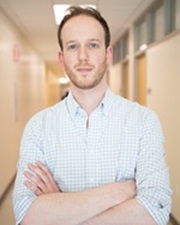
Tyler Allison – Research Assistant III, PhD Student
Education & Training
B.S. Biomedical Sciences – Colorado State University (2017)
Research Interests & Experience
Cellular and molecular mechanisms of neurodegenerative diseases; 2.5 years in clinical R&D and 2.5 years in academic research.
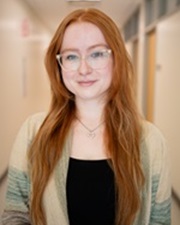 Danielle Harrison – Research Assistant II
Education & Training
B.S. Biomedical Sciences – Saint Edward’s University (2022)
Research Interests & Experience
Neural mechanisms, protein structure, protein misfolding diseases, signal transduction
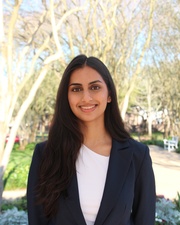
Zaina Rehan – Research Assistant II
Education & Training
B.S. Biomedical Sciences, University of Waterloo, Waterloo, Canada (2021)
Research Interests & Experience
After obtaining her degree in Biomedical Sciences from the University of Waterloo in 2021, Zaina has been immersed in neurodegenerative disease research at UTHealth Science Center at Houston. She has experience in induced pluripotent stem cells (iPSC) and iPSC-derived brain organoid models. Currently, her research focuses on biochemical assays for early detection of alpha-synuclein seeding-competent protein aggregates in biological fluids for synucleinopathies.
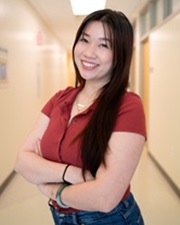
Quynh Nguyen – Research Assistant I
Education & Training
B.S.A. Neuroscience with a minor in Communication Studies – University of Texas at Austin
Certificate in Business of Healthcare – University of Texas at Austin
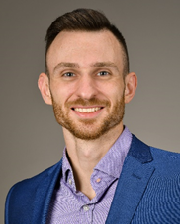 Damian Gorski – Postdoctoral Fellow
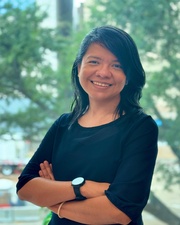 Velmarini Sanchez Vasquez, Ph.D. – Postdoctoral Research Fellow
Education & Training
B.S. Biochemistry, John Brown University (2013)
Ph.D. Biotechnology, INDICASAT-AIP joint program with Acharya Nagarjuna University (2019)
Research Interests & Experience
Velmarini studies the molecular mechanisms by which misfolded protein aggregates drive neurodegeneration. Her earlier work examined how alpha-synuclein aggregation induces DNA damage and mitochondrial dysfunction in Parkinson’s disease models. Her current research combines laser-capture microdissection with mass spectrometry–based proteomics to map how the protein composition of amyloid-beta plaques changes across disease progression, identifying the co-aggregating partners and cellular responses that accompany plaque maturation. In parallel, she uses iPSC-derived neurons and cerebral organoids to investigate the seeding capacity and propagation of alpha-synuclein aggregates in human brain-like tissue.
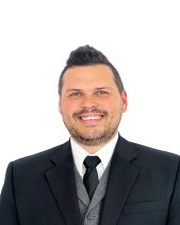
George Edwards III, Ph.D. – Postdoctoral Research Fellow
Dr. Edwards III obtained his B.S. in Biology from Texas A&M University and M.S. and Ph.D. in Neuroscience at the University of Texas Health Science Center in Houston. After a postdoctoral period with Dr. Joanna Jankowsky at Baylor College of Medicine researching the effect of the lysosome-associated protein TMEM106B in tauopathies, he joined the Soto laboratory as a Postdoctoral Fellow to continue pursuing his research interest in multiple facets of neurodegenerative proteinopathies, including genetic and modifiable risk factors, early detection methods, molecular mechanisms, and treatments.
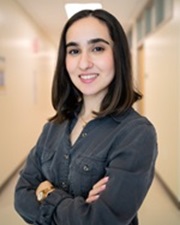
Ghazal Shareghi – Senior Administrative Assistant
Education & Training
B.S Biochemistry – University of Houston-Downtown
Research Interests & Experience
Ghazal is passionate about how innovation and technology can solve real-world problems. This passion led her to pursue a career where science and business intersect, combining analytical thinking with strategic decision-making. She is dedicated to making a meaningful difference in both the scientific and entrepreneurial worlds.