
Teen girl survives brain hemorrhage thanks to UTHealth Houston neurosurgeons
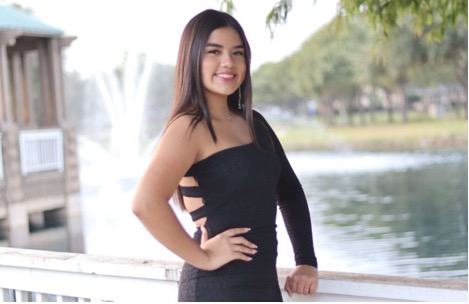
 On Nov. 2, 2024, Katherine Paez was on her way to work when she got an urgent call from one of her daughter’s friends. The group of girls was headed to dinner at a restaurant before their high school homecoming when Sara, then 16, suddenly developed a severe headache, nausea, and confusion.
By the time her mother arrived at the scene, Sara was being loaded into an ambulance, having trouble breathing on her own, and foaming at the mouth. “I started screaming,” Katherine said. “My knees just buckled. It was a horrible moment.”
Sara was taken to Memorial Hermann Katy Hospital, where a CT scan revealed bleeding in her brain. At that point, she was transferred to Children’s Memorial Hermann Hospital for specialized care.
Getting a Diagnosis
 Sara underwent an angiogram—a type of X-ray in which dye is injected into the veins to identify blockages. The test showed that the cause of the bleeding was a ruptured arteriovenous malformation, or AVM, which is a tangle of abnormal blood vessels. Sara’s AVM was on the left side of her cerebellum, the part of the brain that controls voluntary movements, balance, posture, and fine motor control. It also plays a key role in cognitive functions, such as language processing.
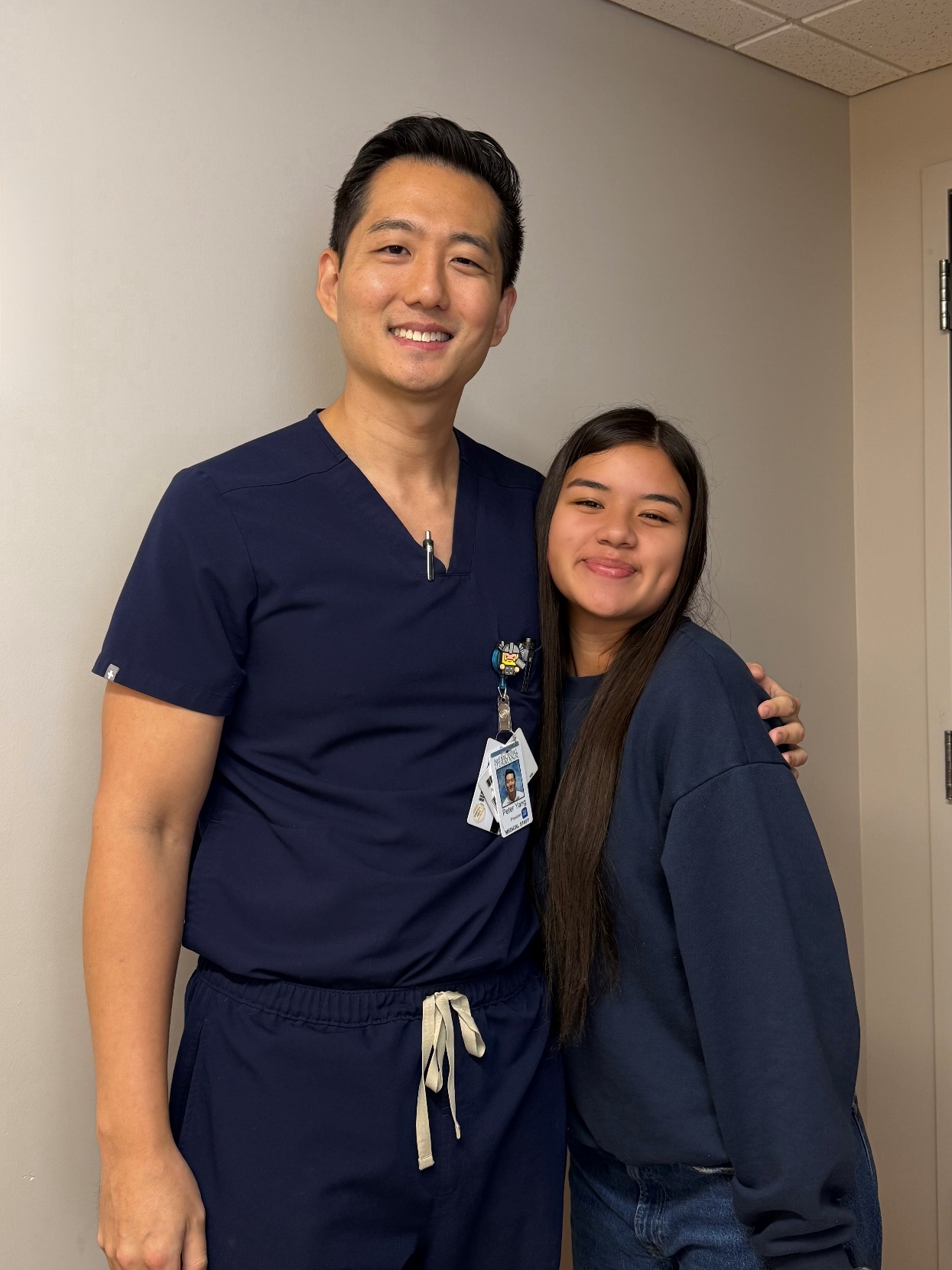
Peter Yang, MD, an assistant professor of pediatric neurosurgery at McGovern Medical School at UTHealth Houston and a pediatric neurosurgeon at UTHealth Houston Neurosciences, explained to the family that an AVM is a congenital condition, something a person is born with. “However, it is typically ‘silent,’ meaning that most people have no idea they have one until an event like this happens,” Yang said. “It often goes undetected until it ruptures, causing a hemorrhage.”
Yang speculated that the rupture may have been caused by a sudden spike in Sara’s blood pressure in response to a near-miss car accident on the way to the restaurant. Sara’s friends reported that the driver slammed on the brakes to avoid hitting another car.
Sara would eventually need surgery to remove the AVM, which would restore function and prevent another rupture. The primary concern at that point, however, was to minimize the amount of swelling in Sara’s brain. “The blood from the rupture caused significant inflammation,” Yang said. “This makes the brain tissue extremely fragile. We had to wait for that initial swelling to subside before we could safely perform the microsurgical resection.”
‘Praying and Hoping for a Miracle’
During the three weeks Sara spent in the hospital waiting for the swelling to go down, Katherine said she “prayed and hoped for a miracle.” While there, Sara also began a rehabilitation program to regain function. “She essentially had to start from zero, relearning how to sit up, hold her head upright, stand, and walk,” Katherine said. She also worked with a speech therapist to address difficulties with speaking and swallowing.
No Room for Error
Sara was discharged at the end of November and then returned to Children’s Memorial Hermann Hospital Dec. 18 for surgery. Working in tandem with Spiros Blackburn, MD, professor in the Vivian L. Smith Department of Neurosurgery at McGovern Medical School and a neurosurgeon at UTHealth Houston Neurosciences, Yang made an incision behind Sara’s left ear and created an opening in the skull, a procedure known as a craniotomy. The surgeons then used a GPS-like navigation system to pinpoint the abnormal blood vessels comprising the AVM. They methodically dissected and cauterized the malformed vessels away from the surrounding brain tissue. The procedure took seven hours.
“We were working in areas where there was no room for error,” Yang said. “The goal was to precisely address the malformation while preserving all of her cognitive and motor functions. It was a challenging procedure because of how fragile the tissue was at the time.”
Rehabilitation and a New Life
Upon completing the resection, the team performed another angiogram to confirm that there was no residual AVM. The bone was then replaced and the scalp closed. Three days later, Sara went home. The surgery had significantly improved her mobility, though she would still require intensive daily physical therapy for another few months.
At the time of the rupture, Sara had been living in Katy, Texas, with her mother. Following her recovery, she decided to move to Colombia to live with her father. She is now 18 and expects to graduate from high school this coming November.
“She is basically back to normal,” Katherine said. “I notice little things, because I’m her mom, but nothing bad. She is here, and she is herself. I’m very grateful for the team [at UTHealth Houston]. They’re very awesome people. They gave her the chance to have her life back.”