
Vagus Nerve Stimulation Paired With Rehabilitation Improves Outcomes for Ischemic Stroke Survivors
Researchers at UTHealth Houston were among those who proved that paired vagus nerve stimulation (VNS) with rehabilitation therapy reduced upper-extremity motor deficits and improved motor function in chronic ischemic stroke patients. The successful clinical trial resulted in FDA approval of the Vivistim® Paired VNS™ System, which requires surgical implantation followed by a high-intensity rehabilitation protocol of 18 sessions, three times a week for 90 minutes, coupled with a self-directed, home-based therapy program.
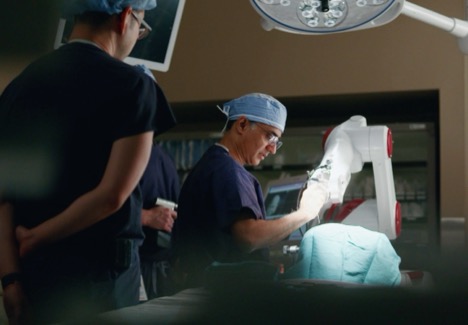 Implantation of the tiny pocket-watch-shaped VNS stimulator is done by Nitin Tandon, MD, professor and Nancy, Clive and Pierce Runnels Distinguished Chair in Neuroscience of the Vivian L. Smith Center for Neurologic Research, and director of the Texas Institute for Restorative Neurotechnologies. In a quick, same-day outpatient procedure, Tandon makes a small incision in the neck to place a lead and a second small incision in the chest to place the implant. The device is turned on during therapy, which most patients are cleared to begin within a few weeks.
“We track the progress of patients who choose VNS to aid in recovery from hemiplegic ischemic stroke through our Vivistim registry,” he says. “The system opens the door to neuroplasticity, the ability of the nervous system to adapt structurally and functionally in response to learning, experiences, and environmental changes. Most patients have had very significant improvement as measured by the Fugl-Meyer score. We’re testing other strategies, including direct brain stimulation, but we’re happy to be able to offer patients with moderate to severe arm impairment a minimally invasive option that has been proven successful.”
Vivistim is reimbursed by Medicare and covered by Medicaid and private insurance, with prior authorization on a case-by-case basis. UTHealth Houston accepts referrals of motivated adult stroke survivors who meet the following criteria:
- A history of chronic ischemic stroke at least six months post-stroke and ideally no more than 10 years post-stroke
- Moderate to severe upper-extremity impairment, with some movements in the wrist, thumb, and at least two digits
- Sensory deficits that do not limit the ability to perform functional tasks
- Adequate expressive and receptive communication skills
- Controlled spasticity
- No history of bilateral or left vagotomy
To refer a patient, call (832) 325-7080, fax (713) 512-2239, or email [email protected].