Interview with Amalia Guardiola, MD, Champion of Clinical Learning Environment
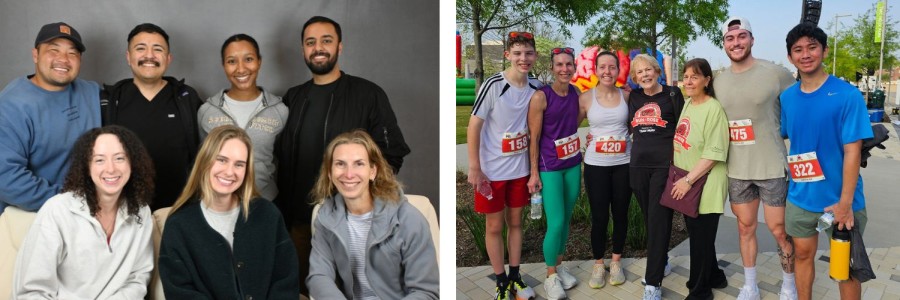
L-R: Dr. Guardiola (bottom right) with one of her McGovern Society cohorts; Dr. Guardiola (second from left) finishes the Run for the Rose fun run alongside her son and several students.
Champions are identified through the Learning Environment Surveys, which are sent to students as an invitation to recognize faculty whose everyday actions have meaningfully shaped their clinical education.
This interview is part of a series that spotlights each of the Champions of Clinical Learning Environment. Each issue will highlight educators who have made a lasting impression on third-year medical students during clerkship rotations by fostering clinical learning environments rooted in professionalism, compassion, and academic rigor. The Office of Professionalism at McGovern Medical School congratulates General Academic Pediatrics Professor Amalia Guardiola, MD, on being honored as a Champion of the Clinical Learning Environment.
How has teaching shaped your own clinical practice or professional growth?
Teaching has shaped the way I approach patient care and my professional growth. Working with medical students challenges me to explain my clinical reasoning clearly, stay current with evidence-based practices, and model compassionate and clear communication. Their curiosity and perspectives make me reflect on how I practice and sometimes question the way I do things — It pushes me to continually improve. Teaching has also strengthened my skills as a mentor and leader, helping me think more intentionally about how to create fair, inclusive, and meaningful learning experiences for every learner.
How do you foster a supportive learning environment for our students on their clerkship rotations?

Amalia Guardiola, MD
Creating a positive and supportive learning environment begins with respect and professionalism. I make it a priority to learn students’ names, where they are from, and to set clear expectations early on. I emphasize psychological safety — reminding them that questions and mistakes are part of learning and that we are all here to learn from one another — while modeling kindness, teamwork, and empathy. I also try to make the environment enjoyable, which helps everyone feel more relaxed and engaged. I use brief debriefings, feedback check-ins, and “teaching moments” in real time to reinforce growth and confidence. My goal is for each student to leave the rotation feeling valued, supported, and more confident in their ability to care for children and families.
What advice would you give to new faculty or residents who are starting their clinical teaching journey?
Start with curiosity and empathy. You don’t have to know everything to be a great teacher — what matters most is your willingness to engage, reflect, and meet learners where they are. Be explicit in your expectations, give timely and constructive feedback, and remember that your attitude toward patients, families, and colleagues teaches as much as your words do. Finally, enjoy it — teaching is one of the most rewarding parts of our profession, and it has the power to transform both learners and teachers alike.