Champions of Clinical Learning Environment: Todd Huzar, MD, and Amalia Guardiola, MD
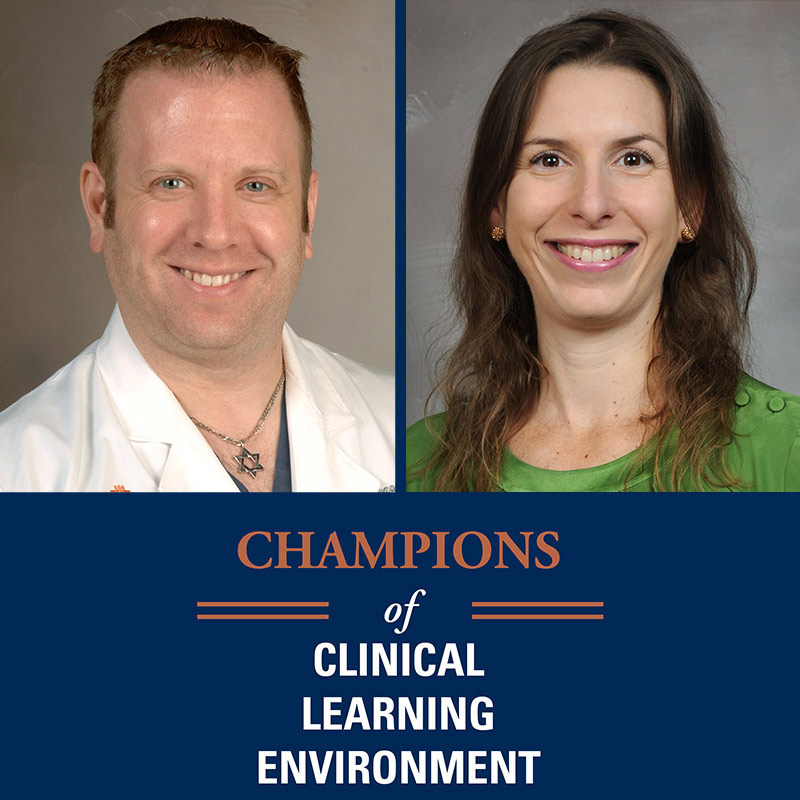
The Office of Professionalism at McGovern Medical School congratulates Todd Huzar, MD, and Amalia Guardiola, MD, on being honored as Champions of the Clinical Learning Environment.
Champions are identified through the Learning Environment Surveys, which are sent to students as an invitation to recognize faculty whose everyday actions have meaningfully shaped their clinical education.
This series spotlights each of the Champions of Clinical Learning Environment. Each issue will highlight educators who have made a lasting impression on third-year medical students during clerkship rotations by fostering clinical learning environments rooted in professionalism, compassion, and academic rigor
Todd Huzar, MD
How do you foster a supportive learning environment for our students on their clerkship rotations?
I foster a supportive learning environment by promoting a culture of mutual respect, professionalism, and intellectual curiosity, ensuring students feel valued as integral members of the clinical team. I provide structured teaching, timely and constructive feedback, and clear expectations to guide their development. By modeling compassionate, multidisciplinary care for burn patients, I aim to cultivate both clinical excellence and humanistic values in future physicians.
How has teaching shaped your own clinical practice or professional growth?
Teaching has had a profound impact on my own practice and professional growth. Not only am I instructing and supporting the next generation of physicians, but they are also pushing me to continually develop an engaging curriculum that challenges and remains abreast of advances in burn surgery and patient care. This reciprocal relationship fosters continual reflection, intellectual curiosity, and a deeper commitment to evidence-based, patient-centered care. Engaging with students challenges me to articulate my clinical reasoning clearly and stay current with the latest developments. Through this process, I have grown as a clinician, mentor, and leader within the multidisciplinary team.
How would you describe your teaching philosophy?
My approach to teaching centers on cultivating an environment of respect, inquiry, and active engagement, where trainees are encouraged to think critically and take ownership of their growth. I emphasize experiential learning, integrating students into meaningful patient care while providing structured guidance and feedback. Ultimately, I aim to inspire curiosity, compassion, and professionalism that will guide their development as future physicians.
What do you enjoy most about working with medical students during their training?
The thing I find most enjoyable about working with medical students is witnessing their growth as they transition from observers to active contributors in patient care. Their curiosity and enthusiasm bring renewed energy and perspective to the clinical environment, continually inspiring my own practice. Guiding them through challenging yet rewarding learning experiences reinforces the values of teamwork, empathy, and continual learning that define our profession.
Amalia Guardiola, MD
How has teaching shaped your own clinical practice or professional growth?
Teaching has shaped the way I approach patient care and my professional growth. Working with medical students challenges me to explain my clinical reasoning clearly, stay current with evidence-based practices, and model compassionate and clear communication. Their curiosity and perspectives make me reflect on how I practice and sometimes question the way I do things — It pushes me to continually improve. Teaching has also strengthened my skills as a mentor and leader, helping me think more intentionally about how to create fair, inclusive, and meaningful learning experiences for every learner.
How do you foster a supportive learning environment for our students on their clerkship rotations?
Creating a positive and supportive learning environment begins with respect and professionalism. I make it a priority to learn students’ names, where they are from, and to set clear expectations early on. I emphasize psychological safety — reminding them that questions and mistakes are part of learning and that we are all here to learn from one another — while modeling kindness, teamwork, and empathy. I also try to make the environment enjoyable, which helps everyone feel more relaxed and engaged. I use brief debriefings, feedback check-ins, and “teaching moments” in real time to reinforce growth and confidence. My goal is for each student to leave the rotation feeling valued, supported, and more confident in their ability to care for children and families.
What advice would you give to new faculty or residents who are starting their clinical teaching journey?
Start with curiosity and empathy. You don’t have to know everything to be a great teacher — what matters most is your willingness to engage, reflect, and meet learners where they are. Be explicit in your expectations, give timely and constructive feedback, and remember that your attitude toward patients, families, and colleagues teaches as much as your words do. Finally, enjoy it — teaching is one of the most rewarding parts of our profession, and it has the power to transform both learners and teachers alike.