PLUS Program: Community lessons help shape future physicians
[Published by McGovern Medical School, September 2, 2026]
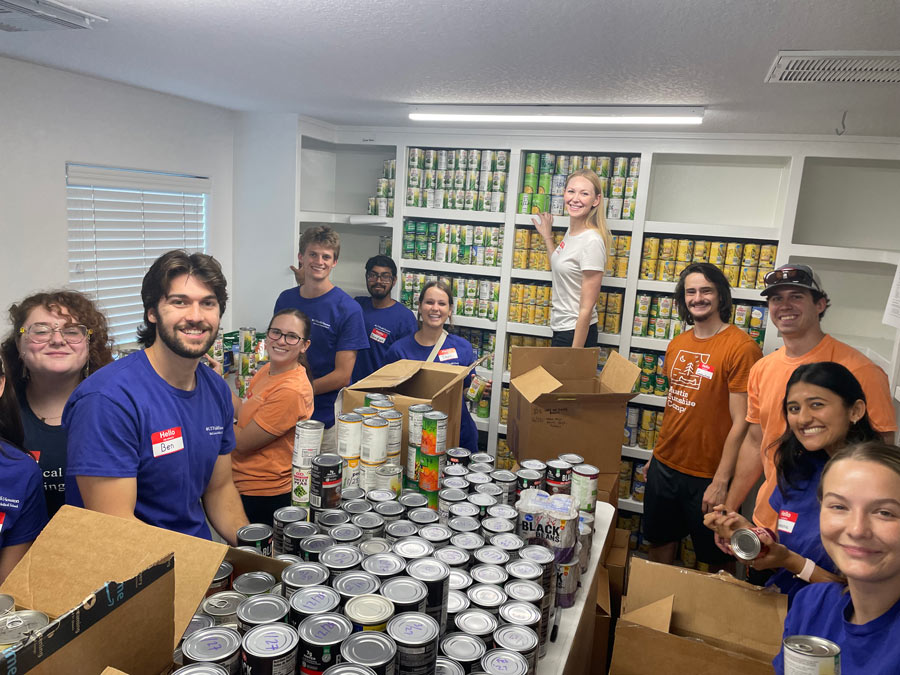
McGovern Medical School at UTHealth Houston students participate in the Professional Learning Underscored by Service program. (Photo by UTHealth Houston)
For future physicians, understanding a patient’s health means understanding more than what happens inside an exam room.
Through the Professional Learning Underscored by Service (PLUS) program at McGovern Medical School at UTHealth Houston, first- and second-year medical students are stepping into communities across Houston to see firsthand how food access, transportation, housing, financial stability, social connection, and other factors can shape health.
The longitudinal service-learning program, launched in 2024 as an evolution of the medical school’s traditional Day of Service, integrates community engagement directly into the preclerkship curriculum. Rather than participating in a single volunteer experience, students develop sustained relationships with community organizations while connecting what they encounter to lessons they are learning in medical school.
Students participate through their McGovern Societies in groups of approximately 10 and are accompanied by faculty facilitators. During visits, students take part in a critical lens walk through the surrounding neighborhoods, examining the communities’ strengths and challenges and learning directly from the organizations and people who live and work there. They then collaborate with their partner organizations on priorities identified by the organizations themselves.
Following each experience, students debrief with a faculty facilitator and complete written reflections. They return to the same organization during the fall and spring semesters of their first and second years, providing at least four opportunities to build relationships, listen to community perspectives, and better understand the connection between physicians, patients, and the community.
For one student working with Harlem River Farms, the experience prompted a shift in how they thought about developing treatment plans.
“It really encouraged me to be intentional about putting myself in my patients’ shoes and crafting a treatment plan that is not only scientifically backed, but practically sound and personalized,” the student wrote in their reflection.
The student described learning to look beyond addressing an immediate medical problem and consider what could prevent it from happening again. For instance, food access and other circumstances in a patient’s life could determine whether a treatment plan that works scientifically will also work for the individual receiving it.
That connection between community experiences and medical education is a central component of PLUS. Students use challenges identified alongside their community partners as part of their social determinants of health team-based learning, bringing observations from the community back into the classroom.
“PLUS gives students the opportunity to move beyond learning about social determinants of health in the abstract and see how challenges such as housing insecurity shape a person’s health and ability to navigate care,” said Anish Patnaik, MD, MPH, assistant professor in the Department of Pediatrics. “That firsthand understanding is essential. Physicians are better equipped to address barriers when they have seen how those barriers affect patients’ daily lives. PLUS bridges classroom learning with the lived realities of the communities our students will serve.”
Student participants reflect on their PLUS Program experiences >>