Summer Institutes
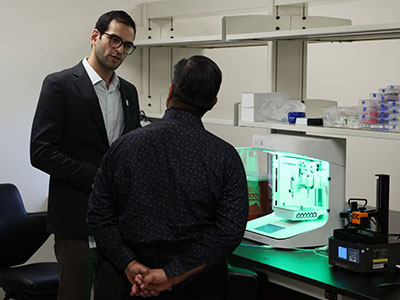
Engineering the Future of Congenital Heart Disease Care
The UTHealth Houston Children’s Heart Institute (CHI) Summer Scholar Institute offers an immersive, high-impact academic experience designed for exceptional high school and undergraduate students who are passionate about science, engineering, and medicine.
This highly selective program introduces motivated students to scientific research methodology and innovative, cutting-edge discoveries and technologies transforming the future of congenital heart disease (CHD) care. Through rigorous coursework, hands-on exposure to advanced bioengineering tools, and direct mentorship from leading physicians, scientists, and innovators, CiCHD Scholars gain early insight into translational medicine and biomedical innovation.
Course: 3D Bioprinting & Organ Biomanufacturing (Hybrid)
This flagship course begins with a Foundations in Discovery seminar that introduces students to the scientific lab environment, research and discovery process, hypothesis generation, study design, and scholarship process. Subsequently, students will utilize the skills acquired through the Foundations seminar to explore how next-generation bioengineering technologies are transforming the understanding and treatment of CHDs. Students will examine how engineered human cardiac tissues, stem cell technologies, and advanced biomanufacturing platforms are being developed to model structural heart defects, study disease mechanisms, and design regenerative therapies for CHD patients.
Participants will learn:
- Foundations of scientific discovery, including the research process, hypothesis generation, experimental design, and the principles of scholarship in biomedical science
- Foundations of cardiovascular bioengineering, with emphasis on congenital heart development and structural defects
- Principles of 3D bioprinting and organ biomanufacturing applied to cardiac tissue modeling
- Stem cell biology and patient-specific disease modeling for CHD
- Mechanobiology and how biomechanical forces influence heart development and malformations
- Translational science: advancing innovations from laboratory discovery to pediatric clinical application
- Innovation, entrepreneurship, and biomedical design thinking in the context of CHD solutions
Program Structure
Dates: June 15 – July 15, 2026
Format: Hybrid
- 2 Weeks Online (June 15 – June 26)
Interactive virtual lectures, journal clubs, and team-based projects - 2 Weeks On-Site at UTHealth (July 1 – July 15)
Laboratory demonstrations, 3D bioprinting and cardiovascular tissue engineering workshops, clinical guest sessions, and hands-on innovation activities
Final Symposium:
CiCHD Scholars will present their capstone innovation projects to faculty, clinicians, families, and invited guests.
Program Highlights
- Direct exposure to real-world biomedical innovation
- Interactive workshops with CHI scientists and physicians
- Small cohort experience (only 10 students accepted)
- CICHD Scholars under the age of 16 are eligible to participate in virtual seminars and workshops only
- Personalized mentorship and collaborative team projects
- Development of critical thinking, leadership, and scientific communication skills
Stipend & Cost
- Full UTHealth Houston CHI Stipend: $2,000 per student (spent towards training expenses)
- No tuition cost for the inaugural cohort
- Housing accommodations and other associated expenses for the on-site portion of the program are the responsibility of each student
Admission
This is a competitive, limited-capacity program designed for motivated and academically strong high school and undergraduate students interested in STEM, medicine, and innovation.
Selection is based on:
- Academic excellence
- Demonstrated curiosity in science/engineering
- Commitment to collaborative learning
Application & Eligibility
Eligibility
Applicants must meet the following criteria:
- High school students currently enrolled in grades 9–12, or undergraduate students
- Strong academic standing and demonstrated interest in science, engineering, or medicine
- Ability to actively participate in the online program components
- Students under the age of 16 are eligible to participate in the virtual seminars and workshops only
Application Requirements
Applicants must submit:
- Completed online application form
- Current resume or CV highlighting academic achievements and relevant experiences (strongly recommended for undergrad students, optional for high school students)
Applications are reviewed on a rolling basis, and admission decisions are made based on the strength of the applicant’s academic record, demonstrated curiosity, and potential to benefit from the program.
Why Join?
At CiCHD, we believe the next generation of innovators will transform how congenital heart disease is understood and treated. This program offers early exposure to advanced technologies — including 3D bioprinting and organ manufacturing — while cultivating the mindset of future physician-scientists and biomedical engineers.
Join us this summer and take your first step toward shaping the future of medicine.
Location
UTHealth Houston Center for Innovation in Congenital Heart Disease (CiCHD)
McGovern Medical School
Suite MSB 2.131, 6431 Fannin Street
Houston, Texas 77030
The CiCHD laboratories are located within the Texas Medical Center (TMC)—the largest medical complex in the world—and feature newly renovated research and innovation spaces designed to support cutting-edge biomedical discovery and translational research. The facility houses advanced bioengineering and biomanufacturing technologies, including state-of-the-art 3D bioprinting platforms, stem cell and tissue engineering laboratories, and collaborative innovation workspaces.
The CiCHD space is located immediately adjacent to Memorial Hermann Children’s Hospital, creating a unique environment where scientific discovery and clinical care intersect. This close proximity provides students with meaningful exposure to the clinical context of congenital heart disease, allowing them to better understand how biomedical innovations developed in the laboratory translate into real-world pediatric care.
Capacity: 10 Students
- Part 1 – Online: 38
- Part 2 – Onsite: 12
Program Dates: June 15 – July 15, 2026