Magnetic Seizure Therapy vs ECT: A New Era in Convulsive Treatments for Depression?
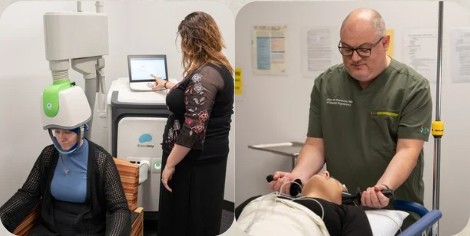
A Long-Standing Trade-Off in Psychiatry
For decades, clinicians treating severe and treatment-resistant depression have faced a difficult balance:
Maximize efficacy (ECT)
Minimize cognitive side effects
Electroconvulsive therapy (ECT) remains one of the most effective treatments in psychiatry—but concerns about memory and cognition continue to limit its acceptance.
A landmark randomized clinical trial published in The Lancet Psychiatry introduces a compelling alternative:
Magnetic Seizure Therapy (MST)
What Is Magnetic Seizure Therapy?
MST is a next-generation convulsive therapy that:
- Uses magnetic stimulation instead of electrical current
- Induces a therapeutic seizure (like ECT)
- Produces more focal brain activation
Unlike ECT, MST is less affected by skull conductivity, allowing:
More targeted stimulation
Reduced spread to memory-related brain regions
The CREST-MST Trial: A Landmark Study
This multicenter, randomized, double-blind trial included:
- 239 patients with major depressive disorder
- Conducted across the United States and Canada
- Compared:
- MST
- Right unilateral ultra-brief ECT (RUL-UB ECT)
The primary question:
Can MST match ECT in effectiveness while improving cognitive safety?
Key Findings
1. MST Is as Effective As ECT
- Remission rates:
- ECT: 27.8%
- MST: 22.5%
MST met non-inferiority criteria, meaning it is clinically comparable in efficacy
2. Significantly Better Cognitive Outcomes
One of the most striking findings:
- Memory worsening:
- ECT: 17.3%
- MST: 2.7%
👉 MST showed substantially fewer cognitive side effects, especially in autobiographical memory
3. Faster Recovery After Treatment
Patients receiving MST experienced:
- Faster reorientation after seizures
- Better performance across:
- Memory
- Executive function
- Attention
4. Comparable Effect on Suicidal Ideation
- MST was non-inferior to ECT in reducing suicidal ideation
This is critical, as convulsive therapies are among the most effective interventions for acute suicidality.
Why This Matters
One of the biggest barriers to ECT is not efficacy—it is acceptability.
- Fear of memory loss
- Stigma
- Misconceptions
This study directly addresses that barrier:
MST may offer the benefits of ECT with fewer cognitive trade-offs
A Critical Insight: Precision in Brain Stimulation
The advantage of MST likely comes from:
- More focal stimulation (5–10× more targeted than ECT)
- Relative sparing of:
- Hippocampus
- Medial temporal structures
Regions closely linked to memory function
Clinical Implications
1. A New Option for Patients Who Refuse ECT
Many patients decline ECT due to cognitive concerns.
MST could expand access to life-saving treatments
2. Potential First-Line Convulsive Therapy
The study suggests MST could be considered:
A first-line convulsive treatment, not just an alternative
3. Better Patient-Centered Care
MST aligns with modern priorities:
- Efficacy
- Safety
- Patient preference
4. Integration into Existing Systems
Importantly:
- MST can be implemented within existing ECT infrastructure
- Requires relatively minor adaptations
Important Considerations
As with any study, context matters:
- Remission rates were lower than older ECT trials (~30%)
- Study excluded psychotic depression (often more responsive to ECT)
- Real-world outcomes may differ
Additionally:
Bitemporal ECT (common in practice) was not used in this trial, which may influence comparisons
UTHealth Houston Perspective
At the Center for Interventional Psychiatry at UTHealth Houston, we are closely following—and helping drive—the evolution of:
- Convulsive therapies
- Precision neuromodulation
- Rapid-acting interventions for severe depression
MST represents a major step forward:
Bridging the gap between efficacy and tolerability
As we expand access to advanced treatments—including ECT, ketamine, and accelerated TMS—emerging therapies like MST will play an increasingly important role.
Final Thoughts
This study marks a turning point in interventional psychiatry.
For decades, ECT has set the standard for effectiveness—but at a cognitive cost for some patients.
MST challenges that paradigm:
Comparable efficacy, with improved cognitive safety
If validated and widely implemented, this approach could:
- Increase treatment acceptance
- Reduce stigma
- Expand access to life-saving care
And most importantly:
Offer patients a more tolerable path to recovery
Reference
Blumberger DM, McClintock SM, Thorpe KE, et al. Magnetic seizure therapy versus right unilateral ultra-brief electroconvulsive therapy for depression (CREST–MST): a randomized, double-blind, non-inferiority trial. The Lancet Psychiatry. 2026.
Contact
Request for Second Opinion Form – https://Go.uth.edu/CIPIntake (external link)
Phone – (713) 486-2621
Fax – (713) 500-2728
E-mail – [email protected]
Website – https://go.uth.edu/CIP (external link)
Disclaimer
This article was created with the assistance of artificial intelligence (AI) to help organize and refine the presentation of scientific information. All medical and scientific content has been reviewed and approved by Joao L. de Quevedo, MD, PhD, Executive Director of the Center for Interventional Psychiatry at the John S. Dunn Behavioral Sciences Center at UTHealth Houston. The content is intended for educational and informational purposes only and does not substitute for professional medical advice.