Intranasal Esketamine Therapy (SPRAVATO®)
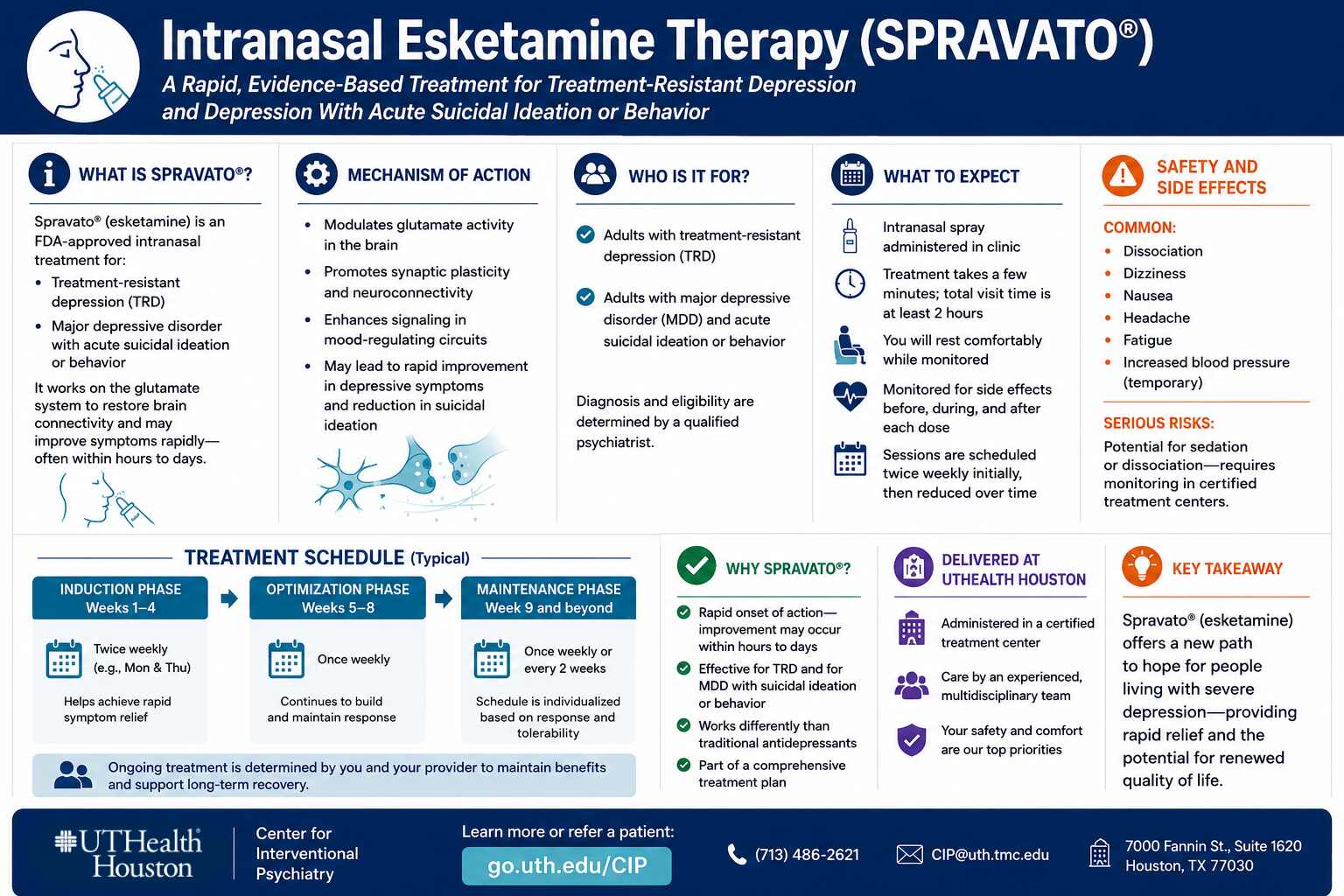 Spravato® (esketamine) is an intranasal antidepressant approved by the U.S. Food and Drug Administration (FDA) for adults with treatment-resistant depression (TRD) and for major depressive disorder with acute suicidal ideation or behavior, when used in conjunction with an oral antidepressant. Esketamine acts on the glutamate system, promoting synaptic plasticity and producing rapid antidepressant effects, often within hours to days, distinct from traditional monoaminergic antidepressants.
At the UTHealth Houston Center for Interventional Psychiatry, intranasal esketamine is delivered within a structured, evidence-based clinical program, integrated with comprehensive psychiatric care and matched to the appropriate level of care.
Who May Be Appropriate for Esketamine Therapy
Esketamine therapy may be considered for patients who:
- Have treatment-resistant depression, defined by inadequate response to multiple antidepressant trials
- Experience severe depressive symptoms, including those with acute suicidal ideation, when clinically appropriate
- Have not tolerated or benefited from standard pharmacologic treatments
- Require rapid symptom improvement as part of a broader treatment plan
All patients undergo a thorough evaluation to confirm the diagnosis, review prior treatments, and assess the medical and psychiatric appropriateness of esketamine therapy.
Treatment Process and Dosing Schedule
Intranasal esketamine is administered in a certified clinical setting under direct medical supervision, in accordance with FDA and REMS requirements. Because of potential side effects—including dissociation, dizziness, sedation, nausea, and transient increases in blood pressure—patients are monitored for at least two hours following each treatment session and must arrange transportation home.
Treatment typically follows a phased approach:
- Induction phase: twice weekly administration for 4 weeks
- Continuation phase: once weekly administration for an additional 4 weeks
- Maintenance phase: individualized dosing, continuing either weekly or every two weeks, based on clinical response and tolerability
Treatment frequency and duration are adjusted over time using measurement-based assessments and shared decision-making.
Safety and Monitoring
Safety is a central component of esketamine treatment at the Center. Vital signs and clinical status are monitored throughout each visit, and potential risks, benefits, and alternatives are reviewed carefully with patients before initiation and throughout treatment.
Integration With Ongoing Care
Esketamine therapy is not provided as a standalone intervention. It is integrated with:
- Ongoing medication management
- Psychotherapy, when indicated
- Regular clinical follow-up and outcome monitoring
Depending on symptom severity and overall clinical needs, patients receiving esketamine may be treated within outpatient, IOP, PHP, or inpatient settings.
Through this structured, closely monitored, and integrated approach, the Center aims to provide safe and effective access to intranasal esketamine therapy as part of comprehensive care for individuals with severe and treatment-resistant depression.