Tripathi selected as 2026 SOBP Travel Fellowship Award recipient
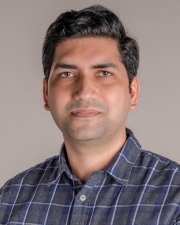 Ashutosh Tripathi, PhD, postdoctoral research fellow in the Faillace Department of Psychiatry and Behavioral Sciences, was recently selected as a recipient of the 2026 Society of Biological Psychiatry (SOBP) Travel Fellowship Award, one of the Society’s prestigious national awards.
The fellowship supports his participation in the 2026 SOBP Annual Meeting, which will be held April 30–May 2, 2026, at the Marriott Marquis in New York. Selection criteria included past excellence in scholarly work, potential for scholarly growth in biological psychiatry and clinical neuroscience, and overall excellence.
As part of the award, he will receive a stipend of $2,000 to help with expenses associated with the 2026 meeting. He will also have his registration fee waived for the 2026, 2027, and 2028 SOBP Annual meetings. Tripathi will also be matched with a mentor to guide him and will be participating in the Society’s Early Career Investigator Program throughout the 2026 meeting.
His research examines how neuroimmune signaling regulates brain function and behavior, with a primary interest in cell-type–specific mechanisms. His work in mouse models and human samples has shown that type I interferon (IFN-I) signaling contributes to stress-induced neuroinflammation and synaptic changes.
He now aims to uncover the molecular mechanisms through which astrocytic IFNAR signaling influences synaptic and behavioral outcomes. Using state-of-the-art techniques such as single-cell RNA sequencing, spatial transcriptomics, and Split-TurboID–based proteomics, his goal is to identify molecular mechanisms at the astrocyte–synapse interface that may underlie stress-related psychiatric disorders.
The SOBP annual meeting provides an unparalleled platform to present these findings and engage with experts bridging molecular neuroscience and clinical psychiatry.
Tripathi credits the departmental work he’s done that’s been supported by seed grant funding. He’s also been a part of the Career Development and Research Excellence Program, which aims to facilitate research training and career development for the junior investigators, trainees, and fellows in the department.
He is also grateful for working with and continued guidance from Anilkumar Pillai, PhD.
“Dr. Pillai has provided an exceptional balance of intellectual freedom and mentorship,” Tripathi said. “His support has allowed me to pursue innovative, high-risk ideas while building the skills necessary for an independent research career.”