Champions of Clinical Learning Environment: Kawal Bir, MD, and Elena Zamora, MD, MHA
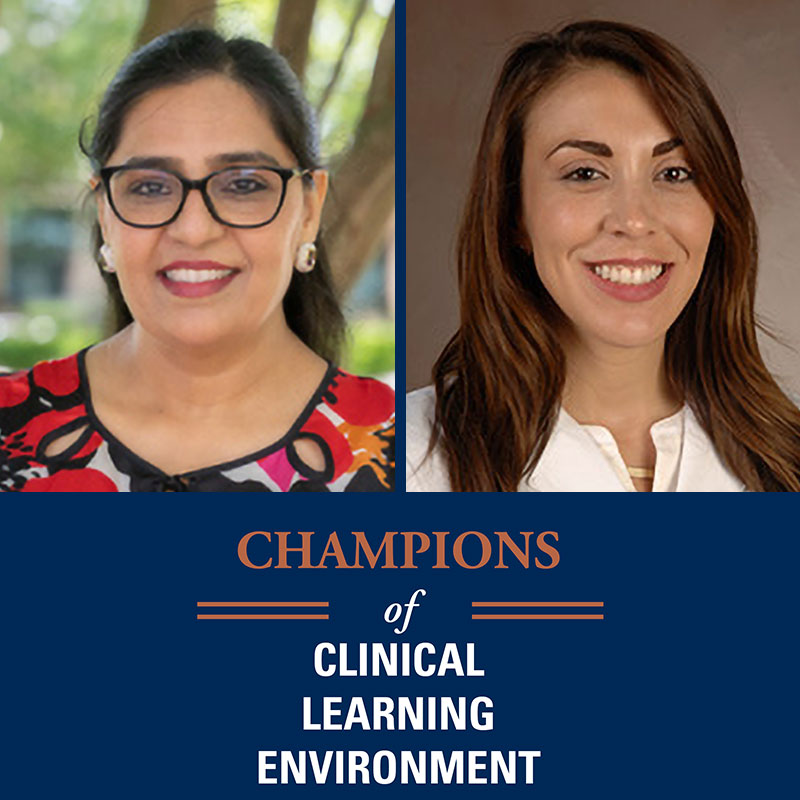
The Office of Professionalism at McGovern Medical School congratulates Kawal Bir, MD, and Elena Zamora, MD, MHA, on being honored as Champions of the Clinical Learning Environment.
Champions are identified through the Learning Environment Surveys, which are sent to students as an invitation to recognize faculty whose everyday actions have meaningfully shaped their clinical education.
This series will spotlight each Champion of the Clinical Learning Environment. Each issue will highlight educators who have made a lasting impression on third-year medical students during clerkship rotations by fostering clinical learning environments rooted in professionalism, compassion, and academic rigor.
Kawal Bir, MD
Assistant professor, Louis A. Faillace, MD, Department of Psychiatry and Behavioral Sciences
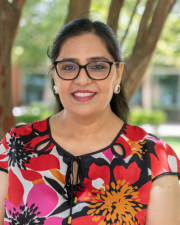
Kawal Bir, MD, serves as the attending physician for inpatient psychiatry and emergency psychiatry consultations liaison services at Harris Health Lyndon B. Johnson Hospital. As the only dual-board-certified psychiatrist in both adult and child/adolescent psychiatry at Harris Health LBJ, she has filled a critical service gap and expanded psychiatric care for some of the most vulnerable populations.
Since joining the faculty in 2015, Bir has distinguished herself as an exceptional clinician, educator, administrator, and leader. Her contributions are not only extensive in scope but deeply impactful in every domain of academic medicine.
How would you describe your teaching philosophy?
My teaching philosophy centers on creating a learning environment that is safe, collaborative, and deeply human. Psychiatry offers a unique opportunity to teach not only diagnostic and therapeutic skills, but also empathy, communication, and self-awareness.
I aim to model curiosity and humility, showing students that it is acceptable not to have all the answers, as long as we remain open to learning from our patients and from one another. I encourage students to approach every patient encounter with respect and genuine interest, recognizing that each story teaches us something about the mind, resilience, and healing.
Do you have a particular practice that has proved effective in your clinical teaching?
One approach that has proved effective is engaging students in reflective discussions after patient encounters. We take time to discuss what went well, what was challenging, and what emotions the experience evoked. This practice helps normalize the emotional complexity of clinical work and fosters empathy and self-awareness. I also prioritize giving students space to lead interviews under supervision, building their confidence while ensuring they feel supported and valued as members of the care team.
What do you enjoy most about working with medical students during their training?
I most enjoy guiding students as they grow into confident, compassionate clinicians. Whether helping them formulate appropriate questions, gather collateral information, or demonstrating how to lead a sensitive psychiatric interview, I value watching them absorb and apply these nuances in their own encounters.
Over the course of a rotation, it is rewarding to see their confidence build day by day. The most fulfilling moments occur when students no longer require as much guidance and are independently conducting thoughtful, patient-centered interviews. In those moments, I feel a deep sense of fulfillment knowing I have played a small role in helping them find their footing as future physicians.
How has teaching shaped your own clinical practice or professional growth?
My mother is a teacher, and I often reflect on how teaching mirrors many of the instincts a parent feels toward a child. You want learners to explore, make mistakes, and discover their strengths, while also guiding and protecting them so their growth feels supported rather than overwhelming. For me, teaching is not simply a role, but a calling. It gives my clinical work depth and meaning, and I would feel incomplete without it. Each student teaches me something new, and their curiosity and insight keep me engaged, humble, and energized.
Teaching has also made me a more reflective and intentional clinician. Students’ questions challenge me to remain current and to think critically about my approach to patient care. Teaching has strengthened my communication skills with both patients and colleagues by reinforcing the importance of expressing complex ideas with clarity and compassion. Ultimately, teaching grounds me in the values that make psychiatry meaningful: empathy, connection, and lifelong learning. Through my students, I am continually reminded to approach psychiatry, and life itself, with the sense of wonder and openness I hope to inspire in them.
How do you foster a supportive learning environment for students on their clerkship rotations?
I prioritize psychological safety by ensuring students feel comfortable asking questions, expressing uncertainty, and sharing their perspectives. I strive to model respect for every member of the care team and encourage students to do the same. By fostering a culture of openness, I hope students feel empowered to take initiative and view themselves as valued contributors to patient care, not merely observers.
What advice would you give to new faculty or residents who are starting their clinical teaching journey?
Begin with empathy, both for your students and for your patients. Remember what it felt like to be in their position, balancing excitement with uncertainty. Meet learners where they are, then guide them forward. With support and trust, students often exceed expectations.
Your words, actions, and responses during patient encounters or difficult family conversations leave a lasting impression. Students remember not only what you say, but how you respond. Be mindful, intentional, and patient, and lead by example. The lessons conveyed through compassion and professionalism often have a greater impact than words alone. Above all, allow your passion for teaching and patient care to be visible, as genuine enthusiasm inspires learners more than anything else.
Elena Zamora, MD
Assistant professor, director of Medical Student Education, Department of Family and Community Medicine
McGovern Society leader
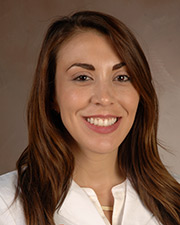
Elena Zamora, MD, is a board-certified family medicine practitioner and lifestyle medicine advocate who integrates wellness and balance into every aspect of her life and teaching. Zamora models the principles she teaches — prioritizing self-care, mindfulness, and lifelong growth — while balancing a fulfilling career with her young family. Her leadership in creating a supportive, human-centered learning environment has inspired countless students to pursue primary care with renewed passion and confidence.
A native Houstonian, she received her medical degree from the American University of Antigua and completed her residency training at UTHealth Houston. She has been recognized with numerous teaching awards, including the Faculty for Tomorrow Award from the Society of Teachers of Family Medicine.
How would you describe your teaching philosophy?
I believe the most effective way to teach is through example. I live the principles of lifestyle medicine in my own life, finding balance among my health, career, family, and personal growth. By demonstrating joy in my career, I aim to show learners that medicine can be deeply fulfilling and sustainable.
My vision is for learners to understand that caring for themselves is just as essential as caring for their patients. Through self-care, they not only uphold their professional responsibilities and commitment to medicine but also cultivate happiness, resilience, and long-term satisfaction in their work.
Do you have a particular practice that proves effective in your clinical teaching and fosters a supportive learning environment for our students on their clerkship rotations?
One approach I have found highly effective is encouraging students to think out loud. When students verbalize their reasoning, I can better understand their thought process — how they are gathering information, forming differentials, and prioritizing next steps.
This open dialogue allows me to tailor my teaching to their individual needs and guide them in developing stronger clinical reasoning skills. It also creates a supportive learning environment in which curiosity and reflection are valued, helping students gain confidence in formulating assessments and plans. I also stress the importance of building confidence in physical examination skills and often say, “Learn and practice to trust your hands.”
What do you enjoy most about working with medical students during their training?
What I enjoy most is watching students transform — from hesitation to confidence, and from memorizing facts to understanding the application of medicine. I am especially delighted when students tell me they were surprised to enjoy family medicine, because it means the field I love had the opportunity to surprise and inspire them as well.
What advice would you give to new faculty or residents who are starting their clinical teaching journey?
My advice to new faculty is to remember that effective teaching starts with humility, curiosity, and empathy. You do not need to have all the answers; what matters most is creating a space in which students feel safe to ask questions and think critically. Recognize that small moments — taking time to explain your thought process, checking in after a challenging case, or celebrating small wins — can have a lasting impact. Most important, let your enthusiasm for medicine show. When learners see your genuine passion for patient care and teaching, it becomes contagious.