New center driving breakthroughs in congenital heart disease
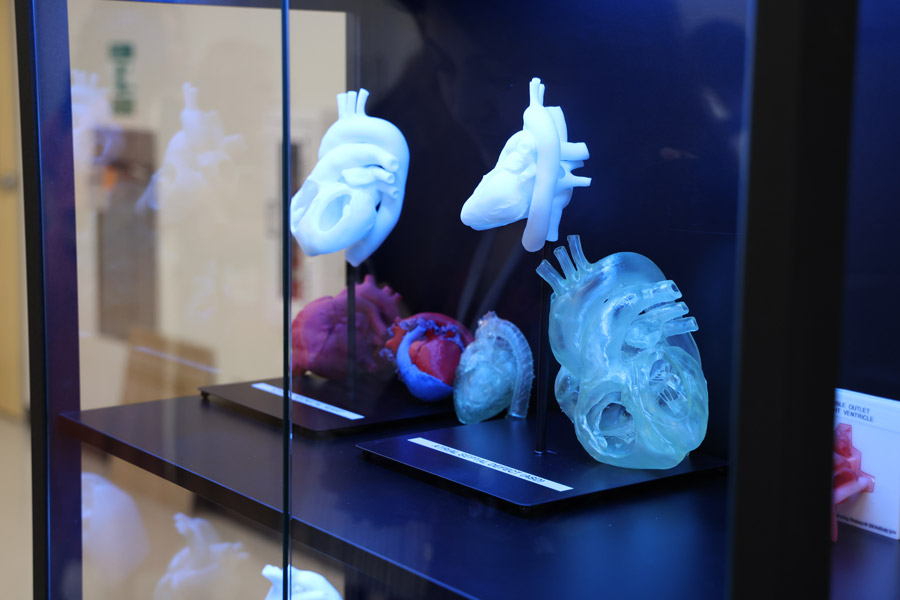
A new multidisciplinary center at McGovern Medical School at UTHealth Houston is bringing together experts across medicine, science, and engineering to transform how congenital heart disease is understood and treated across a patient’s lifetime.
Designed to bridge discovery and care, the Center for Innovation in Congenital Heart Disease (CiCHD) will focus on advancing research, developing technologies, and translating those innovations into clinical solutions.
“We want to establish the Center for Innovation in Congenital Heart Disease as a nationally leading hub for breakthrough technologies, personalized regenerative therapies, and translational solutions that redefine outcomes for individuals with congenital heart disease from infancy through adulthood,” said Holly Bauser-Heaton, MD, PhD, professor and John P. and Kathrine G. McGovern Distinguished Chair in the Department of Pediatrics.
The center was founded through collaboration with clinicians, scientists, bioengineers, trainees, and community and industry partners. The team already has plans to expand the center with the recruitment of postdoctoral and clinical fellows, as well as students currently enrolled in MD/PhD, PhD, and masters programs.
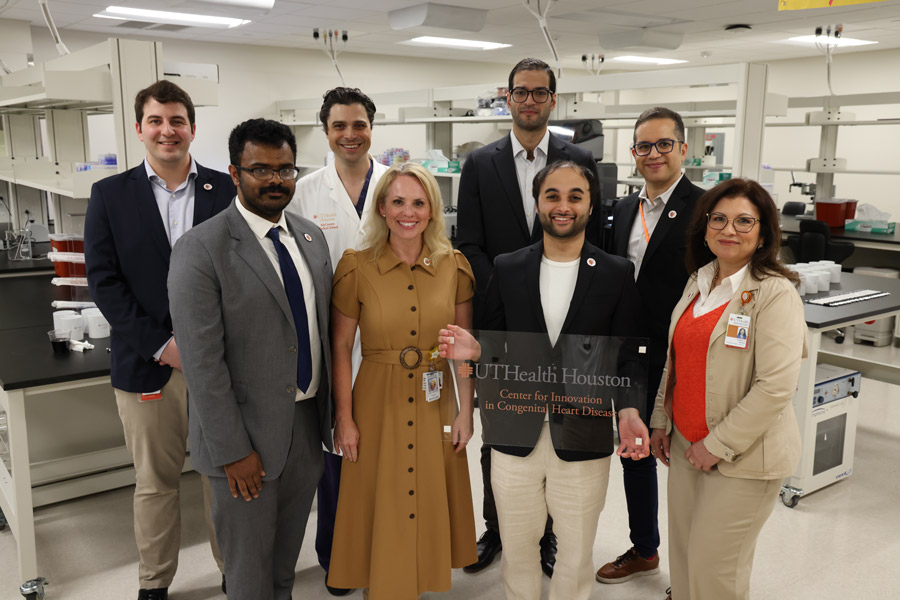
“We invited several people that we’ve collaborated with over the years to not only join us, but to come here to Houston,” Bauser-Heaton said. “A large cohort of the group here today came from Atlanta, where our collaborative efforts happened at Emory University.”
Researchers at the center are actively involved in a number of projects centered on bioengineering and 3D bioprinting to better understand and treat complex cardiovascular conditions. At the core of this work is the development of human-based, lab-grown models that replicate the structure and function of organs and tissues. One major effort focuses on recreating early human heart development using stem cells and bioprinted structures, allowing scientists to study how congenital conditions such as hypoplastic left heart syndrome originate and evolve.
“We are experts in nanobiomaterials and highly interested in developing new biomaterial solutions for those who are interested in coming up with new developments in biomedical research,” said Vahid Serpooshan, PhD, associate professor in the Department of Pediatrics.
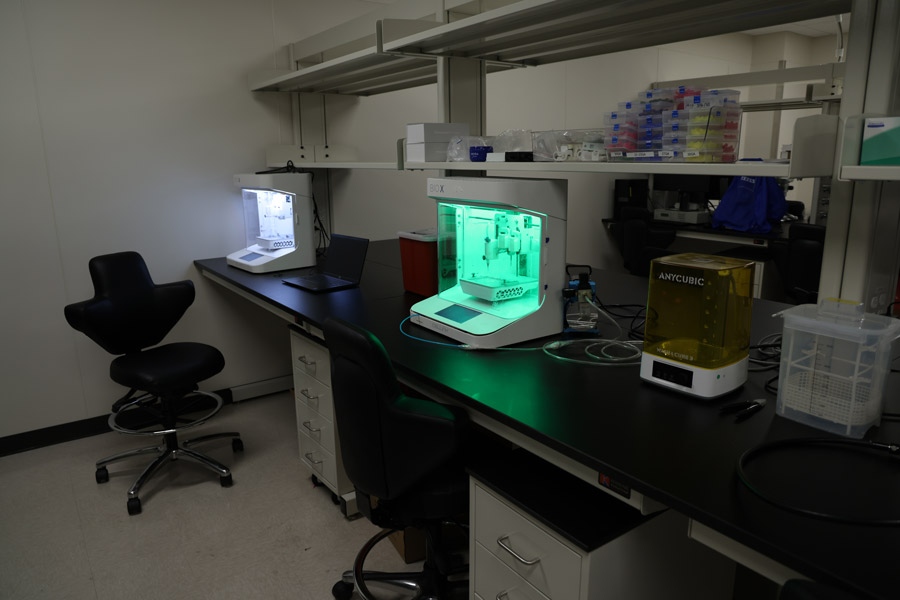
The team is also applying these technologies to model specific cardiovascular diseases including pulmonary vein stenosis and pulmonary artery atresia. Creating bioprinted vascular systems that mimic real human anatomy allows researcher to study how changes in blood flow, oxygen levels, and cellular signaling contribute to disease progression.
Beyond the heart, research extends to complications associated with congenital heart disease, such as Fontan-associated liver disease. By bioprinting liver models, investigators can examine how altered circulation impacts liver function over time to better understand the conditions that lead to fibrosis, cirrhosis, and cancer.
“A lot of these projects are minimizing the need for animal research, which is somethingthat is highly relevant in today’s landscape,” Serpooshan said.
Researchers in the center are also building systems to simulate ischemic heart injury by introducing controlled blockages in bioprinted vessels, enabling real-time testing of therapies. Work in regenerative medicine, as well as models to study endocardial fibroelastosis, complements these efforts.
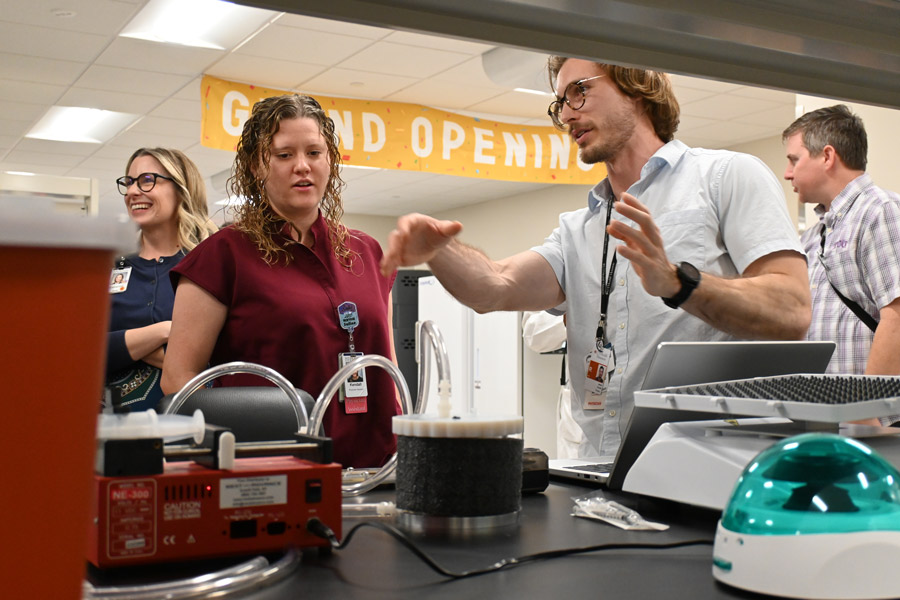
Another major component of the Center for Innovation in Congenital Heart Disease is the education of future physicians and scientists. With this in mind, the center created the CiCHD Summer Scholar Institute, an interdisciplinary approach to provide real-world, hands-on training for high school and undergraduate students.
“We are at a critical juncture in medicine with the youth of the United States and North America in terms of all that we do,” said Damien LaPar, MD, MSc, professor and John P. and Kathrine G. McGovern Distinguished Chair in the Department of Cardiothoracic and Vascular Surgery. “We want to be a leader in that field. We want to be a place that has an impact in that space.”
The institute will provide a unique opportunity for selected individuals to join the center for a four-week experience, with two weeks completed virtually and two weeks on-site. Students will begin by learning foundations and scientific methods before advancing to understanding how to conceptualize research projects, while receiving hands-on experience with the technologies available in the center.
“At the Center for Innovation in Congenital Heart Disease, we believe that the next breakthroughs will come from bold, interdisciplinary collaboration,” Bauser-Heaton said. “We are deeply grateful to UTHealth Houston leadership, our colleagues, partners, and supporters, who have made this vision possible.”