Institute of Perioperative Medicine celebrates first year, advances
Each year, millions of patients survive surgery only to face a different and often overlooked threat: organ failure in the days that follow.
Perioperative death remains the third leading cause of death in the United States, behind heart disease and cancer, with most surgical mortality linked to perioperative organ injury.
At UTHealth Houston, researchers at the Institute of Perioperative Medicine are working to change that reality.
One year after its official launch, the institute is already translating laboratory discoveries into clinical trials, expanding its national footprint, and training the next generation of physician-scientists focused on reducing perioperative organ injury.
“Over the past year, the Institute of Perioperative Medicine has shown the power of collaboration and a shared commitment to advancing patient care,” said LaTanya J. Love, MD, dean of McGovern Medical School at UTHealth Houston, H. Wayne Hightower Distinguished Professor in the Medical Sciences, and executive vice president of university affairs at UTHealth Houston. “From building a multidisciplinary program to translating research into real-world impact, this progress reflects both the strength of its vision and the dedication of the teams behind it. I am proud of what has been accomplished and look forward to what comes next.”
Building on that momentum, institute leaders say the work is addressing one of the most persistent challenges in modern surgical care.
“Anesthesia and surgery have become remarkably safe over the last several decades,” said institute co-director Holger Eltzschig, MD, PhD, associate vice president for translational research and perioperative programs at UTHealth Houston, as well as professor and John P. and Kathrine G. McGovern Distinguished University Chair at McGovern Medical School. “What continues to put patients at risk is what happens afterward. Organ injury in the perioperative period remains one of the leading causes of complications and death.”
From a single lab to a multidisciplinary institute
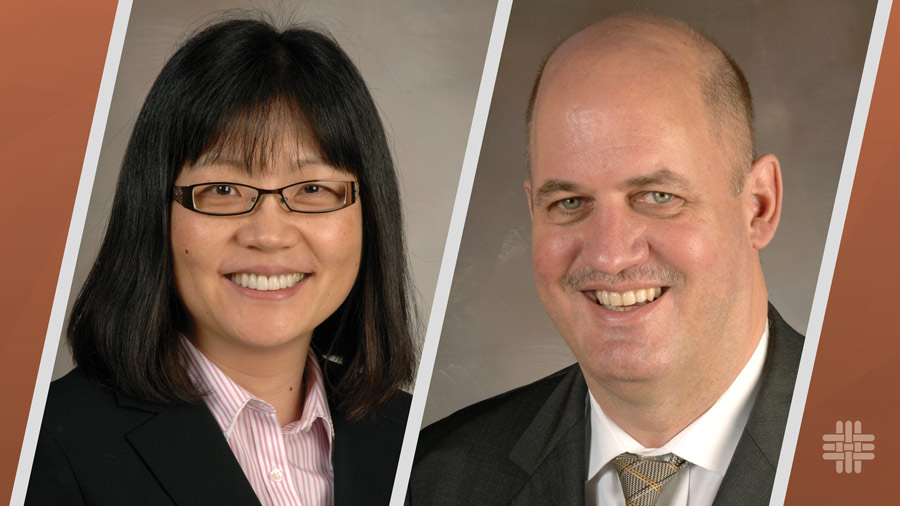
The institute’s rapid growth reflects nearly a decade of groundwork. What began in 2016 as a small research effort led by Eltzschig and co-director Cynthia Ju, PhD—who is a professor, vice chair of research, and the Joseph C. Gabel, MD, Endowed Chair in Anesthesiology at McGovern Medical School, as well as a faculty member at UT MD Anderson Cancer Center UTHealth Houston Graduate School of Biomedical Sciences—has evolved into a collaborative enterprise spanning six specialized centers.
“What started with just our laboratories has grown into a comprehensive institute with a shared mission,” Eltzschig said. “We are bringing together experts who are focused on different organs and different approaches, but all working toward preventing perioperative organ injury.”
The institute now includes the Center for Perioperative Artificial Intelligence Research, the Center for Outcomes Research, the Center for Pulmonary and Critical Care Medicine, the Center for Hepatobiliary and Gastrointestinal Research, and the Center for Aging and Cognitive Dysfunction. Each contributes to a broader bench-to-bedside strategy that moves discoveries from the laboratory into patient care.
“Holger and Cynthia’s vision to bring this group of highly accomplished, as well as up-and-coming, investigators together in a multicenter, multidisciplinary architecture transcends departmental and school boundaries to accelerate discovery and targeted translational research,” said Kevin Morano, PhD, senior vice president for Academic and Faculty Affairs.
Advancing research from bench to bedside
Over the past year, the institute has made significant progress in identifying the mechanisms behind perioperative organ injury and testing potential therapies.
One of the most exciting milestones is a handful of clinical trials sponsored by the Department of Defense, the NIH, and private industry. One such study is evaluating an FDA-approved dialysis drug to determine whether it can benefit critically ill patients in the intensive care unit who are experiencing acute lung injury. For more than two decades, Eltzschig has investigated how the body responds to low oxygen levels—a process known as hypoxia signaling—and how this response can protect the lungs during severe illness. This clinical trial builds directly on that foundational research.
The initial phase of the study focused on patients with COVID-19 and produced promising results. Funded by the U.S. Department of Defense, these findings were published in JCI Insight and provided critical proof of concept for this novel therapeutic approach.
Building on that success, industry partners are now supporting a second clinical trial. This next phase will expand the investigation to patients with all forms of pneumonia. Together, these efforts have the potential to open a new pathway for treating serious lung conditions using a medication that is already widely available.
“This is a clear example of how we take discoveries from the lab and move them into clinical trials,” Eltzschig said. “That translation is at the core of what we do.”
Another promising development involves a widely used medication, omeprazole. Researchers found in preclinical studies that the drug may help prevent acute kidney injury. A pilot clinical trial conducted through the institute showed a 15% reduction in kidney injury among surgical patients.
“Without the collaboration between our research teams and the Center for Outcomes Research, we would not have been able to test this so quickly in patients,” Ju said. “That kind of integration is what makes this institute unique.”
Harnessing artificial intelligence and big data
Artificial intelligence has also emerged as a powerful tool in the institute’s first year.
In collaboration with data scientists, researchers analyzed outcomes from more than 28 million patients to better understand the frequency and impact of perioperative organ injuries. The study identified acute kidney injury as the most common complication and ranked various injuries based on their effect on patient outcomes.
“AI allows us to look at patterns on a scale that was not possible before,” Ju said. “It helps us identify which patients are most at risk and where interventions can have the greatest impact.”
Building the next generation of scientists
Beyond research, the institute has made significant strides in education and workforce development.
Through federally funded training programs, including a T32 grant, the institute is preparing physician-scientists to specialize in perioperative medicine. Several trainees have already secured competitive career development awards and research funding, positioning them for independent careers.
“One of our core missions is to invest in the next generation,” Eltzschig said. “These trainees will carry this field forward and expand the impact of perioperative research.”
Looking ahead
As the institute enters its second year, leadership is focused on expanding clinical trials, strengthening industry partnerships, and continuing to recruit top talent.
Early successes have reinforced the institute’s central premise that preventing organ injury after surgery can dramatically improve patient outcomes.
“Our goal is to understand why these injuries occur and to develop therapies that can prevent them,” Ju said. “We are already seeing progress, but there is still much more to do.”
With a growing portfolio of research, increasing national visibility, and a collaborative model that spans disciplines, the Institute of Perioperative Medicine is positioning itself as a leader in a field that could reshape surgical care.
“Ultimately, this is about making surgery safer,” Eltzschig said. “If we can prevent organ injury, we can save lives.”