Building on a legacy of discovery in pediatrics
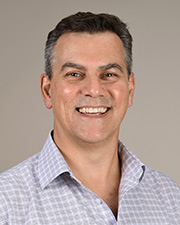
When Jacqueline Hecht, PhD, arrived in Houston in 1977, she expected to stay for no more than two years. Nearly five decades later, her career has helped shape genetic research, education, and clinical care at McGovern Medical School at UTHealth Houston, leaving a lasting impact on the institution and the researchers she has mentored.
Now, as Hecht retires from her leadership roles in the Department of Pediatrics, the programs she helped establish will enter a new chapter under Paul A. Trainor, PhD.
Trainor joined the department in 2026 as vice chair for research and division chief of the Pediatric Research Center, succeeding Hecht after more than 45 years of service to UTHealth Houston. His arrival brings new opportunities to expand the center’s research efforts while preserving the collaborative environment that has defined its work.
For Trainor, following a longtime leader means understanding what made the center successful in the first place.
“It requires respect for the culture and traditions that you established, combined with a willingness to build on those principles and evolve them,” Trainor said in remarks honoring Hecht’s career.
A career that helped shape genetic research
Hecht’s journey to Houston began when genetic counseling was still a relatively new profession. After graduating from one of the nation’s earliest genetic counseling programs in 1974, she arrived in the Texas Medical Center in 1977 as one of only two genetic counselors working in Houston.
What she initially envisioned as a short stay became a career spanning clinical genetics, scientific discovery, and academic leadership.
In 1989, Hecht established the UTHealth Houston Genetic Counseling Program, creating opportunities for students to enter a growing profession. She also developed research programs investigating the genetic and molecular causes of birth defects, including cleft lip and palate, clubfoot, and pseudoachondroplasia, a rare inherited disorder affecting bone growth.
Her work brought together genetic discovery, clinical observations, and laboratory investigations to better understand how these conditions develop. She also participated in natural history studies of achondroplasia and spent more than three decades working with Little People of America, including service on its Medical Advisory Board.
In 2006, Hecht became division chief of the Pediatric Research Center, where she helped develop a basic science research program focused on understanding the biological mechanisms underlying pediatric conditions.
Her leadership eventually extended beyond the medical school. In 2012, she became associate dean for research at UTHealth Houston School of Dentistry, where she helped establish the Center for Craniofacial Research, strengthening research connections between the schools of dentistry and medicine.
Hecht also played an instrumental role in expanding UTHealth Houston’s participation in the Rolanette and Berdon Lawrence Bone Disease Program of Texas, serving as managing co-director for five years. She was named vice chair for research in the Department of Pediatrics in 2019.
Her contributions have earned recognition throughout her career. In 2024, she received the Distinguished Scientist Award in Craniofacial Biology Research from the International Association for Dental, Oral, and Craniofacial Research, one of the organization’s highest scientific honors. The award recognizes sustained contributions to the field through research, publications, and scientific leadership.
Those accomplishments came with challenges.
When Tropical Storm Allison flooded the Texas Medical Center in 2001, Hecht’s laboratory lost its entire animal colony, forcing research operations to shut down for two months. Rebuilding the colony took approximately a year, but the effort allowed her team to continue investigating the molecular mechanisms responsible for growth abnormalities in pseudoachondroplasia.
Looking back, Hecht credits much of her success to the mentors, colleagues, students, and laboratory staff who supported her throughout her career.
In remarks delivered during her retirement celebration, she reflected on the importance of finding a profession that matched her curiosity, her willingness to ask questions, and her love of communicating with others.
She also shared three principles she considers essential to a successful academic career: communication, collegiality, and collaboration.
“People remember appreciation and kindness,” Hecht said.
Those values influenced how she approached research and mentorship, from assembling collaborative teams to recognizing the contributions of the people working alongside her.
A new chapter for the Pediatric Research Center
Trainor brings more than two decades of experience investigating the cellular and genetic processes that shape embryonic development, particularly the formation of the face and skull.
A native of Australia, he earned his PhD in genetics and biochemistry from the University of Sydney before completing postdoctoral training at the National Institute for Medical Research in London. He subsequently joined the Stowers Institute for Medical Research in Kansas City, where his laboratory studied the biological processes involved in craniofacial development and congenital birth defects.
Much of his work has focused on neural crest cells, a population of embryonic cells that contributes to the formation of the face, skull, and other structures throughout the body. By studying how these cells develop, migrate, and interact with surrounding tissues, researchers can better understand the origins of craniofacial disorders and identify potential approaches to treatment or prevention.
Trainor’s contributions extend beyond the laboratory. He has served as editor-in-chief of Developmental Dynamics and president of the Society for Craniofacial Genetics and Developmental Biology. In 2025, he received the Henry Gray Scientific Achievement Award, the highest scientific honor presented by the American Association for Anatomy.
Mentorship has also been a significant part of his career. In 2022, he became the inaugural recipient of the Outstanding Mentor Award from the American Association for Anatomy, recognizing his contributions to the education and professional development of young scientists.
The opportunity to work in the Texas Medical Center was a major factor in Trainor’s decision to come to Houston. With its concentration of academic institutions, hospitals, and research programs, the medical center offers opportunities for collaboration across scientific and clinical disciplines.
He sees considerable potential in bringing those groups closer together.
The PRC’s existing laboratories investigate important questions in developmental biology, with discoveries that could ultimately influence the understanding and treatment of pediatric conditions. Trainor wants to build stronger connections between that fundamental research and the clinical work taking place throughout the Department of Pediatrics.
Growth always and in all ways
Trainor has adopted a motto for the next phase of the Pediatric Research Center: “Growth always and in all ways.”
Over the next five years, he hopes to double the center’s faculty, bringing in additional investigators who can expand its scientific expertise and pursue new areas of research.
Recruiting junior faculty will be a particular priority. Trainor believes early-career researchers can introduce new ideas and approaches while helping establish a larger scientific community within the department.
Initial funding is available to begin the recruitment process, with the goal of expanding both the faculty and the number of trainees working in the center.
The planned growth is not simply about adding laboratories. Trainor wants researchers across the Pediatric Research Center to have more opportunities to work with one another and with their clinical colleagues, connecting discoveries in developmental biology to questions that arise in patient care.
Another priority is creating a research home for pediatric clinical fellows who want to pursue scientific investigations as part of their training.
By providing opportunities to work alongside established investigators, the center could help fellows develop research skills, explore questions related to their clinical interests, and gain a better understanding of how laboratory discoveries can eventually inform medical care.
Trainor also wants to preserve the supportive environment that has allowed the center’s researchers and trainees to succeed. That commitment reflects an appreciation for the culture Hecht developed during her years of leadership.
“Only rare individuals achieve such success in both realms,” Trainor said, referring to Hecht’s research accomplishments and institutional leadership.
He acknowledged the challenge of following someone whose work has influenced so many areas of the university, expressing appreciation for Hecht’s guidance throughout the transition.
“Although it will be statistically impossible for me to match Dr. Hecht’s 45-year legacy at UTHealth Houston, I relish the opportunity to step into her shoes, and I hope she feels content and secure in passing the baton to me, to build on her foundations and legacy,” Trainor said.
Hecht’s career took her from the early days of genetic counseling to leadership roles that helped expand research across multiple schools at UTHealth Houston. Along the way, she witnessed substantial changes in the Texas Medical Center, the university, and the scientific fields to which she devoted her career.
Trainor now takes responsibility for the next phase of the Pediatric Research Center, with plans to recruit new investigators, expand training opportunities, and strengthen the relationship between laboratory research and pediatric clinical care.
The center’s direction may evolve, but the importance of its people, their research, and the opportunities they create for future scientists will remain at the heart of its work.