In Memoriam: Anthony A. Wright, PhD
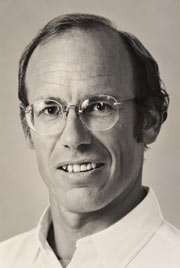
Anthony A. Wright, PhD, professor emeritus at McGovern Medical School at UTHealth Houston and an internationally recognized researcher in comparative cognition, learning, and memory, died Aug. 2.
Known to colleagues and students as Tony, Wright spent more than five decades advancing the understanding of how humans and animals perceive, learn, and remember information. He joined UTHealth Houston in 1972 and remained a dedicated researcher, educator, and mentor until his retirement in 2022.
Wright grew up south of Los Angeles and spent much of his youth along the California coast. He attended Stanford University, where he earned a bachelor’s degree in psychology. During his undergraduate studies, he was influenced by several prominent scientists, including cognitive psychologist Gordon Bower, whose work inspired him to pursue graduate training in experimental psychology.
Following Stanford, Wright and his wife, Susan, moved to New York City, where he earned his master’s degree and PhD in psychology from Columbia University. His doctoral research focused on color perception and hue discrimination in pigeons, laying the foundation for his lifelong interest in comparative cognition.
Wright began his academic career in 1971 as an assistant professor of psychology at The University of Texas at Austin. The following year, he joined the newly established University of Texas Health Science Center at Houston, beginning a 50-year career in research and education.
Among Wright’s most significant scientific contributions was his research into how the brain encodes, stores, and retrieves information. His work helped advance the understanding of two fundamental memory processes: the primacy effect, in which people more easily remember items presented at the beginning of a sequence, and the recency effect, in which recently presented items are also more easily recalled.
Through innovative experiments involving pigeons, monkeys, and humans, Wright and his colleagues demonstrated striking similarities in memory across species. Using visual memory tasks involving travel photographs and kaleidoscope images, his research provided important insights into the fundamental mechanisms of learning and memory.
Beyond his research, Wright was deeply committed to teaching and mentoring the next generation of scientists. Throughout his career, he shared his expertise and passion for experimentation with undergraduate and graduate students, postdoctoral fellows, and young investigators.
Many of his former trainees went on to establish successful academic careers at universities across the United States and abroad, including Robert Cook, PhD, at Tufts University; Julie Neiworth, PhD, at Carleton College; Peter J. Urcuioli, PhD, at Purdue University; and Jeffrey S. Katz, PhD, at Auburn University.
Through their own research and mentorship, these scientists have continued to build upon Wright’s work, extending his influence to new generations of researchers.
Wright received numerous honors throughout his career, including the Fogarty Senior International Fellowship, which supported research in New Zealand, and the Alexander von Humboldt Prize, which provided opportunities for collaborative scholarship in Germany.
In 2012, he received the Comparative Cognition Society’s Lifetime Research Award in recognition of his pioneering contributions to the field. He was also elected a fellow of the Society of Experimental Psychologists and received multiple Dean’s Teaching Excellence Awards for his dedication to educating medical and graduate students at UTHealth Houston.
Wright’s contributions to experimental psychology and comparative cognition leave a lasting scientific legacy. Equally significant is the impact he made as an educator and mentor, inspiring generations of researchers who continue to advance the understanding of learning and memory.