
Eltzschig honored with ASA Excellence in Research Award
Holger K. Eltzschig, MD, PhD, professor and John P. and Kathrine G. McGovern Distinguished University Chair of the Department of Anesthesiology, Critical Care and Pain Medicine at McGovern Medical School at UTHealth Houston, received the 2026 American Society of Anesthesiologists…

CPRIT honors Zhiqiang An for cancer research
Zhiqiang An, PhD, a nationally recognized cancer researcher, inventor, and drug discovery leader at UTHealth Houston, has been honored with the Texans Conquer Cancer Award from the Cancer Prevention and Research Institute of Texas (CPRIT), recognizing his groundbreaking contributions to…

Building on a legacy of discovery in pediatrics
After nearly five decades of leadership and scientific discovery under Jacqueline Hecht, PhD, the Department of Pediatrics at McGovern Medical School at UTHealth Houston is entering a new chapter with Paul A. Trainor, PhD, taking over as vice chair for…

Turning connections into opportunities
For second-year McGovern Medical School at UTHealth Houston student Akhil Marupudi, one conversation led to another and eventually to a role in a $37 million clinical trial. Marupudi spent last summer at Northwestern University working on projects including a clinical…
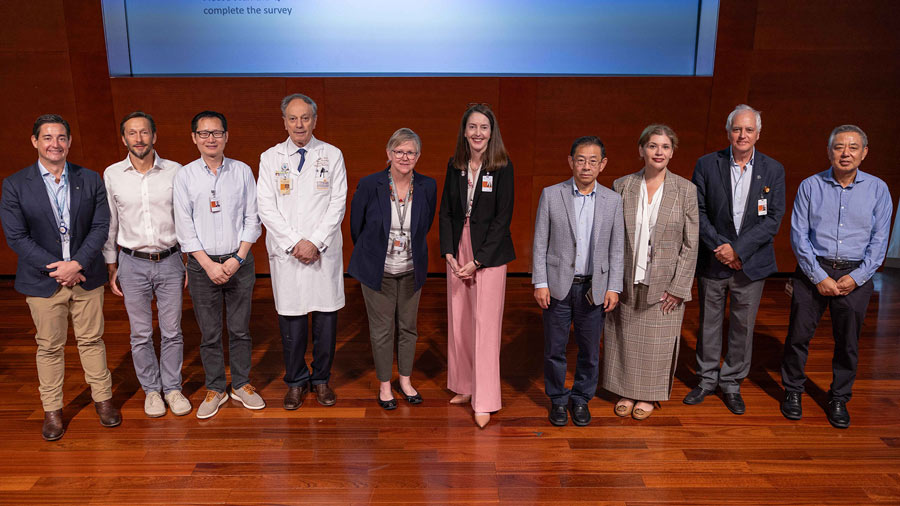
Kibbe talks growth, collaboration, and resources with IMM researchers
UTHealth Houston President Melina R. Kibbe, MD, got an up-close look at the research shaping the future of The Brown Foundation Institute of Molecular Medicine for the Prevention of Human Diseases at McGovern Medical School at UTHealth Houston during a…
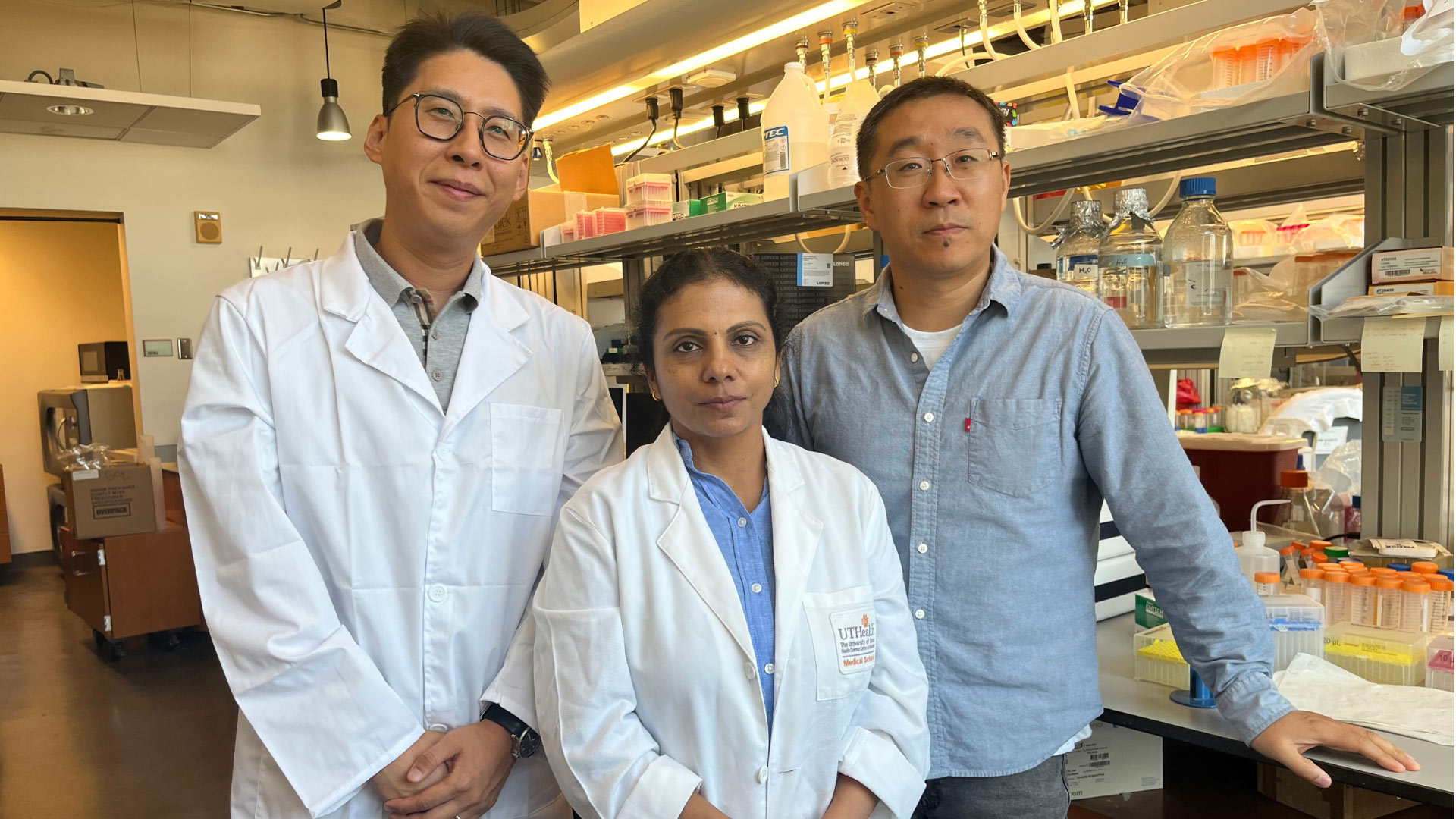
UTHealth Houston team reverses nerve pain in diabetic mice
A team of UTHealth Houston researchers slowed and even reversed diabetic nerve damage in mice, bringing researchers one step closer to developing a treatment for humans. The research was published recently in Science Translational Medicine (external link). Diabetic peripheral neuropathy…

Study targets overlooked barrier in pancreatic cancer
Researchers at McGovern Medical School at UTHealth Houston are collaborating on a National Institutes of Health-funded study investigating whether a protein best known for its role in blood clotting could help explain why pancreatic cancer is so resistant to immunotherapy….

Early therapy aims to reduce schizophrenia risk
A team of UTHealth Houston researchers has been awarded a five-year, $3.8 million grant from the National Institute of Mental Health to create an individualized, biomarker-guided therapy program that aims to mitigate the risk factors of schizophrenia among children who…

UTHealth Houston researchers to collaborate on $9.3M AIDS Research grant
A new five-year $9.3 million grant from the National Institutes of Health will advance the Texas Center for AIDS Research from a developmental center to a full center, strengthening HIV research, investigator training, and community partnerships across Texas. Established in…

Researchers create the most complete DNA profile of the brown rat to date
Researchers have created the most complete genetic profile of the brown rat to date, according to a UTHealth Houston-led team, paving the way for scientists to more accurately research the genetic links to conditions like heart disease, kidney disease, high…