Annual Aging to Perfection Lecture Series highlights advances in Dementia Care and Brain Health
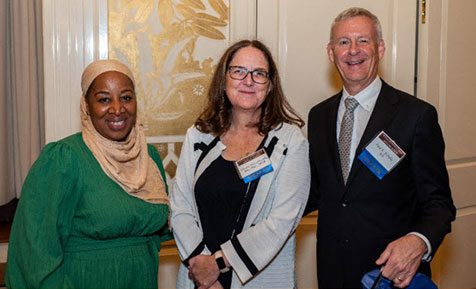
This year’s featured presenters (l-r) Anjail Z Sharrief, MD, professor, Dept. of Neurology, director of Stroke Prevention; Louise McCullough, MD, PhD, professor, chair and Roy M. and Phyllis Gough Huffington Distinguished Chair, Dept. of Neurology, co-director, UTHealth Neurosciences;, UTHealth Institute of Stroke and Cerebrovascular Disease; and Paul E. Shultz, MD, professor, Dept. of Neurology.
Nearly 160 members of the UTHealth Houston community and the public gathered at the Junior League of Houston on Sept. 23 for the fifth annual Aging to Perfection Endowed Lecture Series, which celebrates the legacy of Carmel Bitondo Dyer, MD.
Established in 2022 through a generous gift from UTHealth Houston Development Board member Nancy Guinee, the series honors Dyer’s pioneering contributions to geriatric and palliative medicine, elder mistreatment prevention, and home health care. The lecture series also celebrates the evolution of the Consortium on Aging, founded by Dyer, into the UTHealth Houston Institute on Aging.
Hosted through a collaboration among the Institute on Aging (external link), Center for Healthy Aging, the Joan and Stanford Alexander Division of Geriatric and Palliative Medicine, and the Department of Neurology at the McGovern Medical School, this year’s event brought together experts to discuss the latest developments in dementia care and strategies for improving quality of life across the lifespan.
The “Dementia” theme was selected in recognition of World Alzheimer’s Month, an international effort held each September to raise awareness and reduce the stigma surrounding dementia. The annual event provides an opportunity for researchers, clinicians, caregivers, and community members to learn about advances in evaluation and treatment of dementia while promoting awareness of cognitive health and healthy aging.
Key insights from UTHealth Houston neurology experts
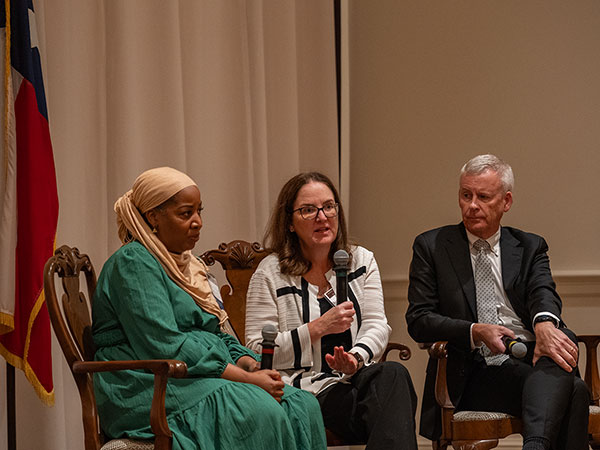
Featured presenters included Louise McCullough, MD, PhD, professor, chair and Roy M. and Phyllis Gough Huffington Distinguished Chair, Dept. of Neurology, co-director, UTHealth Houston Neurosciences; Anjail Z. Sharrief, MD, professor, Dept. of Neurology, director of Stroke Prevention, UTHealth Institute of Stroke and Cerebrovascular Disease; and Paul E. Schulz, MD, professor, Dept. of Neurology.
Together, they provided an overview of dementia and other neurodegenerative diseases while highlighting promising innovations in brain health research, prevention, early detection, and treatment.
Prevention begins with healthy habits
A central message throughout the presentations was the importance of maintaining brain health through positive lifestyle choices. McCullough began by emphasizing that following a nutritious diet, engaging in regular physical activity, getting adequate sleep, and keeping blood pressure levels under control can help reduce the risk of cognitive decline and dementia.
The speakers also highlighted the relationship between cardiovascular health and brain health, noting that managing conditions such as hypertension, diabetes, and other vascular risk factors may lower the likelihood of developing neurodegenerative diseases later in life.
 Connecting gut health, community, and cognitive wellness
Presenters explored the growing evidence linking gut health and brain health, an area of research that continues to reveal potential connections between the digestive system and cognitive function.
The discussion also highlighted community-based efforts to support cognitive wellness, such as “Brain Cafés,” which provide education, resources, and social engagement for individuals and families affected by dementia.
Addressing the role of social connection in healthy aging, Sharrief said research shows that reducing social isolation and fostering meaningful social relationships may lower the risk of dementia and Alzheimer’s disease, reinforcing the importance of community engagement throughout life.
Early detection and emerging treatments
Schulz discussed advances in early detection, including research suggesting that biological changes associated with Alzheimer’s disease may be identified as early as 20 years before symptoms appear. Early identification could create new opportunities to delay disease onset, improve outcomes, and expand treatment options for individuals at risk.
The presenters also reviewed current and emerging therapies that offer hope for slowing disease progression and improving the quality of life for patients and caregivers.
Honoring a legacy of advocacy for older adults
Following the presentations, Katie Scott, CEO of CarePartners, moderated a question-and-answer session with attendees. Before the conclusion of the program, Jodie L. Jiles, member of The University of Texas System Board of Regents, shared reflections on the legacy and impact of the late Dr. Dyer, a nationally recognized advocate for older adults and founder of the UTHealth Houston Consortium on Aging.
The annual series is open to the public. Those who were unable to attend can watch the recorded live stream here (external link) and view event photos here. (external link)