Accelerated Transcranial Magnetic Stimulation (SAINT® TMS)
 The UTHealth Houston Center for Interventional Psychiatry offers Accelerated Transcranial Magnetic Stimulation using the SAINT® (Stanford Accelerated Intelligent Neuromodulation Therapy) protocol, powered by technology from Magnus Medical.
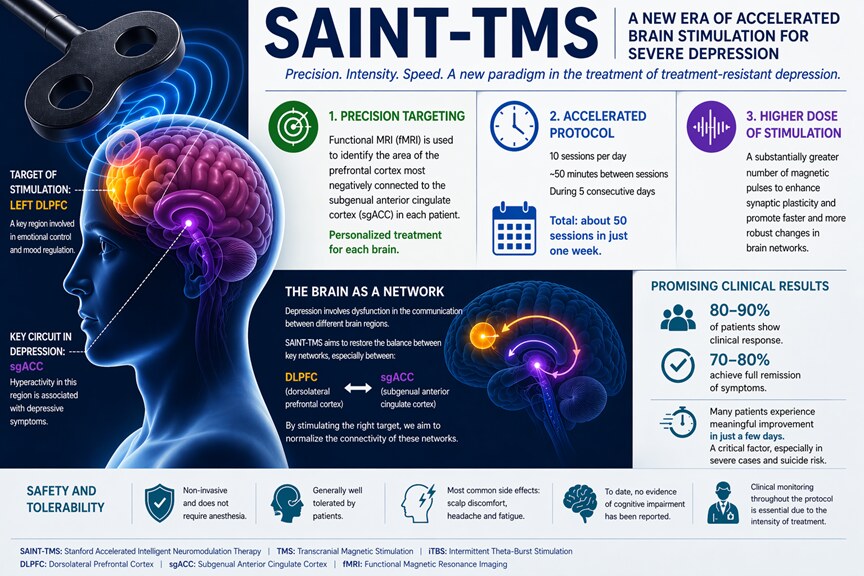
SAINT® TMS is an advanced form of intermittent theta burst stimulation (iTBS) designed to deliver a highly accelerated course of treatment for individuals with treatment-resistant depression (TRD). Unlike conventional TMS protocols that typically require daily sessions over six weeks, the SAINT® protocol administers multiple precisely timed stimulation sessions per day over a shorter treatment period.
This accelerated approach allows for rapid modulation of brain circuits involved in mood regulation, potentially producing faster symptom improvement for patients who have not responded adequately to traditional treatments.
How SAINT® TMS Works
Patient Testimonial
SAINT® TMS uses repetitive magnetic pulses delivered through a coil placed on the scalp to stimulate specific brain regions associated with mood regulation, particularly the left dorsolateral prefrontal cortex.
The protocol incorporates several key innovations:
- Accelerated treatment schedule, delivering multiple stimulation sessions per day
- Intermittent theta burst stimulation (iTBS), a patterned form of stimulation designed to enhance neuroplasticity
- Individualized targeting of brain circuits involved in depression
- High total stimulation dose, delivered in a condensed timeframe
These elements are designed to strengthen neural connections in mood-regulating networks, helping restore more normal brain function.
Who May Benefit from SAINT® TMS
SAINT® TMS may be appropriate for individuals who:
- Have treatment-resistant depression
- Have not improved with multiple antidepressant medications
- Cannot tolerate medication side effects
- Prefer a non-invasive neuromodulation treatment
- Require rapid symptom improvement
Eligibility is determined through a comprehensive psychiatric evaluation at the Center.
Treatment Experience
SAINT® TMS treatments are delivered in a specialized outpatient setting by trained clinical staff.
A typical treatment course includes:
- Multiple stimulation sessions per day
- Sessions spaced throughout the day
- Each session lasts only a few minutes
- A treatment course completed over a short, intensive timeframe
Patients remain awake and seated during treatment. No anesthesia or sedation is required, and individuals can typically resume normal activities immediately afterward.
Safety and Side Effects
Transcranial Magnetic Stimulation is considered a safe and well-tolerated procedure.
The most common side effects include:
- Mild scalp discomfort during stimulation
- Temporary headache
- Mild fatigue
These symptoms are typically short-lived and improve as treatment progresses.
Serious adverse events are rare when treatment is administered according to established clinical protocols.
Integration with Comprehensive Care
At the UTHealth Houston Center for Interventional Psychiatry, SAINT® TMS is delivered as part of a comprehensive treatment framework that may include:
- Psychiatric evaluation and diagnosis
- Medication management
- Psychotherapy when appropriate
- Coordination with referring clinicians
- Long-term treatment planning
Our goal is to match each patient with the most effective and appropriate treatment pathway.
How to Get Started
Patients and clinicians interested in SAINT® TMS may contact the Center to schedule an evaluation.
Request an evaluation: https://Go.uth.edu/CIPIntake (external link)
Phone: (713) 486-2621
Fax: (713) 500-2728
Email: [email protected]
A New Generation of Neuromodulation
Accelerated neuromodulation protocols such as SAINT® TMS represent an important advancement in the treatment of severe depression. By combining precision targeting, high-intensity stimulation, and accelerated treatment schedules, these approaches may offer new hope for patients whose symptoms have not responded to conventional therapies.
The UTHealth Houston Center for Interventional Psychiatry is committed to advancing the science and clinical application of interventional psychiatry to improve outcomes for patients with the most challenging psychiatric conditions.