Meet Our Residents
Keiko Kunitoki, MD, MPH – PGY4
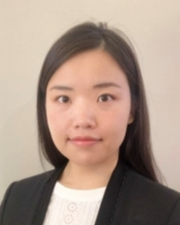
Keiko received her MD and PhD from the Tohoku University School of Medicine in Japan and holds a Master of Public Health from the Harvard T.H. Chan School of Public Health. Prior to joining UT, she completed a postdoctoral research fellowship and served as an instructor at Massachusetts General Hospital. Her research focuses on the mechanisms and treatment of negative symptoms in schizophrenia spectrum disorders.
Why I chose UTH Research Track: My interactions with several residents before joining confirmed a welcoming and collaborative atmosphere. Being one of the largest medical centers, I know the robust institutional support UTH offers. Furthermore, the unique backgrounds and interests of the residents and faculties greatly appealed to me.
Maykel Farag Ghabrash, MD, MS – PGY4
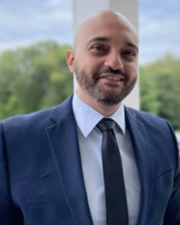
Dr. Ghabrash earned his medical degree from Cairo University Faculty of Medicine and completed a Master’s in Psychiatry at McGill University, focusing on affective disorders and related psychopharmacology. His work was recognized by Medscape-WebMD at the American Psychiatric Association (APA 2016) for its relevance to routine clinical practice. He then pursued a Post-Doctoral Research Fellowship in Addiction at the University of Montreal, focusing on the treatment of patients with co-occurring psychiatric and substance use disorders. His contributions have been acknowledged through the APA’s Research Colloquium Award for Junior Investigators (2018) and the Canadian Psychiatric Association’s Early Investigator Poster Award (2017).
During residency, he plans to study the interplay between fear, anxiety in psychosis, and the neurobiology of paranoid versus non-paranoid psychosis, utilizing fMRI to investigate aberrant corticolimbic processing.
Why I chose UTH Psychiatry Research Track: I relocated from Canada to the U.S. to begin my residency and pursue my research goal of advancing more precise interventions for psychiatric illnesses by deepening our understanding of the underlying neuropathological networks. The UTHealth Research Track offers exceptional breadth of expertise, fostering innovation and scientific progress. It also provides unmatched opportunities for collaboration. Most importantly, the faculty’s expertise, the cutting-edge techniques and methods, and the supportive environment make UTHealth a truly unique place for intellectual growth, productivity, and a strong sense of community.
Gustavo dos Santos Alves Maria, MD, PhD – PGY3
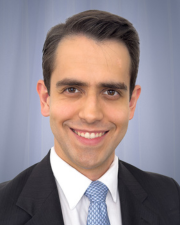
Dr. Maria received his medical degree from the Federal University of Minas Gerais, Brazil. He received his degree of Doctor of Philosophy from the Postgraduate Department in Molecular Medicine of the same university. His main research focus is neuromodulation for refractory mood disorders, and his interest in research is to deepen the knowledge in interventional psychiatry.
Why I chose UTH Psychiatry Research Track: I chose the University of Texas Health Science Center at Houston due to its strong bonds between clinical activities and research practices. Moreover, I felt that I would receive the support necessary to reconcile my clinical duties and my research curiosity, what confirmed to be true in the Research Track.
Ethan Faries, MD – PGY3
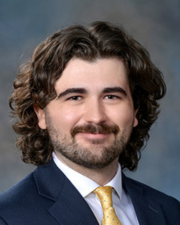
Dr. Faries received his medical degree from Baylor College of Medicine. During his time at Baylor, he conducted original research on substance use trends among patients with borderline personality disorder. In residency, he plans to continue to conduct clinical research on topics like personality and mood disorders.
Why I chose UTH Psychiatry Research Track: As a Houston native with a passion for scientific inquiry in psychiatry, the UTHealth research track made perfect sense for me. The breadth and depth of faculty expertise, cutting-edge techniques and methods, and inviting atmosphere make UTHealth a one-of-a-kind opportunity for intellectual growth, productivity, and camaraderie.
Brian Yang-Chieh Chen, MD – PGY2
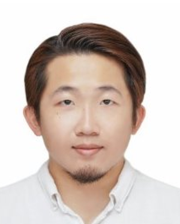
Brian received his medical degree from China Medical University, Taiwan. Prior to starting psychiatry residency training, his research comprised of studying the efficacy of different interventional psychiatry modalities and exploring dose-response efficacies of novel psychiatric drugs. Current research interests include interventional psychiatry, artificial intelligence in psychiatry, and using electronic health records and registries to investigate trends in psychiatry.
Why I chose UTH Psychiatry Research Track: The UTH Psychiatry Research Track provides a rigorous clinical training environment alongside dedicated resources that support a broad spectrum of psychiatric research, making it an ideal setting for the development of physician-scientists. The depth and diversity of faculty expertise and resident backgrounds create opportunities to learn and approach psychiatry from multiple perspectives.
Himanshu Wagh, MD – PGY2
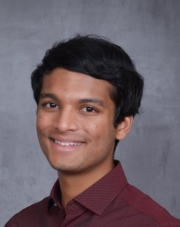
Himanshu Wagh graduated with his MD from California Northstate University in California. During his free time, he conducted original research on topics he has personal experience with such as AI dating apps, concerning TikTok trends, video game addiction, and the development of machine learning models to classify pathological images. He is particularly interested in exploring how emerging technologies shape psychiatric symptoms, treatment delivery — and the evolving landscape of mental health.
Why I chose UTH Psychiatry Research Track: When I saw the impressive research posters and presentations by UTH residents at the APA conference, and how happy and close they were to each other, I knew I wanted to be part of that community. After joining the Research Track, I realized the benefits like close mentorship, additional educational days, protected research time, and, last but not least, increased research funding, were exactly what I needed to foster my academic development and contribute to the evolving landscape of mental health.
Christopher Kung, MD – PGY2
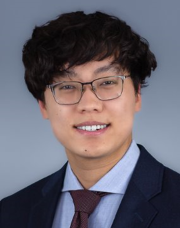
Chris received his medical degree from UT Southwestern Medical School in Dallas, Texas. His research there focused on 1. Characterizing psychiatric disease burden and outcomes in the large, incarcerated patient population in Dallas; 2. Evaluating national disparities in health outcomes, such as race-based differences in maternal mortality during childbirth, as well as predatory billing strategies employed by major hospital systems in the United States. His research interests in residency include characterization of psychiatric disease burden in the Houston incarcerated population, economic analyses of healthcare spending in the public and private sectors in Houston, and investigation of novel interventional psychiatric techniques.
Why I chose UTH Psychiatry Research Track: I was impressed with the program’s extensive resources for pursuing our unique research interests, such as access to a wealth of datasets covering multiple domains of psychiatric care delivery, including the Houston jail system, active clinical trials for new psychiatric interventions, and ample full-time research blocks. Coupled with the robust clinical training in the heart of Houston, I felt confident UTH’s program would support me in becoming a complete physician-scientist.
Shehrezade Jafry, DO – PGY1
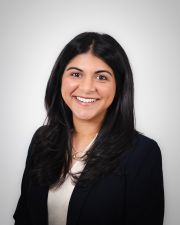
Dr. Jafry received her Bachelor of Arts in Psychology at Wellesley College and further pursued her medical degree at the University of North Texas Health. Prior to residency, her research spanned nephrology, psychiatry, neuroscience, and digital health, including work on chronic kidney disease outcomes at the Michael E. DeBakey VA Medical Center, neurobehavioral risk assessment in justice-involved youth, and digital biomarkers for opioid use disorder. Her clinical and research interests center on child and adolescent psychiatry, the impact of early adversity across the lifespan, culturally responsive mental health care for immigrant and refugee communities, and the application of technology to improve psychiatric diagnosis and intervention.
Why I chose UTH Psychiatry Research Track: I chose the UTHealth Psychiatry Research Track because it provides the ideal environment to grow as both a clinician and physician-scientist. The collaborative culture, dedicated mentorship, and unparalleled opportunities within the Texas Medical Center allow me to pursue interdisciplinary research while receiving outstanding clinical training.
Aishwarya Vemula, MD – PG1
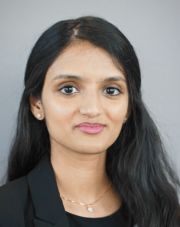 Dr. Vemula earned her BS in Neuroscience from The University of Texas at Dallas before receiving her MD from the Joe R. and Teresa Lozano Long School of Medicine at UT Health San Antonio. As an undergraduate, she was selected as both a Green Fellow and Summer Undergraduate Research Fellow (SURF) at UT Southwestern Medical Center, where she conducted translational cancer research in the Department of Cell Biology. Her early work investigated the effects of the telomerase substrate precursor 6-thio-2’-deoxyguanosine (6-thio-dG) in three-dimensional models of non-small cell lung cancer, evaluating novel therapeutic strategies that more closely mimic the tumor microenvironment. She later contributed to research published in Cancer Cell demonstrating that 6-thio-dG activates the STING/interferon signaling pathway, enhancing innate and adaptive anti-tumor immunity and overcoming resistance to immune checkpoint blockade. These experiences fostered her passion for translational research and the development of innovative therapeutic approaches.
During medical school, her research interests evolved toward neuroscience and psychiatry. She investigated novel neuroimaging biomarkers of neuropsychiatric disease, including imaging correlates of chronic headache disorders. Her research demonstrated an association between increased nasal blood pool activity and recurrent headaches, supporting the hypothesis that nasal lymphatic dysfunction contributes to headache pathophysiology and identifying a potential imaging biomarker. She is interested in neuroimaging, neuroinflammation, and the biological mechanisms underlying psychiatric illness, with the goal of translating scientific discoveries into improved patient care.
Why I chose the UTHealth Research Track:
I chose the UTHealth Research Track because it offers the ideal environment to pursue both exceptional clinical training and meaningful research. The collaborative culture, dedicated mentorship, and protected research time provide outstanding opportunities for physician-scientist development. Training within the Texas Medical Center allows me to collaborate across disciplines while continuing to investigate the biological mechanisms of psychiatric disorders and develop innovative approaches to diagnosis and treatment.
Salih Cayir, MD – PGY1
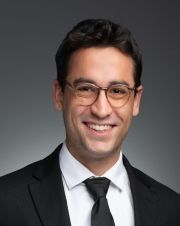 Dr. Cayir received his medical degree from Istanbul University, Türkiye. He subsequently completed a two-year postdoctoral fellowship at Yale University, focusing on developing clinically translational biomarkers for a range of psychiatric disorders, including treatment-resistant depression, addiction, autism, and frontotemporal dementia. His research used neuroimaging modalities including PET and MRI. He has also developed a research interest in environmental factors influencing brain health. His work has been published in multiple peer-reviewed journals. In his free time, he enjoys playing tennis, traveling, doing yoga, and meeting friends over Turkish tea and treats!
Why I chose UTHealth Psychiatry Research Track:
The UTHealth Psychiatry Research Track offers a high-volume, diverse patient population and world-class, cutting-edge research in the same place, a combination that is not easy to find. As someone interested in clinically translational research, the depth and breadth of both is what made the choice for me