Students shine at teaching competition
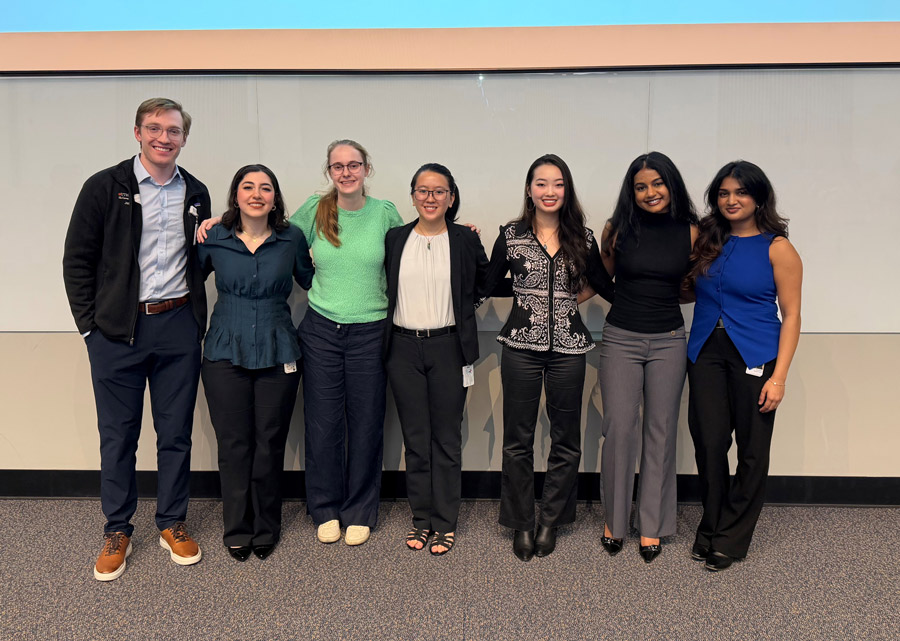
The McGovern Medical School at UTHealth Houston Academic Medicine Student Organization and the Medical Student Research Office hosted the fourth annual Teaching Competition on Jan. 21 in MSB 3.001.
For the competition, each student was given five minutes to present on a topic important to them. Students practiced their presentations with a faculty coach or mentor in preparation for the event.
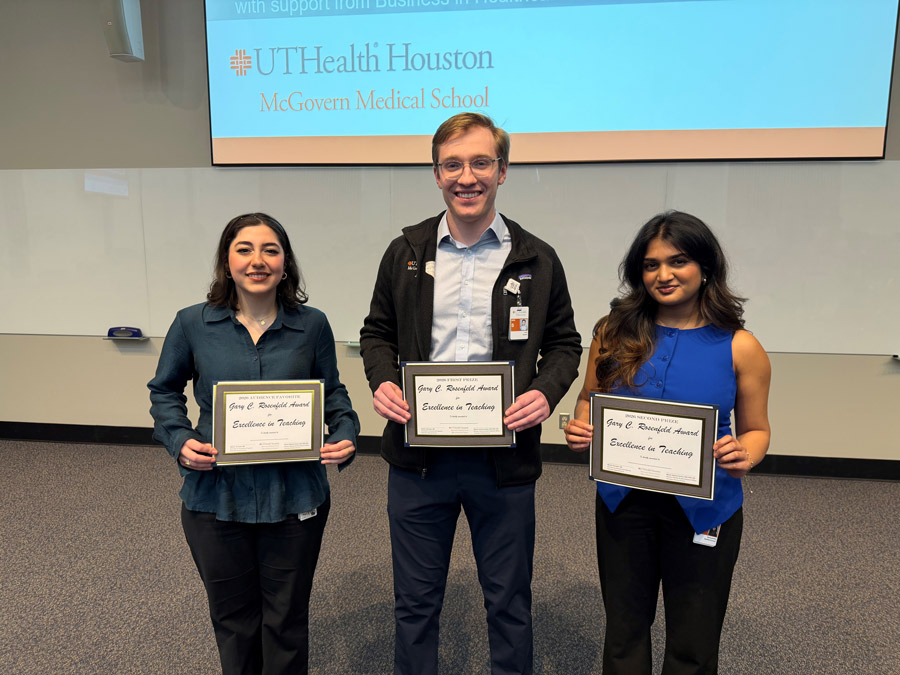
First place was awarded to Jack Zamen for his presentation, “Keeping the Rhythm: A Primer on Pacemakers and ICDs.”
Zamen opened his presentation with an anecdote about the first patient he encountered who required an emergency pacemaker. Drawing on his experience as a pacemaker and ICD technician, Zamen described a patient with a dangerously low heart rate who appeared critically ill. After 30 minutes and the implantation of a new pacemaker, however, the patient’s “life was coming back to them beat by beat,” he said.
His presentation explained the difference between pacemakers and ICDs, noting that while both devices monitor and treat slow heart rhythms, ICDs can also deliver a therapeutic shock to correct lethal arrhythmias. Zamen showed X-rays of each device to illustrate their structure, as well as EKG results demonstrating different heart rhythms during pacing. He concluded by explaining how a magnet can inhibit or suspend the shocking therapy of an ICD.
“It’s a great feeling to win this award for the teaching competition, but more importantly, it was really exciting to be able to talk to everyone about pacemakers and ICDs because of how common they are in the patient population, and that can help improve care in the future,” Zamen said.
Second place went to Samy Senthil Kumar for her presentation, “Narrative Justice: How Storytelling Shapes Health Equity.” Kumar emphasized that patient stories are not background context, but evidence that directly influences access, decision-making, and outcomes in health care.
Kumar explained that listening to historically marginalized voices can reveal gaps in access, trust, and connection that traditional data and solutions often miss, enabling more effective interventions. She noted that stories can reveal patterns in lived experiences that lead to system-level change in areas such as maternal health, HIV/AIDS care, and community-based services.
The fan-favorite award, voted on by the audience, was presented to Laila Fahed for her presentation, “Psychiatrization: Understanding Psychiatry Throughout History.”
Fahed began by asking the audience what it means to have a mental disorder. She introduced the concept of psychiatrization and provided a brief history of psychiatry, describing how understandings of mental illness have shifted over time — from spiritual and moral interpretations to confinement in asylums — ultimately leading to the formal establishment of psychiatry in the 19th century. She explained that early diagnostic systems were largely shaped by observation and social norms before biological evidence became more prominent toward the end of the 20th century.
In the modern era, Fahed said, psychiatrization has expanded beyond the physician-patient relationship to include pharmaceutical companies and the media, particularly with the rise of television advertisements for medications. She noted that the growth of diagnoses such as social anxiety disorder illustrates how awareness and access to treatment have increased, while more individuals come to define themselves through diagnostic labels. She concluded that mental illness exists within a complex landscape and that society plays a role in defining what it means to have a mental disorder.
Additional presenters for the competition included:
- Allison Baker – Breaching the Blood-Brain Barrier to Tackle Alzheimer’s Disease
- Claudia Silva – Listening as Medicine: How Active Listing Transforms Patient Care
- Aneesha Baral – Cancer: The Unhealed Wound
- Peijun Zhao – The Limits of Research in Neurodegenerative Disorders
- Annabel Shen – The Attention Economy: Is Technology Rewiring our Brains?