Tympanoplasty and Ossicular Chain Reconstruction Gives a Patient His Hearing Back
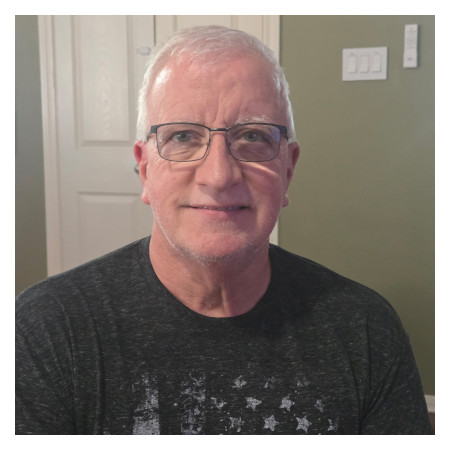 As a child, Joe Strelecki suffered chronic ear infections that led to hearing loss as an adult. When he was in his 40s, an audiologist advised him that he had a ruptured right eardrum and was a candidate for tympanoplasty, a surgery to repair perforations in the eardrum that can cause hearing loss, drainage, and infection.
“They couldn’t guarantee the surgery would give me my hearing back, and my insurance wouldn’t cover a lot of the cost, which at the time was many thousands of dollars,” says Strelecki, now 69. “My hearing gradually worsened to the point that I had about 10% of my normal hearing on the right, which concerned me. When I became eligible for Medicare, it significantly reduced my out-of-pocket costs, so I decided it was time to see a specialist.”
His initial ENT referred Strelecki to Vivian Kaul, MD, chief of otology, neurotology, and lateral skull base and an assistant professor of otorhinolaryngology based at the Texas Medical Center.
“Mr. Strelecki had an approximately 40% perforation of his right eardrum,” Dr. Kaul says. “We took him to the OR in May 2025 for an outpatient tympanoplasty. It turned out to be a more complex surgery than we anticipated.”
During the procedure, Dr. Kaul discovered a cholesteatoma, which can result in the destruction of the ossicles – three small bones in the middle ear that transmit sound vibrations to the inner ear. “The growth tracked along his taste nerve, which we wanted to keep intact to maintain his ability to taste along the anterior two-thirds of his tongue,” she says. “We were able to achieve that and perform an ossicular chain reconstruction, replacing the hearing bones with a titanium prosthesis.”
An audiogram performed three months later showed that Strelecki’s hearing on the right was only slightly worse than his left ear. “My recovery was very smooth, and I could hear a lot better. My hearing in that ear had been fading in and out for years, so I’m happy to have that resolved. Dr. Kaul has a great bedside manner, explains everything clearly, and made me feel at ease about the surgery. I’m sure she’s extremely busy, but you wouldn’t know it by talking with her. She takes her time with you, which is one of the characteristics of a really good doctor.”