Dr. Andrew Tritter Inducted into the Triological Society
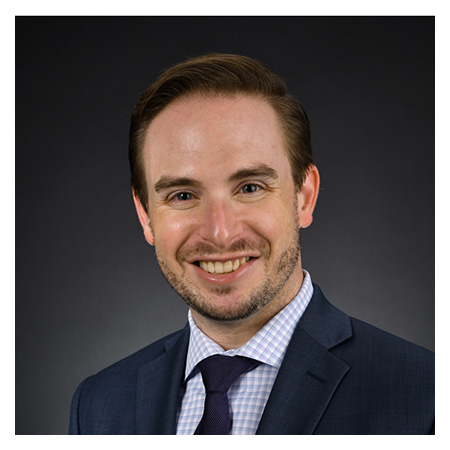 Active fellowship in the 131-year-old Triological Society (external link), the most prestigious academic society in otolaryngology, requires proposal of candidacy by current fellows and presentation of a formal thesis project that must be accepted by a panel of society peers. Andrew Tritter, MD, an assistant professor and chief of the Laryngology Division in the Department of Otorhinolaryngology at McGovern Medical School, was inducted into the society at its 2026 annual meeting. His thesis was accepted in January.
Dr. Tritter wrote his thesis on retrograde cricopharyngeal dysfunction (RCPD), also known as no-burp syndrome, a disorder he has treated since shortly after he joined the department in 2021. “Although RCPD was not officially named until 2019, case reports published as long ago as the 1980s have described the condition, which is characterized by chronic gastrointestinal symptoms related to excessive gas retention from being unable to burp, detrimentally impacting patients’ quality of life. While most patients present as young adults, RCPD affects people of all ages,” he says. “Patients get a high rate of symptomatic relief from injection of Botox® into the cricopharyngeus muscle.”
For his thesis, Dr. Tritter studied more than 100 RCPD patients he treated over a two-year period. While treating these patients, he noticed a particular finding that appears to predict which patients will have a more difficult time getting a long-lasting treatment response from their Botox injections.
“About 20% of patients with RCPD have something called an inlet patch, a small patch of stomach lining that gets ‘lost’ high up in the esophagus when these tissues are separating from one another during development in the uterus,” he says. “While they are most often asymptomatic, this is far more common than the roughly 10% of people in the general population who have these, and they appear to predict a higher likelihood of failure to respond to Botox treatment in the long run. As a secondary observation, we found that the age at which the patient is treated can also influence the chance for a successful long-term result, with younger patients having a much higher likelihood of maintaining a successful treatment response.”
His membership in the Triological Society will open the door to active fellowship in the American Laryngological Association (ALA) (external link), the oldest professional otolaryngology society in the country since its founding in 1878. The ALA is a scholarly organization of physicians and scientists who have made significant contributions to the care of patients with disorders of the larynx and upper aerodigestive tract. It has been a longstanding requirement for active fellowship that all candidates also must be active fellows in the Triological Society.
Dr. Tritter is director of the Texas Voice Performance Institute™ at UTHealth Houston, which provides comprehensive medical and surgical treatment of patients with voice, airway, and swallowing disorders. A lifelong musician and singer, he completed fellowship training in laryngology at Columbia University and Weill-Cornell Medical College in New York City, where he had extensive training in voice, airway, and swallowing disorders.