Collaboration fuels new insights into systemic sclerosis
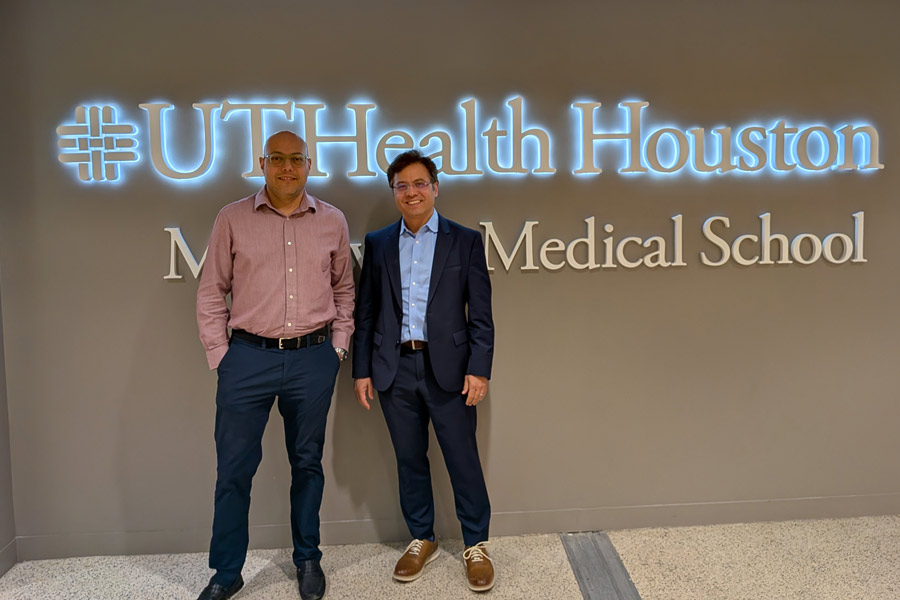
Investigators from the Pulmonary Center of Excellence at UTHealth Houston are highlighting new collaborative discoveries that advance understanding of systemic sclerosis, a complex autoimmune disease that drives fibrosis across multiple organs.
A recent study co-led by Harry Karmouty-Quintana, PhD, associate professor in the Department of Internal Medicine, and Shervin Assassi, MD, MS, professor of rheumatology, Dr. Noranna B. Warner Endowed Chair in the Division of Rheumatology, and George S. Bruce, Jr. Professor in Arthritis and Other Rheumatic Diseases, demonstrates how interdisciplinary partnerships between vascular biology, immunology, and rheumatology researchers can accelerate translational discovery.
The study published in JCI Insight (external link), identified the developmental transcription factor SIX1 as a key molecular switch linking adipocyte loss to fibrotic progression in systemic sclerosis skin diseases. The team’s work showed that deletion of SIX1 preserves dermal white adipose tissue, reduces collagen deposition, and suppresses profibrotic signaling pathways.
“These findings highlight adipocyte-fibroblast interactions as a previously underappreciated driver of fibrosis and position SIX1 as a potential therapeutic target,” Karmouty-Quintana said. The impact of the study has already attracted attention across the rheumatology community and was highlighted by Nature Reviews Rheumatology, underscoring the broader significance of the findings for systemic sclerosis research.
“Importantly, the project also reflects the strength of UTHealth Houston’s Medical Scientist Training Program,” Karmouty-Quintana said. “First author Dr. Nancy Wareing, completed the work during her graduate training, illustrating how physician-scientist trainees within the Medical Scientist Training Program contribute to major translational discoveries bridging basic science and clinical disease.”
Building on these discoveries, the Karmouty-Quintana Laboratory has extended this work into the cardiopulmonary complications of systemic sclerosis. In a complementary study published in MedComm (external link), investigators identified RNA-processing mechanisms that drive vascular remodeling in systemic sclerosis-associated hypertension. This research demonstrated that the loss of the RNA-binding protein, CPSF5, promotes abnormal pulmonary artery smooth muscle expansion by altering alternative polyadenylation and shortening 3’ untranslated regions of key regulatory genes.
“Together, these studies highlight a broader theme emerging from the Pulmonary Center of Excellence,” Karmouty-Quintana said. “RNA dysregulation and cellular reprogramming are central drivers of fibrotic disease across organs, linking skin fibrosis, vascular remodeling, and pulmonary hypertension in systemic sclerosis.”
The collaborations have helped lead to new research initiatives, including recent funding to Karmouty-Quintana and his colleagues to further investigate RNA dysregulation-mediated fibrotic mechanisms in system sclerosis-associated interstitial lung disease and to explore the role of SIX family transcription factors in pulmonary vascular remodeling.
“By integrating chemical cohorts, molecular biology, and translational models, these projects exemplify how collaborative research across the Pulmonary Center of Excellence is advancing the understanding of complex fibrotic diseases and training the next generation of physician-scientists,” Karmouty-Quintana said.