Advancing Astronaut Health Through International Collaboration
Advancing Space Med Through International Collaboration in France
As humanity pushes farther into space, international partnerships are becoming increasingly important for advancing research, innovation, and astronaut health.
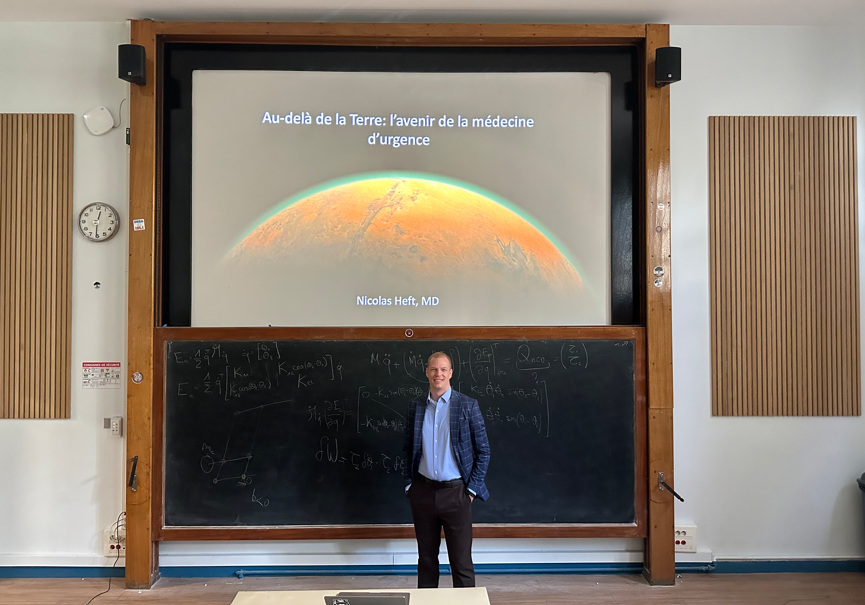
With that goal in mind, Space Medicine Fellowship Director and UTH-EM Staff Physician Nick Heft, MD, recently traveled to Toulouse, Paris, and Antibes, France, to strengthen collaborations in space medicine, aerospace engineering, and EM.
In Toulouse, Dr. Heft met with colleagues at the Spaceflight Institute (external link) at ISAE-SUPAERO to discuss commercial space initiatives, astronaut training, and the safety implications of autonomous artificial intelligence assistants for deep-space missions.
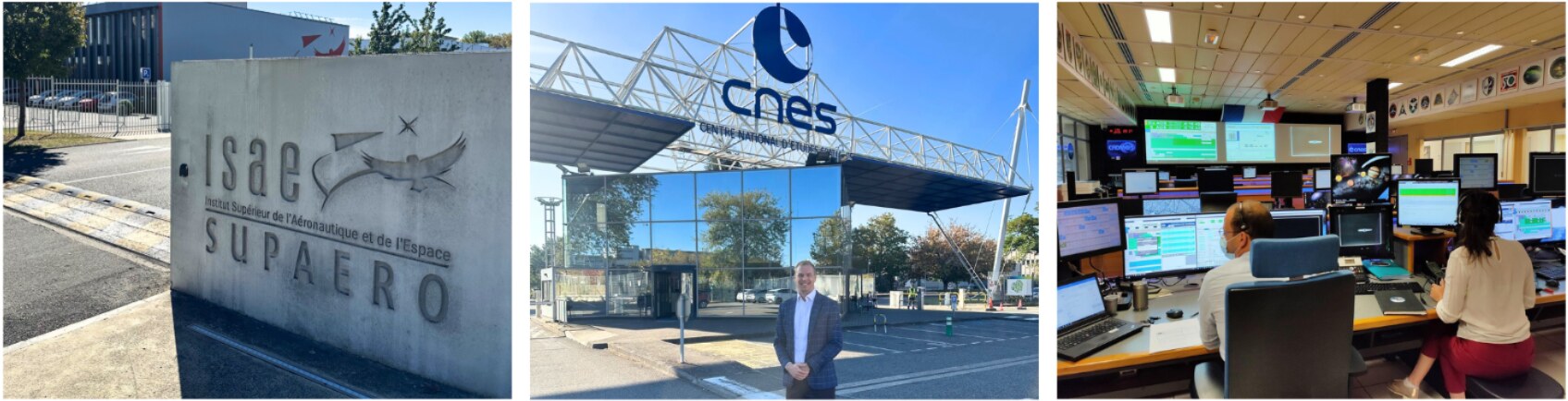
He also visited CNES (external link), France’s national space agency, and MEDES (external link), the country’s specialized institute for space medicine and physiology. During these visits, he toured mission control and research facilities supporting spaceflight experiments, bed-rest and dry-immersion studies, and human centrifuge training.
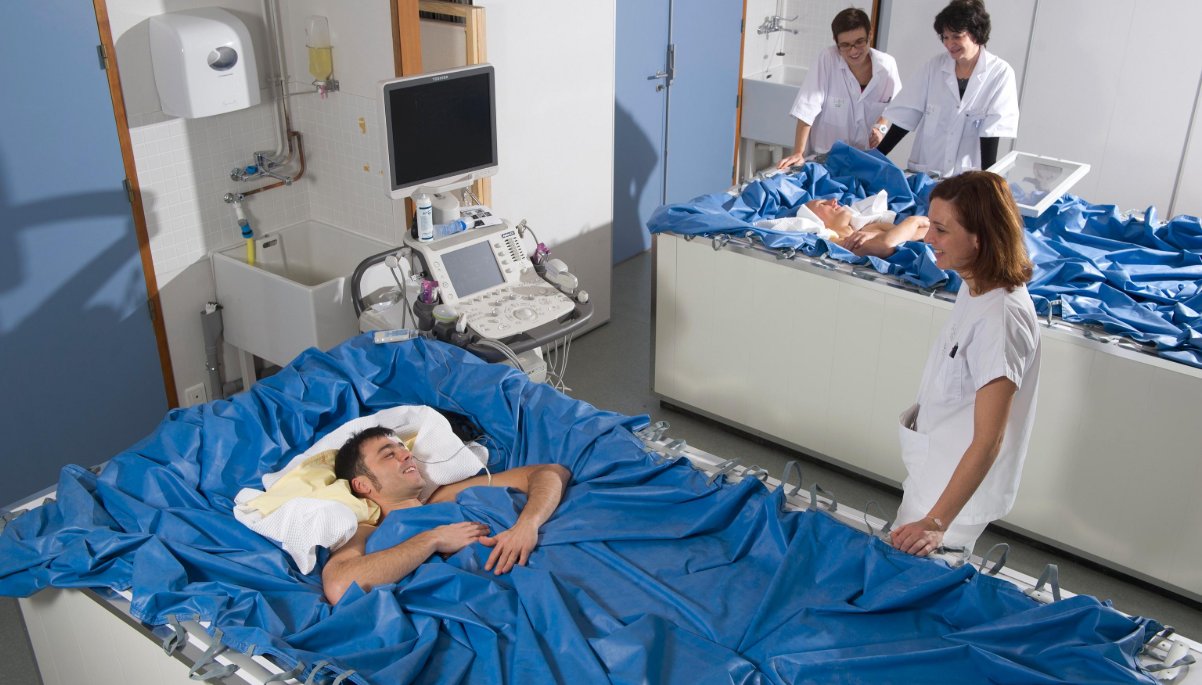
Conversations also explored opportunities for collaborative research on rehabilitation following prolonged bed rest and astronaut recovery after long-duration space missions.
In Paris, Dr. Heft presented a lecture on space medicine at Arts et Métiers (external link), sparking additional discussions about research opportunities at the intersection of engineering, space medicine, and EM.
The trip concluded in Antibes at the 14th International Association for the Advancement of Space Safety (IAASS) Conference (external link), where Dr. Heft presented research on acetaminophen pharmacokinetics in microgravity.
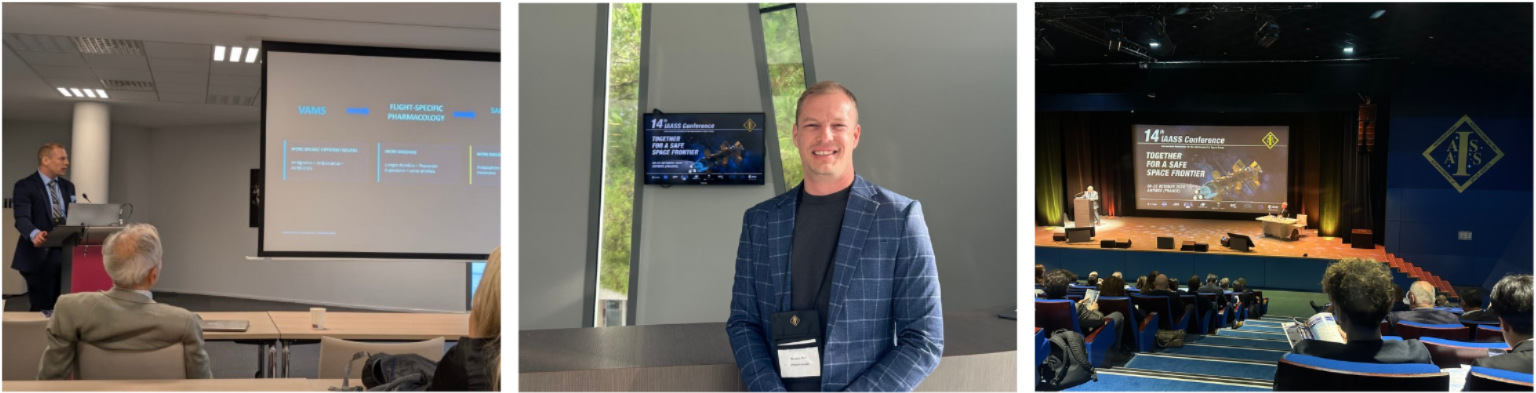
The conference brought together experts from around the world to discuss the future of human spaceflight, the development of commercial space stations, and strategies for advancing safety through systems engineering.
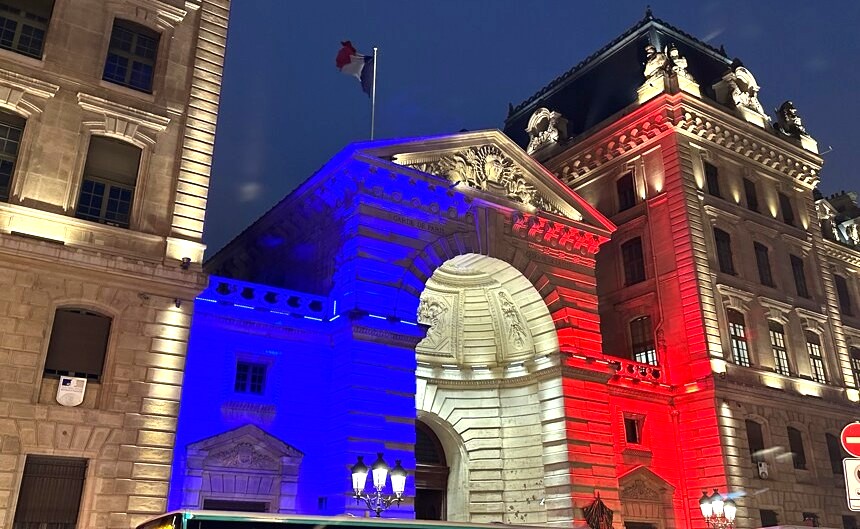
Dr. Heft also had the opportunity to explore the city and take in some of its iconic sights!

Together, these engagements underscore the growing opportunities to bridge EM and aerospace research, strengthen international partnerships, and advance the medical knowledge needed to support the next chapter of human space exploration.