Hospital Medicine
Welcome to the Hospital Medicine Division within the Department of Emergency Medicine at UTHealth Houston. Our division is committed to delivering exceptional care to hospitalized patients while supporting medical education, interdisciplinary collaboration, and strong systems-based practice across affiliated clinical environments.
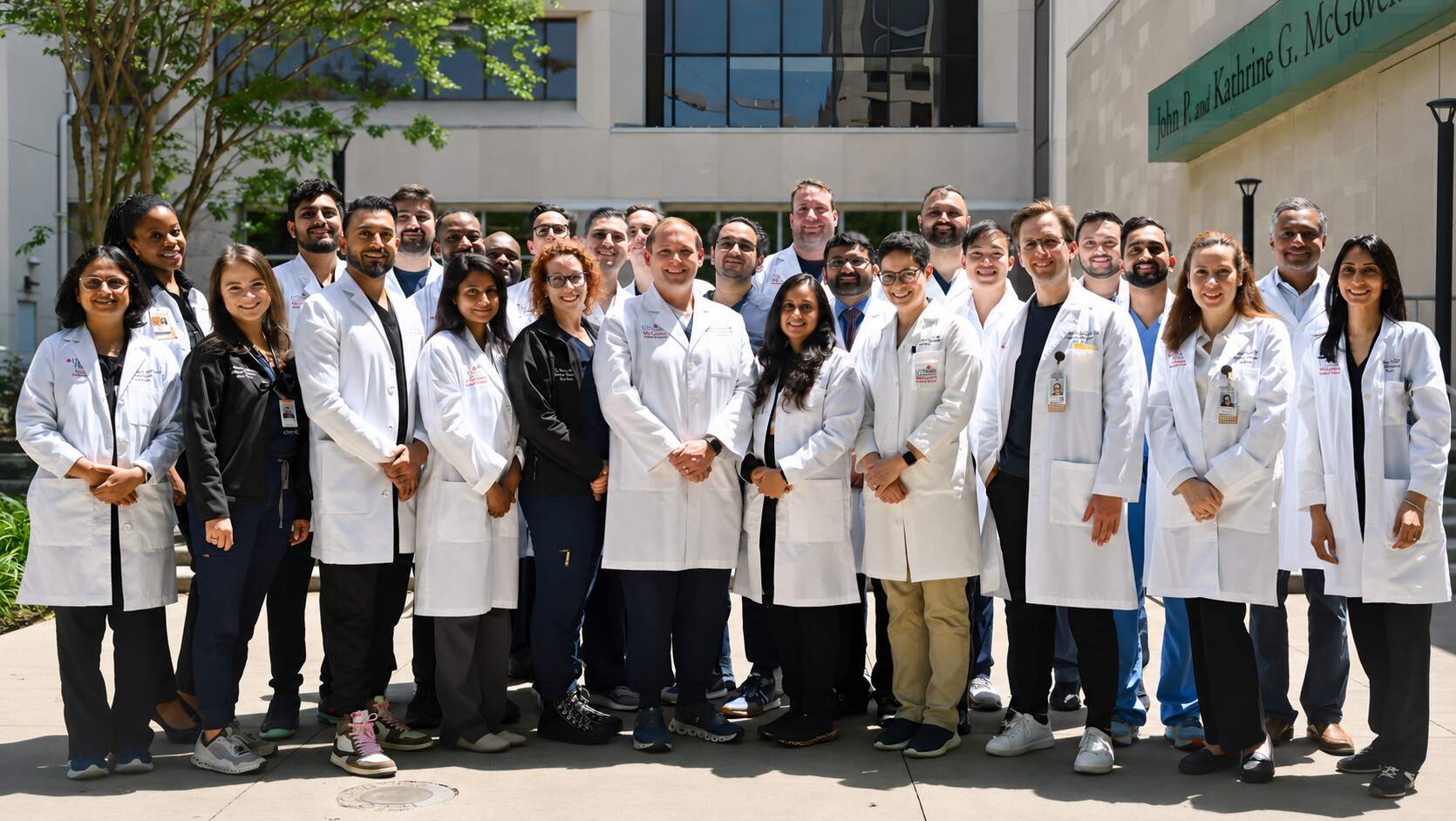
Hospitalists play an essential role in the management of inpatient care, helping ensure continuity, coordination, and high-quality outcomes from admission through discharge. Working closely with emergency physicians, consultants, nursing teams, and care coordination partners, our faculty and staff physicians help advance efficient, compassionate, and patient-centered care.
Division Highlights
- Comprehensive inpatient management
- Interdisciplinary collaboration across services
- Commitment to education and clinical mentorship
- Structured onboarding for new hospitalists
- Practice within a large academic health system
Clinical Practice & Scope
The Hospital Medicine Division supports the management of hospitalized patients across a wide range of medical conditions. Hospitalists are integral to inpatient operations and partner with multidisciplinary teams to deliver efficient, evidence-informed care.
- Admission and inpatient medical management
- Coordination across consulting and specialty services
- Communication with patients and families
- Discharge planning and transitions of care
- Integration with emergency medicine and hospital teams
Education & Academic Environment
As part of the Department of Emergency Medicine, the division contributes to an academic environment centered on learning, mentorship, and team-based care.
Faculty support the development of trainees through bedside teaching and collaborative clinical experiences.
- Medical student and learner engagement
- Clinical mentorship in hospital medicine
- Interdisciplinary learning with faculty and staff
- Exposure to systems-based inpatient care
Hospital Sites
The Hospital Medicine Division provides inpatient care across several Memorial Hermann clinical environments, giving our hospitalists the opportunity to care for diverse patient populations and medical needs.
From a major academic medical center to specialized orthopedic and rehabilitation hospitals, each site offers a distinct clinical setting while maintaining a shared focus on collaboration, continuity of care, and clinical excellence.
- Memorial Hermann-Texas Medical Center (TMC) (external link) — Located in the heart of the Texas Medical Center, Memorial Hermann-TMC serves as the primary teaching hospital for McGovern Medical School and provides comprehensive inpatient and specialty care within a large academic medical environment.
- TIRR Memorial Hermann (external link) — A specialized rehabilitation hospital caring for patients recovering from serious illness or injury, TIRR provides a highly collaborative environment focused on complex medical management, rehabilitation, and recovery.
- Memorial Hermann | Rockets Orthopedic Hospital (MHROH) (external link) — A hospital dedicated to orthopedic and spine care, MHROH provides a specialized setting for patients undergoing surgical treatment and recovery, with an emphasis on coordinated care and restoring function.
Faculty & Staff Physicians
The Hospital Medicine Division includes a diverse group of faculty and staff physicians engaged in inpatient care, clinical collaboration, and academic medicine.
Highlighted Leadership & Faculty
- Amee Amin, MD, CMQ
- Benjamin Clark, MD
- Jacqueline Okere, MD, FACP, FHM
- Andreea Xavier, MD
- Hamzah Abduljabar, MD
- Michael Boyars, MD
- Andrew Molloy, MD, MBA
- Jeffrey Chen, MD
View the full Hospitalists faculty and staff listing
Collaboration Across Services
Hospitalists work closely with emergency medicine, consulting services, nursing teams, and care coordination partners to support safe and effective care throughout hospitalization.
This coordinated approach strengthens transitions of care and supports consistency across the health system.