Chronic Rhinosinusitis (CRS)

Our chronic rhinosinusitis (CRS) studies target the multidirectional challenges behind the complicating factors driving disease causation, development, and consequence. We explore the role of the nasal and gut microbiome, sleep, cognition, racial and socioeconomic disparities, and immune control in influencing CRS severity and comorbidities. Through the integration of clinical data, multi-omics profiling, and neurocognitive assessments, our goal is to identify biological mechanisms, increase diagnostic precision, and develop tailored treatment plans to enhance patient outcomes.
Related Projects:
Cognitive Function in CRS
 This study aims to understand and describe the problems associated with memory, language, thinking, or judgment in patients with chronic sinus disease, a condition with long lasting symptoms of nasal congestion and inflammation in the sinuses.
With a goal to characterize cognitive function profile in both healthy controls and patients with chronic inflammation in upper airways; and identify those at risk of impaired cognition; as well as identify the preventable risk factors of cognitive impairment including sleep timing shift; and to test the hypothesis that serum IL-6 has a role in this process and may serve as a biomarker for cognitive impairment in CRS.
CRS & Sleep
 With support from the NIH R03 grant and additional private funding, our studies are revealing the strong link between chronic rhinosinusitis (CRS), sleep problems, and treatment outcomes. We found that over half of CRS patients experience sleep apnea and poor sleep quality, emphasizing the need for improved screening and management. Using objective sleep assessments, we confirmed that CRS-related sleep issues are common and often underestimated. Our results also show that inflammation, especially elevated IL-6 levels, plays a key role in these disruptions and impacts treatment response. We also discovered that therapies like exhalation-delivered nasal steroids significantly enhance both sleep quality and sinonasal symptoms, with the biggest benefits observed in patients with lower IL-6 levels and no asthma. We are continuing our research to better understand how CRS, sleep apnea, inflammation, and targeted treatments interact, aiming to develop personalized strategies to improve sleep and overall quality of life for people living with CRS.
CRS & Nasal Microbiome
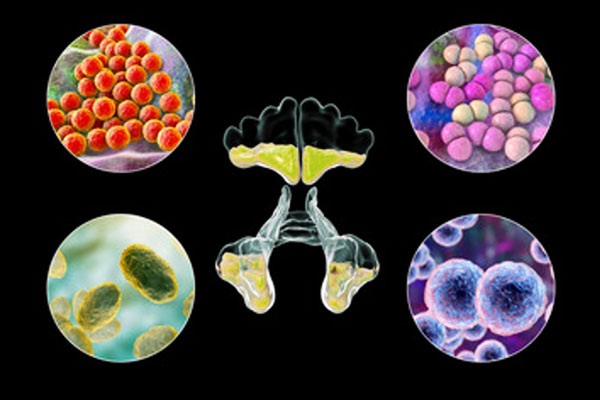 There is growing evidence that the nasal microbiome plays a major role in the development and course of CRS. Microbial diversity and composition have been linked to chronic sinonasal inflammation, and it is thus essential to understand how these alterations influence disease. We have shown microbial dysbiosis in CRS to be linked with reduced diversity and with microbial community imbalance, potentially to increase chronic mucosal inflammation as well as to add to greater symptoms. In response, this study measures longitudinal change in the nasal microbiome in subjects with CRS undergoing endoscopic sinus surgery (ESS) versus controls undergoing ESS for pituitary tumor resection to isolate surgery-related effects from disease-related alterations. This research aims to gain a deeper understanding of how therapeutic interventions, such as surgery, topical steroid irrigations, and proton pump inhibitors (PPIs), affect the nasal microbial ecosystem over the long term. Aids to the development of targeted microbiome-directed methods for the improvement of CRS management and patient outcomes can be gleaned from these findings.
 Chronic Rhinosinusitis and Extracellular Vesicles
Our research examines immune and inflammatory protein profiles in plasma and extracellular vesicles from people with chronic rhinosinusitis (CRS), with and without atopy, and controls without CRS. We aim to identify disease-associated pathways and explore how extracellular vesicle proteins relate to clinical features of CRS. This work may identify candidate biomarkers for future validation.