Caretti Lab for HIE
Neonatal hypoxic-ischemic encephalopathy (HIE) is a major cause of death and lifelong neurological disability following brain injury at birth. Therapeutic hypothermia (cooling) has improved the care of infants with HIE and remains the cornerstone of treatment. However, it must be initiated within the first hours of life, requires specialized neonatal care, and is not equally accessible worldwide. Even with appropriate cooling, some infants die, and many continue to experience long-term neurological disabilities.
The Caretti Lab starts with a simple question: What can we do after this early therapeutic window has closed, or when therapeutic hypothermia is not available?
The developing brain continues to change and remains remarkably plastic long after the initial injury. We study how an injury at birth alters brain development and recovery over time, and whether long-term inflammation after HIE can provide new opportunities for intervention. We are particularly interested in the interaction between the developing brain, immune system, and the gut microbiome. We want to understand whether early brain injury causes the brains of our little patients to age faster. We also study how these responses differ between males and females.
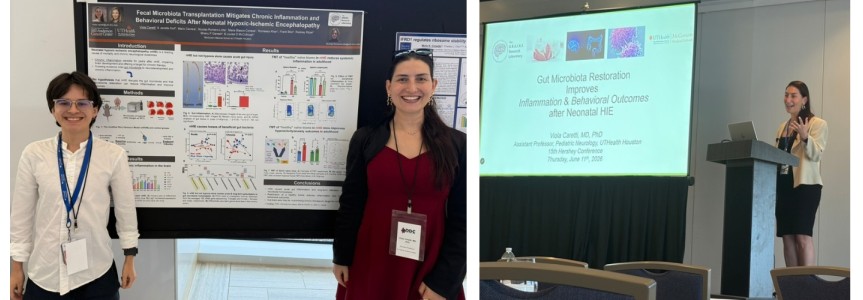
The Caretti Lab team combines experimental models in the laboratory with studies of infants and children in the hospital and clinic to identify therapeutic strategies that complement hypothermia and extend opportunities for treatment beyond the first hours of life. Ultimately, we hope to harness the plasticity of the developing brain to improve recovery and long-term outcomes for children affected by HIE.
As a physician-scientist laboratory, we strive to bring questions from the bedside to the laboratory and discoveries from the laboratory back to our patients. Everyone is welcome in our laboratory. We are committed to creating a safe and respectful environment where people of all backgrounds and identities are valued, supported, and given the opportunity to thrive. We are committed to rigorous, collaborative science and to mentoring the next generation of scientists and clinicians who will advance our understanding and treatment of neonatal brain injury.
Caretti Lab Team
Primary Investigator
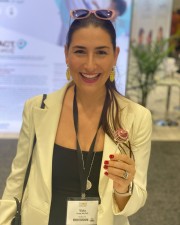
Viola Caretti, MD, PhD, is a child neurologist and physician-scientist studying neonatal hypoxic-ischemic encephalopathy (HIE) and its long-term effects on the developing brain. Her research asks how an injury occurring at birth continues to influence brain development and recovery over time, and whether this creates opportunities to intervene beyond the first hours of life. Her laboratory focuses particularly on neuroinflammation, the immune response, and the gut-brain axis after neonatal brain injury.
View Dr. Caretti’s faculty profile >>
Research Assistants
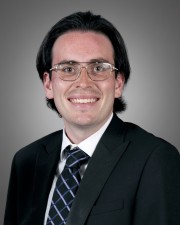
Mario Carrera is a PhD student in the Immunology Program at the MD Anderson UTHealth Houston Graduate School of Biomedical Sciences, working in the laboratories of Viola Caretti, MD, PhD, and Louise D. McCullough, MD, PhD, FAHA. His research asks why an injury sustained at birth produces neurological impairment that persists, and often worsens, across a lifetime. He studies cellular senescence—a state in which cells permanently stop dividing but remain metabolically active and inflammatory—as a mechanism connecting the acute injury to its chronic consequences. His work follows myeloid cells from the injured brain to the bone marrow and asks whether the same features are present in infants with HIE.
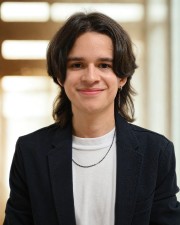
Nicolas Romero-Lotta is a research assistant in the Caretti Lab, where he studies the role of the gut microbiome in neonatal HIE. His current work investigates whether fecal microbiota transplant can improve neurological outcomes in animal models of HIE, pairing hands-on laboratory and animal work with metagenomic data analysis. He is particularly interested in the gut-brain axis and in microbial metabolites, especially short-chain fatty acids, as a link between intestinal communities and neurological outcomes in the newborn.
Nicolas earned his Bachelor’s of Science in industrial microbiology from Pontificia Universidad Javeriana in Bogotá, Colombia, where his undergraduate thesis examined the effects of the probiotic Limosilactobacillus fermentum on neurons. His technical background spans microbiology, cell culture, molecular biology, and bioinformatics, and he is currently deepening his expertise in shotgun metagenomics and the bioBakery suite of tools.
In his free time, Nicolas enjoys playing music, video games, and exploring new places.
Medical Student Researcher
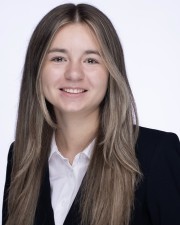
Kylie Lodes is a medical student researcher in the Caretti Lab, where she studies neonatal hypoxic-ischemic encephalopathy (HIE) and factors that may influence neurological injury and recovery. Her work includes clinical data collection and analysis as well as preclinical research examining brain injury in animal models of HIE.
Kylie earned her Bachelor of Science in biochemistry with a minor in neuroscience from Southern Methodist University and is currently a medical student at McGovern Medical School at UTHealth Houston. Her long-term interests include pediatric neurology, neurodevelopment, and translational research aimed at improving outcomes for children with neurological conditions.