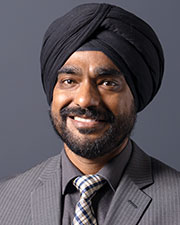
Tarun Singh, MD
- Assistant Professor
- Neuro Critical Care
Contact
Biography
Tarun Singh, MD, is an assistant professor and neurointensivist in the Vivian L. Smith Department of Neurosurgery at McGovern Medical School at UTHealth Houston. He is a clinician-scientist with a longstanding commitment to research and academic medicine, having pursued dedicated research training early in his career and maintaining a consistent trajectory of scholarly work across residency, fellowship, and faculty appointments.
Areas of Interest
Clinical Interests
Dr. Singh provides comprehensive care for critically ill patients with acute neurologic injury, with particular emphasis on neurotrauma and complex Neuro ICU syndromes. His clinical interests include traumatic brain injury, intracerebral hemorrhage, ischemic stroke, status epilepticus, and disorders of consciousness. He is especially interested in high-reliability, protocol-driven neurocritical care, multidisciplinary coordination, and bedside strategies that improve short-term physiologic stability while supporting long-term functional recovery.
Research Interests
Dr. Singh’s research program centers on precision nutrition and metabolic monitoring in neurocritical care, with a specific focus on traumatic brain injury, traumatic spinal cord injury, and subarachnoid hemorrhage. His work aims to:
- Individualize energy targets using indirect calorimetry rather than predictive equations
- Implement pragmatic, ICU-feasible strategies to improve energy and protein adequacy during hospitalization
- Evaluate downstream effects on clinically meaningful outcomes, including sarcopenia risk, functional recovery, and hospital outcomes
- Leverage data science and AI-enabled approaches to strengthen phenotype identification, risk prediction, and outcomes assessment in acute neurologic injury
His approach emphasizes pragmatic trial design, integration into routine Neuro ICU workflows, and recovery-focused outcomes.
His long-term goal is to build a multidisciplinary, fundable program that integrates physiology-informed nutrition targets, implementation workflows, and outcomes research to improve recovery after acute neurologic injury—particularly among vulnerable and high-risk patient populations.