Dr. Sam Beger Presents Astronaut Training & Spaceflight Research at AsMA 2026
Preparing for What Happens Beyond Launch
Each year, the Aerospace Medical Association (AsMA) Annual Scientific Meeting (external link) brings together physicians, researchers, scientists, engineers, military leaders, and aerospace professionals from around the world to share the latest advances in aerospace and space medicine.
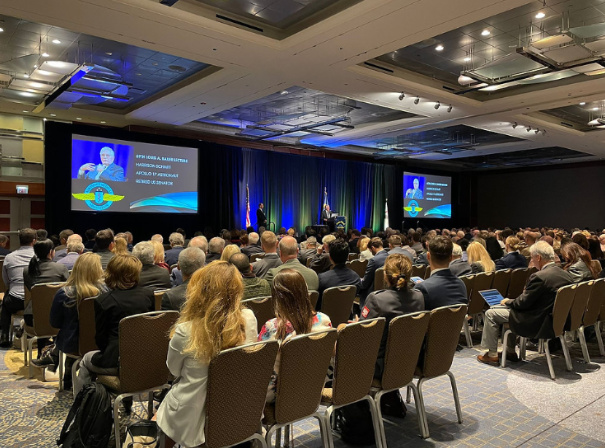
As one of the field’s premier international conferences, AsMA has served as a hub for innovation and collaboration in aviation and human spaceflight for nearly a century.
Samuel Beger, MD, MPH, showcased how the department is helping prepare astronauts for the medical challenges of future spaceflight through innovative training programs and research. A graduate of UTH’s Emergency Medicine Residency and most recently, the Space Medicine Fellowship, Dr. Beger is now joining the faculty at the University of Arizona and the Arizona Program for Exploration Medicine and Surgery (APEX), where he will continue advancing the field of space medicine.
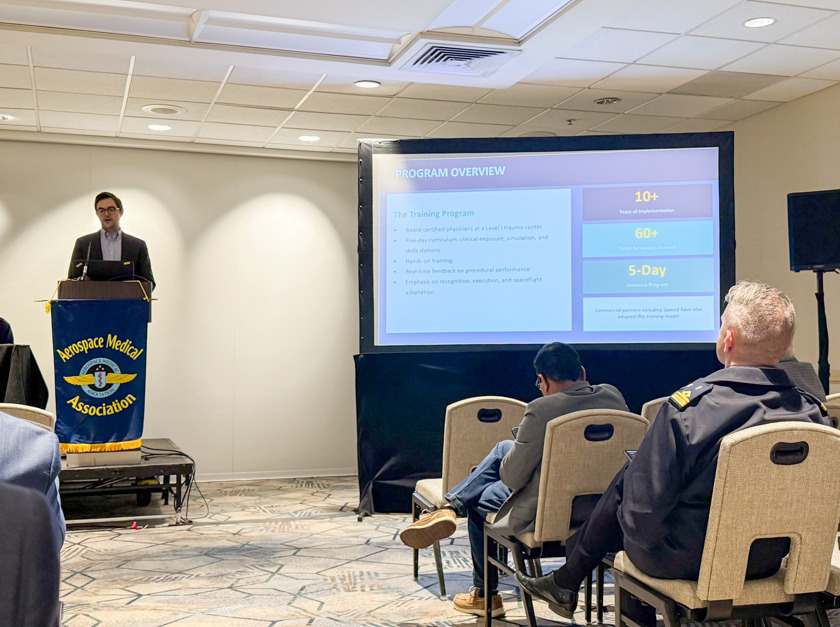
Dr. Beger presented “Pre-flight, Hands-On Medical Skills Training for Non-Physician Crewmembers: The UTHealth Houston Astronaut Medical Training Program,” highlighting the department’s role in preparing astronauts and astronaut candidates through a collaborative training effort with NASA Flight Surgeons (external link), KBR (external link), and UTH-EM physicians. Additional contributors included Nicolas Heft, MD; Kris Lehnhardt, MD; and Eric Power, MD.
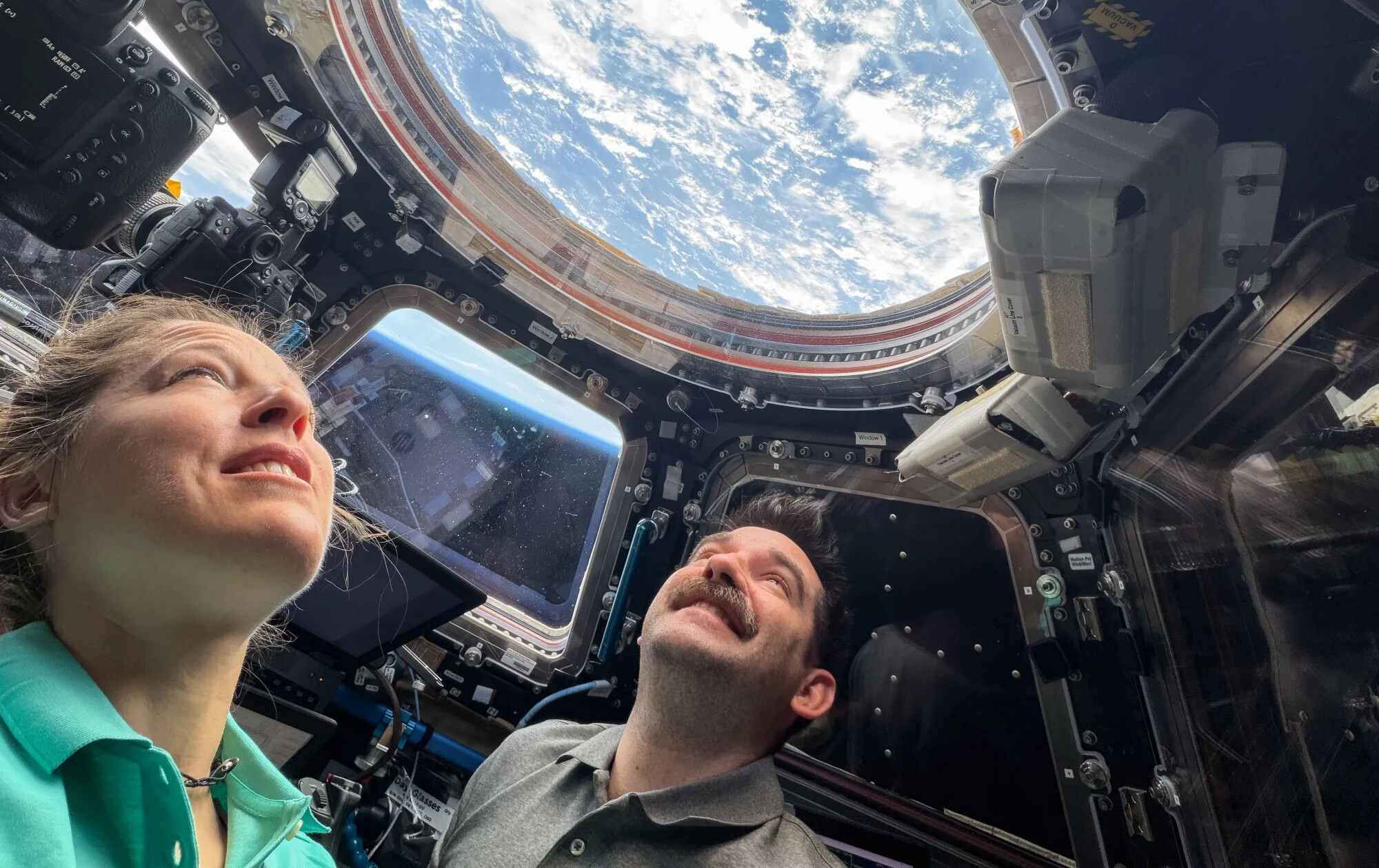
As future missions venture farther into space, medical support becomes increasingly complex. Crews may experience delayed communication with Earth, limited resources, and, in some cases, operate without a physician onboard. The training program helps prepare non-physician crewmembers to recognize medical emergencies, perform mission-specific medical tasks, communicate effectively with flight surgeons, and adapt terrestrial medical skills to the unique challenges of spaceflight.
Built upon the strengths of emergency medicine, the five-day curriculum combines clinical exposure, simulation-based scenarios, procedural skills training, and real-time feedback within a Level I trauma center. Participants receive hands-on instruction in high-yield skills including point-of-care ultrasound, laceration repair, intravenous cannulation, airway management, urinary catheterization, dental and ocular emergencies, selected critical care procedures, and clinical decision-making in austere environments.
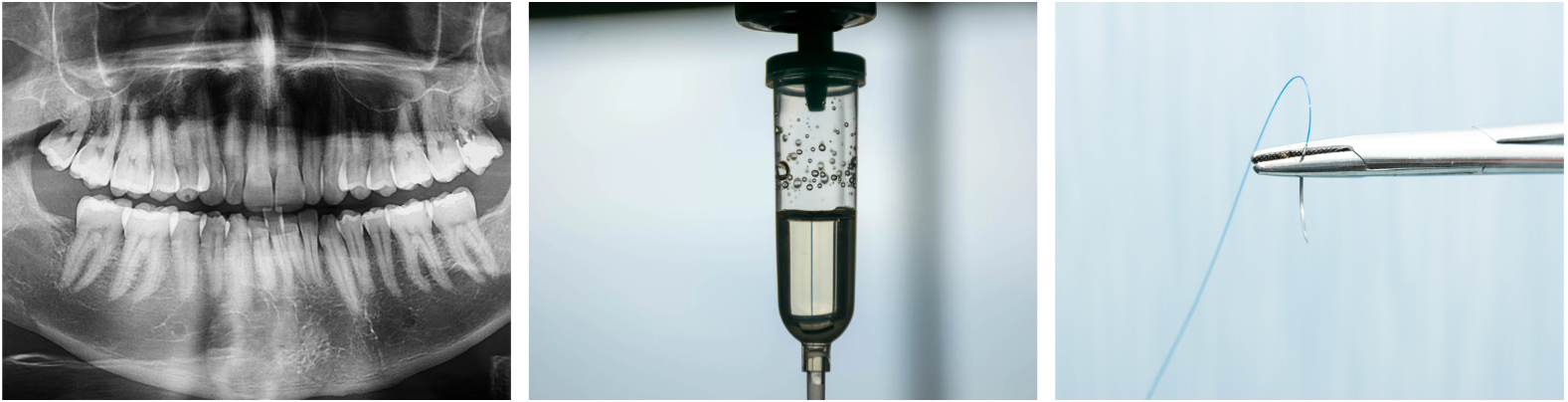
Over the past decade, UTHealth Houston has helped support hands-on medical training for more than 60 NASA astronauts and astronaut candidates through this collaborative NASA/KBR framework. Mission-specific adaptations of the program have also been developed for commercial spaceflight, including training that supported the SpaceX Polaris Dawn mission with simulation, clinical exposure, suturing, IV placement, point-of-care ultrasound, and emergency response training.
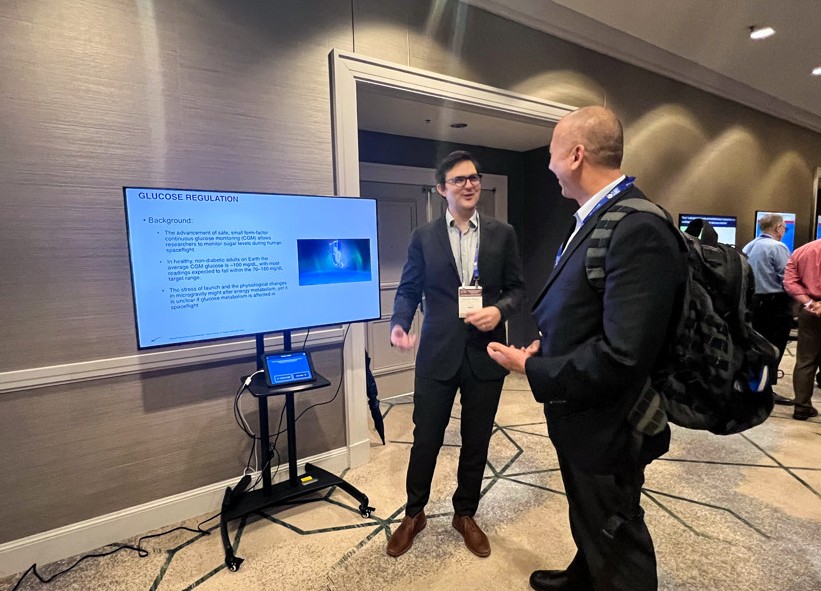
In a second presentation, “Continuous Glucose Monitoring During Human Spaceflight: A Comparison With Terrestrial Baselines,” Dr. Beger shared collaborative research with SpaceX examining continuous glucose monitoring data collected during the Inspiration4 (external link), Polaris Dawn (external link), and Fram2 (external link)missions. The study found that average glucose values remained within normal terrestrial ranges throughout flight, supporting the potential use of compact monitoring technologies to better understand metabolic health during commercial spaceflight.
Beyond the presentations themselves, Dr. Beger’s work reflects the mission of our Space Med program – the first two-year space medicine fellowship housed within an academic Department of Emergency Medicine. The program prepares physicians to meet the unique challenges of caring for humans beyond Earth while advancing research, operational medicine, and medical education through collaborations with NASA (external link), SpaceX (external link), Vast (external link), and other leaders in the aerospace industry.

For EM physicians like Dr. Sam Beger, caring for patients in uncertain, resource-limited, and time-sensitive environments is part of everyday practice. Those same principles are becoming increasingly important as human spaceflight evolves.