Fellowship Overview
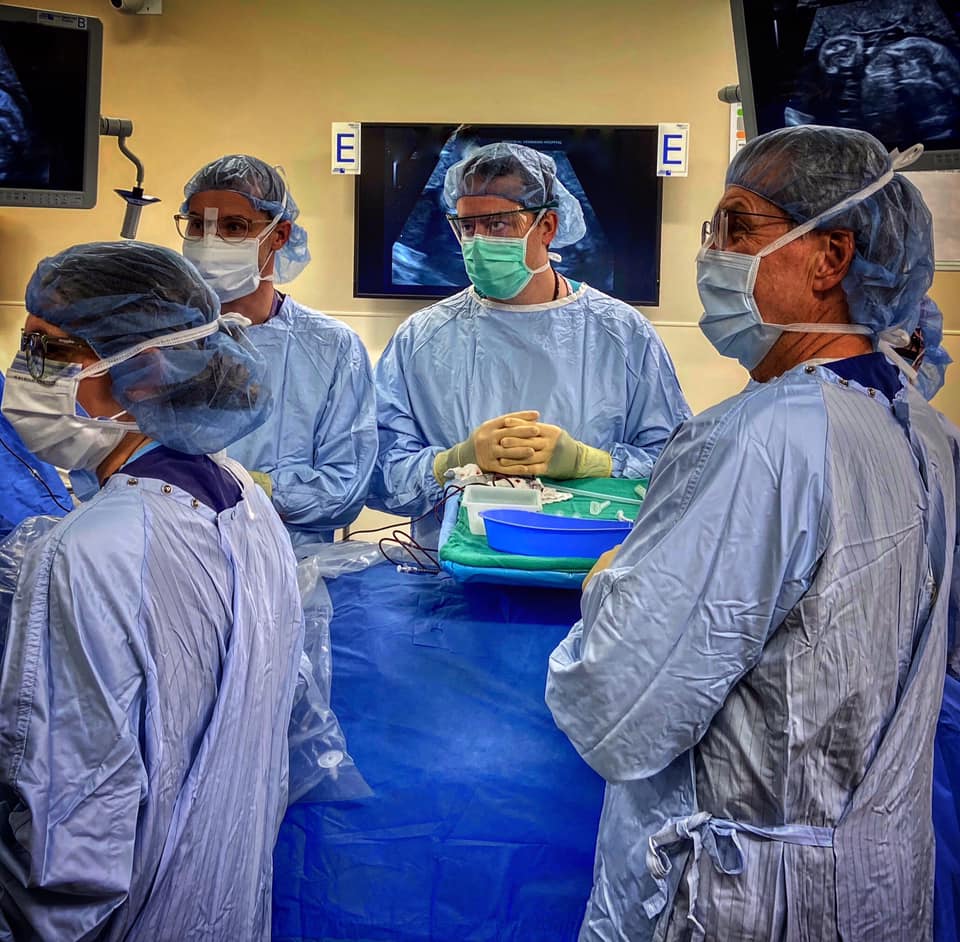
UTHealth Houston Fetal Center at McGovern Medical School, affiliated with Children’s Memorial Hermann Hospital–Houston, is a well-established quaternary referral center for complex fetal anomalies. Patients are referred from across Texas as well as more than 20 other states. The center performs over 200–250 fetal intervention procedures annually, including 80–100 fetoscopic laser surgeries, 40 fetoscopic spina bifida repairs, 20 selective reductions, 50 intrauterine transfusions, 40–50 fetal shunt placements, and six fetoscopic laser procedures for type II/III vasa previa.
The Fetal Intervention Fellowship program was approved by the Graduate Medical Education Office of UTHealth in early 2012 and was reapproved in March 2018. The program has graduated four maternal-fetal medicine specialists who are currently actively practicing Fetal Intervention.
The fellowship is two years in length (2027–2029). Fellows will be appointed through the Graduate Medical Education Office of UT School of Medicine at Houston, and they will be given a faculty position in the Department of Obstetrics, Gynecology and Reproductive Science as a clinical instructor. Salary level will commensurate with their previous number of years of resident and fellow training.
The fellow will be directly supervised by four fetal interventionists with over 60 years of cumulative experience. Clinical activities will take place in the outpatient area at the UT Professional Building as well as on the inpatient service at Memorial Hermann Hospital and in the operating rooms of Children’s Memorial Hermann Hospital located in the Texas Medical Center.
Unique clinical skills with hands-on training will be obtained in the following areas:
- Evaluation of complex fetal congenital anomalies by ultrasound and MRI
- Laser ablation of placental anastomoses in the treatment of severe twin-twin transfusion syndrome
- Fetoscopic tracheal balloon occlusion for congenital diaphragmatic hernia
- Ultrasound-guided shunt placement in the fetal thorax or bladder
- Intrauterine transfusion
- vascular ablation including microwave, laser and bipolar cord coagulation in the treatment of complicated monochorionic multiple gestations
- In-utero open and minimally invasive fetal surgical repair of spina bifida
- Ex-utero intrapartum treatment procedure for airway obstructions or lung masses
- Other fetoscopic procedures such as ablation of chorioangiomas, release of amniotic bands, and fetoscopic laser ablation of type 2/3 vasa previa
Additionally, the fellow will rotate on various clinical services that directly interface with the fetal intervention program including pediatric surgery, pediatric cardiology, and pediatric radiology.
The fellow will be required to be active in ongoing research, which includes several locally and federally funded clinical and translational research projects. It is anticipated that a minimum of one major project directed by the fellow will be completed and a manuscript developed over the course of the program.