Educational Highlights
Why choose this program?
Training at two premier academic centers in the Texas Medical Center
Access to state-of-the-art facilities and nationally recognized faculty
A curriculum that blends clinical care, research, and laboratory experience for a well-rounded fellowship
Opportunity to serve as counselors at Camp PHEver, a week-long summer adventure for children with phenylketonuria (PKU)
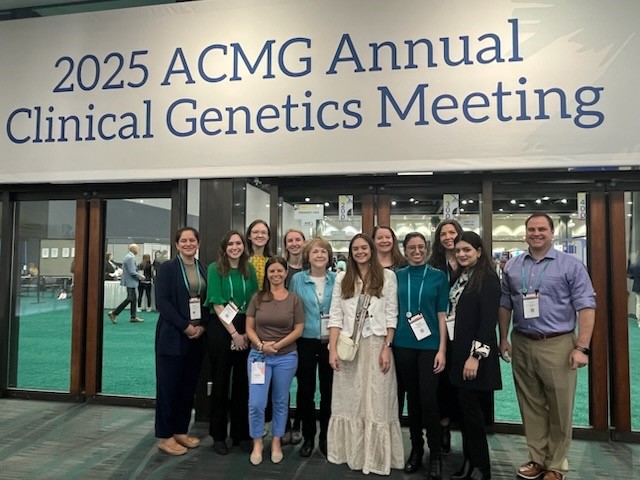
Trainees frequently get opportunities to attend major conferences alongside faculty to build knowledge and networks.
Key competitive advantages
Diverse clinical rotations
- Memorial Hermann Hospital/Children’s Memorial Hermann Hospital and UT Physicians outpatient clinics (9 months): Fellows manage acute and chronic metabolic conditions, supervise residents, and collaborate with metabolic dieticians in both inpatient and outpatient settings
- Texas Children’s Hospital & Baylor-St. Luke’s Hospital (2 months): Exposure to complex pediatric metabolic cases and multidisciplinary care teams
- Baylor/Miraca Biochemical Genetics Laboratory (1 month): Hands-on experience in biochemical testing, interpretation, and communication of results to clinicians
Comprehensive curriculum
- Clinical expertise: Diagnosis and management of inborn errors of metabolism (IEMs) such as urea cycle disorders, phenylketonuria, glycogen storage diseases, and lysosomal storage disorders
- Therapeutic strategies: Training in dietary therapy, enzyme replacement, and emerging treatments
- Newborn screening: Interpretation and follow-up of abnormal results
- Research and epidemiology: Principles of clinical research and genetic epidemiology applied to metabolic disorders
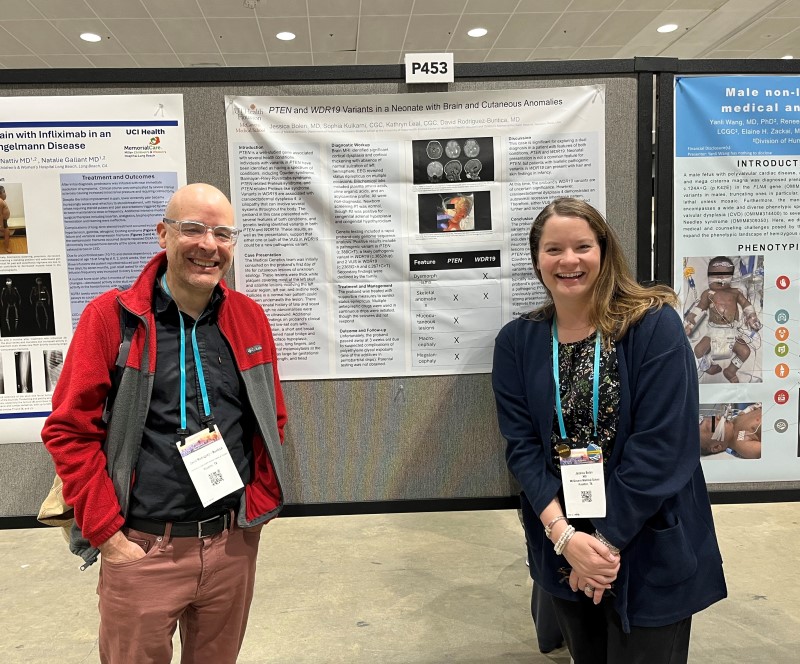
Faculty and trainees research collaboratively, developing posters and presentations suitable for a variety of platforms.
Structured didactics and conferences
- Weekly medical genetics Grand Rounds and biochemical genetics lecture series
- Clinical Core Seminar Series (July to December) hosted by national experts
- Participation in sign-out conferences, research seminars, and interdisciplinary team meetings
Growth potential
Associate Professor Paul Hillman, MD, PhD, FABMGG, is the first graduate of the MBGF program and remains actively involved in fellow instruction and overall development of the program. Current fellow Jessica Bolen, MD, trained as a Combined Pediatrics-Medical Genetics resident here at McGovern Medical School and has chosen to continue her educational journey with this highly customized fellowship program. More residents are lining up to follow this trajectory as there are abundant opportunities and growth potential in the Texas Medical Center.