Mobile ECMO
Introduction to ECMO & ECPR
Advancing the front lines of cardiac arrest care through mobile ECMO, prehospital ECPR, and multidisciplinary innovation.
ECMO, which stands for Extracorporeal Membrane Oxygenation, is a sophisticated life-support technology that temporarily takes over the function of the heart and lungs when a person’s own organs can no longer provide sufficient oxygen or maintain blood circulation. It works by draining blood from the body through large tubes (cannulas), pumping it through an artificial lung that adds oxygen and removes carbon dioxide, and then returning the oxygenated blood back into the patient’s circulation. This support can sustain critically ill patients for days to weeks while clinicians treat the underlying cause of their heart or lung failure.
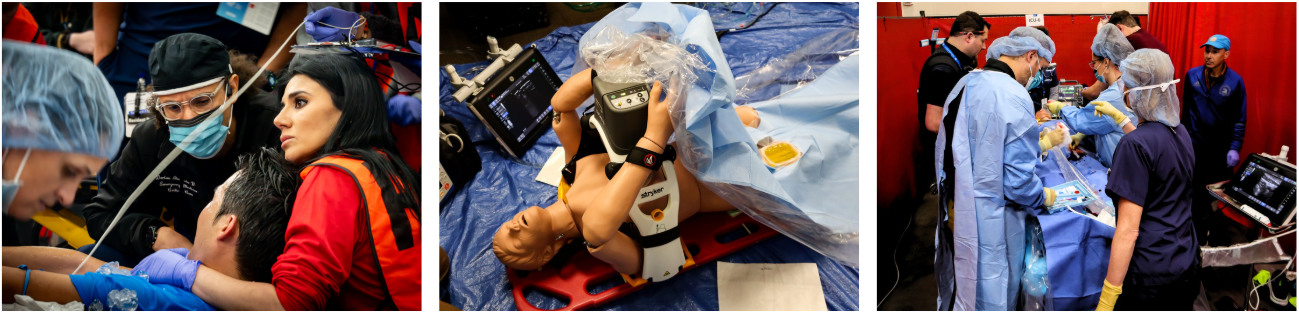
ECPR, or Extracorporeal Cardiopulmonary Resuscitation, is a specialized emergency application of ECMO used during cardiac arrest. When standard CPR fails to restart the heart, highly skilled medical teams can rapidly place a patient on ECMO while chest compressions continue, restoring blood flow and oxygenation to vital organs such as the brain and heart. Together, ECMO and ECPR represent cutting-edge interventions that provide patients with critical time and help stabilize life-threatening situations.
Why ECMO & ECPR Matter
In many cases of cardiac arrest or severe cardiopulmonary failure, survival is limited not only by restoring a heartbeat, but by how quickly oxygen delivery to the brain and vital organs can be reestablished. Even when circulation is temporarily restored, prolonged low blood flow can lead to irreversible organ damage and poor neurological outcomes.
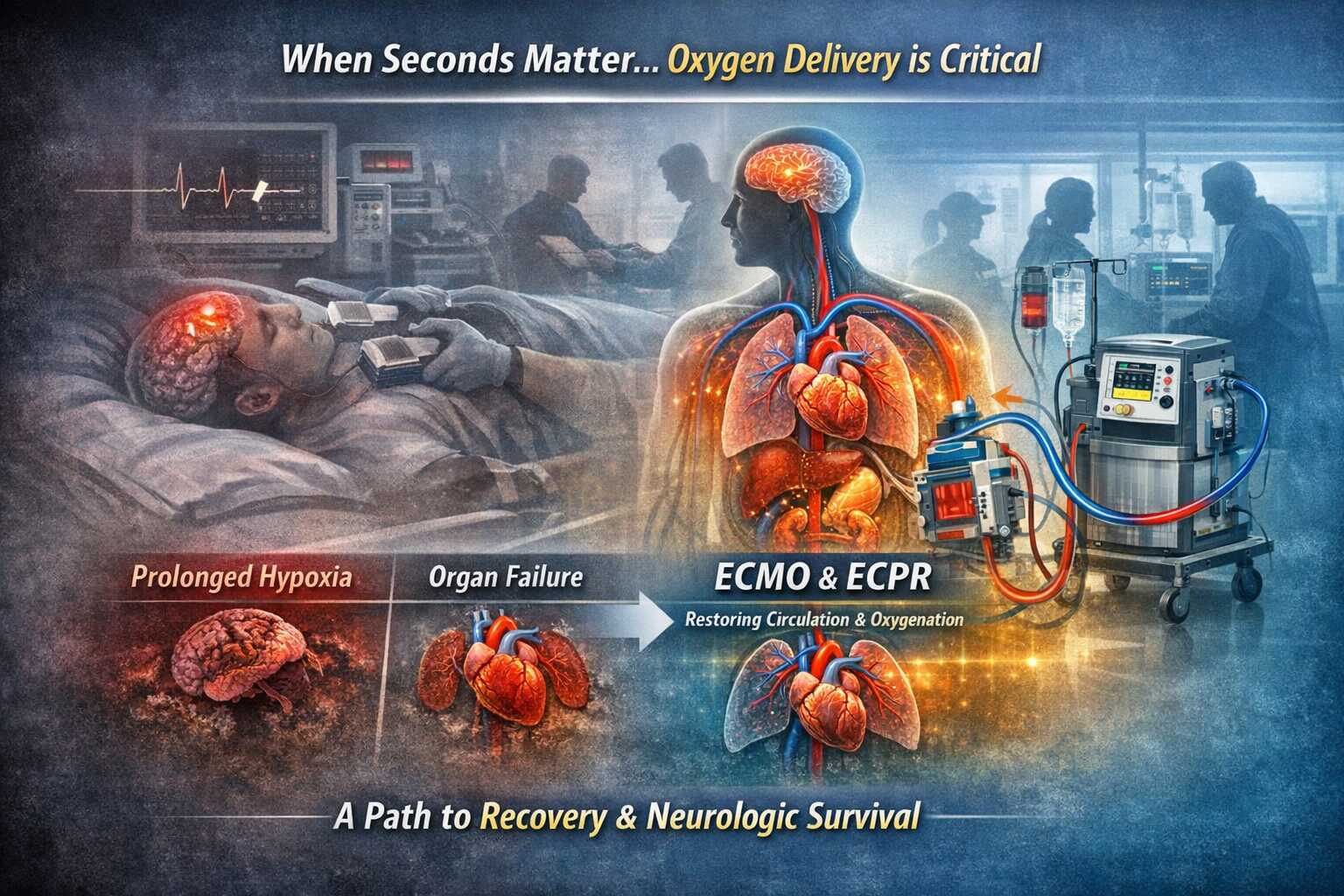
ECMO and ECPR address this critical gap by providing immediate, sustained circulatory and oxygenation support when traditional resuscitative efforts fall short. Rather than relying solely on the body’s ability to recover on it’s own, these technologies allow care teams to stabilize patients, protect organ function, and create a controlled window to identify and treat the underlying cause.
This shift, from reactive resuscitation to proactive organ support – has redefined what is possible in cardiac arrest care. Patients who previously had little chance of survival may now have a pathway to recovery with meaningful neurological outcomes.
By extending the time available for intervention and improving physiologic stability, ECMO and ECPR have become essential tools in modern resuscitative and critical care, offering new possibilities in situations that were once considered unsurvivable.
UTHealth Houston’s Mobile ECMO Program
Our Mobile ECMO program is a pioneering initiative led by the Department of Emergency Medicine in collaboration with the Houston Fire Department (including other local agencies) and Memorial Hermann Center for Advanced Heart Failure, bringing ECPR capabilities directly to the scene of out-of-hospital cardiac arrest. Our team is among a select few worldwide that deploys into the field with a specialized emergency response vehicle to perform ECPR on-site for patients in cardiac arrest.
This first-of-its-kind mobile service in Houston responds to select emergency calls and enables the transport of patients while on ECMO support. By initiating advanced circulatory support in the field, the program reduces time to intervention and expands access to life-saving care beyond the hospital setting.
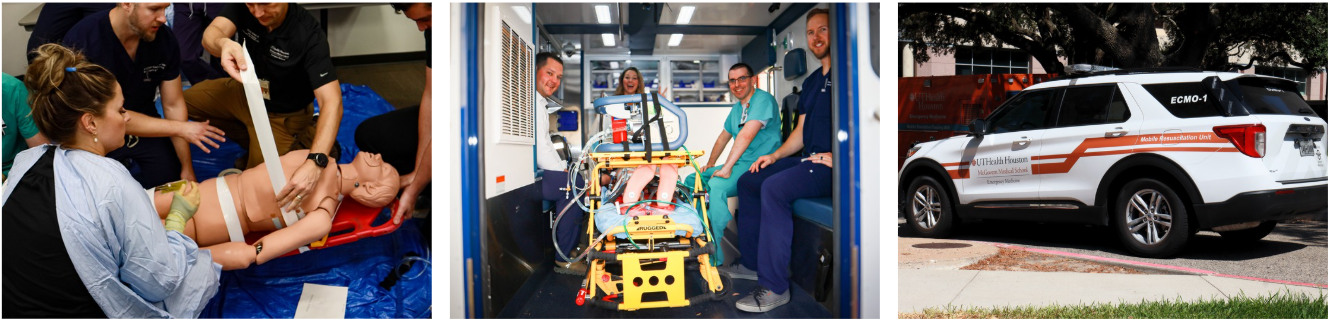
Through this model, highly coordinated teams are able to deliver advanced resuscitative care in real time, bridging the gap between prehospital response and definitive in-hospital treatment. The program has already demonstrated its impact through successful integration into large-scale community events, including the Chevron Houston Marathon, where rapid response capabilities and on-site readiness are critical.
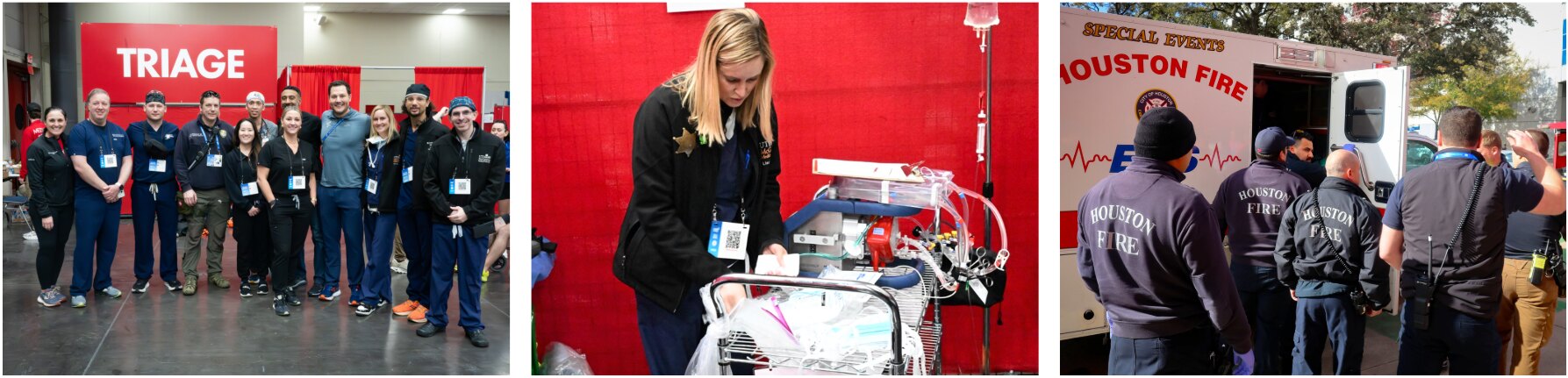
By extending advanced life support into the field and supporting patients during transport and large public events, the program continues to advance prehospital cardiac arrest care. Ultimately, it aims to significantly improve survival rates and neurological outcomes for individuals who would otherwise face poor prognoses following sudden cardiac events in the community.
Program Highlights / What Sets Us Apart
- Mobile ECMO program capable of initiating ECPR directly in the field
- Unique collaboration with the Houston Fire Department to deliver advanced prehospital care
- Deployment via a specialized emergency response vehicle equipped for on scene cannulation
- Integration into major community events and emergency response systems
- Multidisciplinary team including emergency medicine, critical care, perfusion, and EMS professionals
- Rapid-response capability designed to minimize time to advanced circulatory support
Education & Training
Our ECMO program provides hands-on training in high-acuity resuscitation and extracorporeal support across multiple levels of learners.

Residents and fellows are actively involved in patient selection, cannulation procedures, and ongoing ECMO management in both hospital and prehospital settings.
Training is further reinforced through simulation-based sessions and interdisciplinary collaboration with EMS, perfusion, and critical care teams, ensuring learners gain practical experience in time-sensitive, team-based care.
Clinical Capabilities
Our ECMO program delivers comprehensive support for patients in cardiac arrest, including:
- Extracorporeal cardiopulmonary resuscitation (ECPR) for refractory cardiac arrest
- Post-cardiac arrest critical care and hemodynamic optimization
- Safe transport and continuity of care for patients on ECMO support
- Resuscitative Transesophageal Echocardiography (RESUS TEE)
- Pre-hospital arterial line monitoring
Media
- A life saved: UTHealth Houston mobile ECMO team’s first-ever deployment for the Chevron Houston Marathon – UTHealth Houston
- Advancing Critical Care: UTHealth Mobile ECMO Team at Houston Shock Symposium
- ECMO in Action: Advancing Critical Care at UTHealth Houston
- US Military CCATT – UTHealth Houston Mobile ECMO Joint Training
- From Crisis to Triumph: A Tale of Second Chances and Cutting-Edge ECMO Care with Abbas & Helena Mohammadzad
- UTHealth Houston’s Emergency Department ECMO Program Saves Man with Heroic Resuscitation Effort
- Keeping Houston Running: UTH-EM’s Role at the 2026 Chevron Houston Marathon
- 2024 MERITS Workshop Recap: Highlights & Key Takeaways!
- Breaking Waves: EM Makes a splash at TCEP’s CONNECT24 Conference!
- Dr. Carrie Bakunas celebrates a milestone achievement at the 6th Annual “Houston Shock Symposium”
- Ensuring Athlete Safety: Innovations and Challenges in Houston Marathon Medical Management | News | Endurance Medicine | World Athletics
Publications
Philanthropic Support
Interested in supporting the UTHealth Houston Mobile ECMO Program? For philanthropic giving inquiries, please contact:
Houston, TX 77030
Phone: 713-500-7878
Email: [email protected]
