About
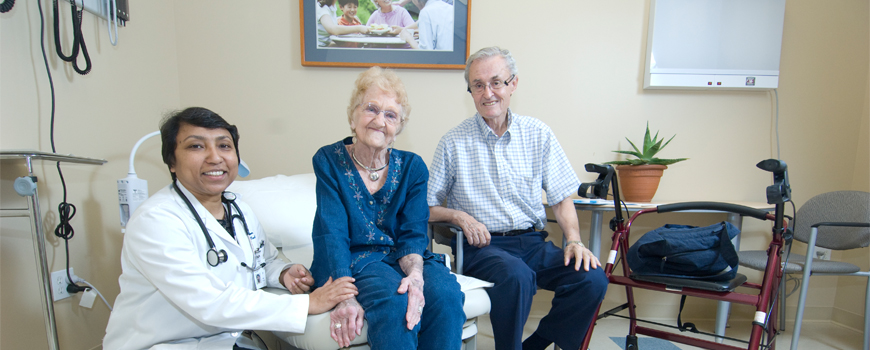
Founded in 2007, the Joan and Stanford Alexander Division of Geriatric and Palliative Medicine is dedicated to improving the lives of older adults, individuals living with serious illness, and the people who care for them. Our work is grounded in compassionate, relationship-based care and driven by a belief that aging and serious illness deserve thoughtful, coordinated, and human-centered approaches across every setting.
The division brings together more than 25 faculty physicians and a large interprofessional team of advanced practice providers, nurses, social workers, researchers, educators, and administrative leaders. Together, we deliver care across UT Physicians, Memorial Hermann, Harris Health, community clinics, hospitals, and patients’ homes. Our clinical programs span geriatrics, palliative medicine, house calls, inpatient care, specialty clinics, and the Center for Healthy Aging, allowing us to meet patients and families wherever they are in their care journey.
Education is central to who we are. The division leads fellowship training in Geriatric Medicine and Hospice and Palliative Medicine and plays an active role across undergraduate and graduate medical education. Fellows, residents, students, and other trainees learn alongside faculty who model team-based care, clinical excellence, and advocacy for older adults and people living with serious illness.
Our research and scholarship focus on real-world challenges facing aging populations, including age-friendly health systems, dementia and delirium care, osteoporosis and fracture prevention, elder mistreatment, social connection, survivorship, health informatics, and community-engaged research. The division is home to the TEAM Collaboratory, the Texas Elder Abuse and Mistreatment Institute, a nationally recognized interdisciplinary effort to protect vulnerable older adults and advance elder justice.
Through close partnership with the UTHealth Houston Institute on Aging (external link) and broad collaboration across UTHealth and the community, the division serves as a connector between clinical care, education, research, and outreach. Our faculty and trainees are nationally and internationally recognized for their work, but at our core, we remain focused on people, dignity, and quality of life at every stage of aging and serious illness.