Ask RHINO: The ChatGPT to Explore Rhythmic Therapeutic Targets
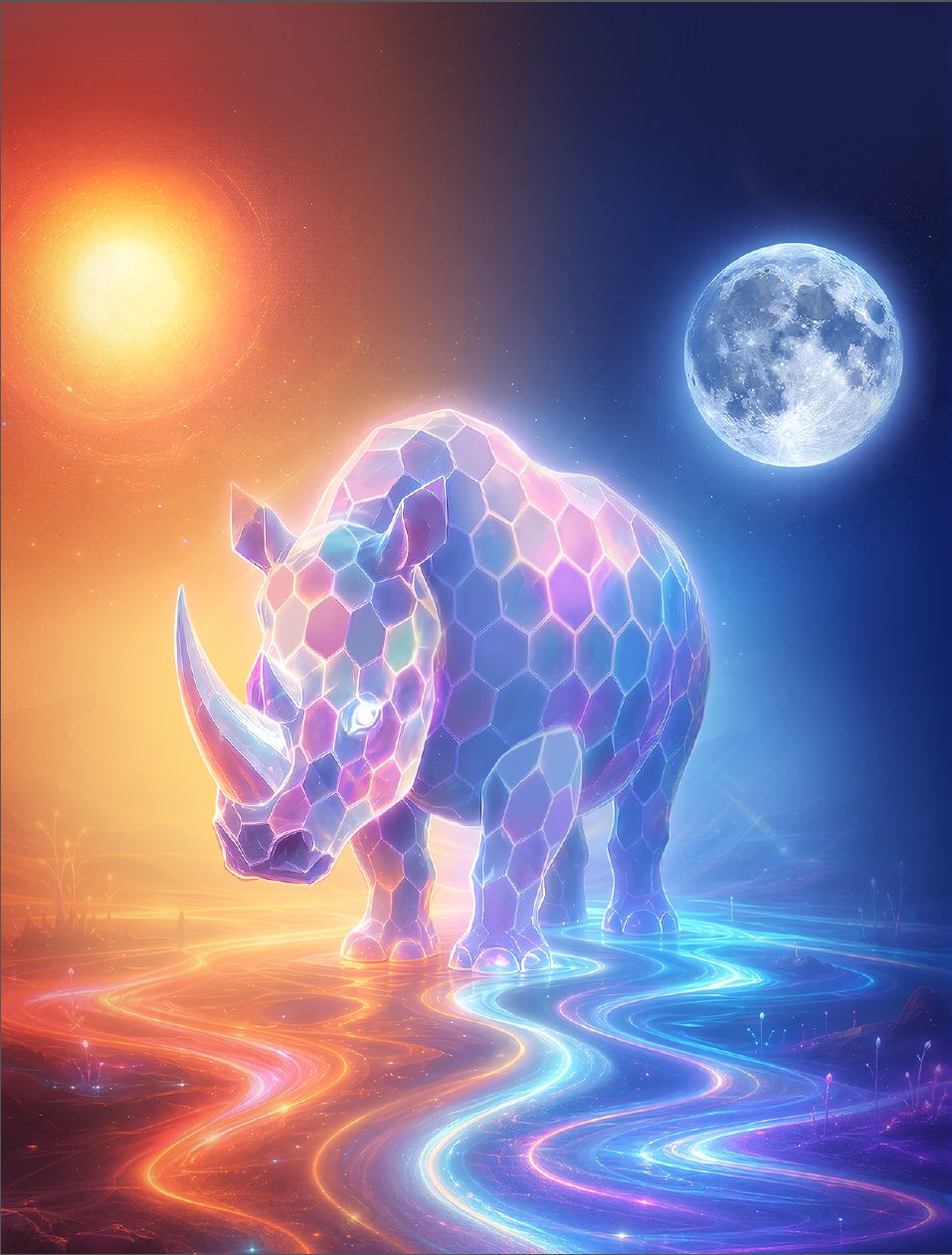
Circadian rhythms shape human physiology, and their disruption influences disease risk and therapeutic response. However, the rhythmic and druggable genome remains largely unexplored. In this issue, Ying Chen and co-workers present RHINO (RHythmic Interacting Network for multi-Omics), an AI-powered web portal that integrates ten multi-omic layers, disease, and drug–target data across tissues and species to expand the landscape of rhythmic therapeutic targets. On the cover, a luminous rhinoceros stands at the boundary of day and night, as warm and cool streams of circadian multi-omics data converge and crystallize across its honeycombed body. The artwork symbolizes RHINO as an integrated, living network attuned to the oscillations of the biological clock.
Through this platform (https://hanlaboratory.com/RHINO (external link)), users can ask questions about circadian rhythms, similar to ChatGPT. We also provide showcases demonstrating how to mine public circadian multi-omics data and generate new hypotheses. The platform has already attracted 5,294 visitors, and one user even emailed us to ask how to cite it before the paper was accepted.