$2.8M NIA Grant Targets Cognitive Decline After Surgery
UTHealth Houston researchers have been awarded a five-year, $2.8 million grant from the National Institute on Aging Alzheimer’s Disease Initiative to identify biomarkers and mechanisms of perioperative neurocognitive disorder (PND) in older adults.
PND includes postoperative delirium, delayed neurocognitive recovery, and postoperative neurocognitive disorder. For years, physicians have seen memory loss and confusion in older patients after anesthesia and surgery, but the underlying biology remains poorly understood. The condition is associated with higher morbidity and mortality, greater cost of care, and increased risk of Alzheimer’s disease and related dementias.
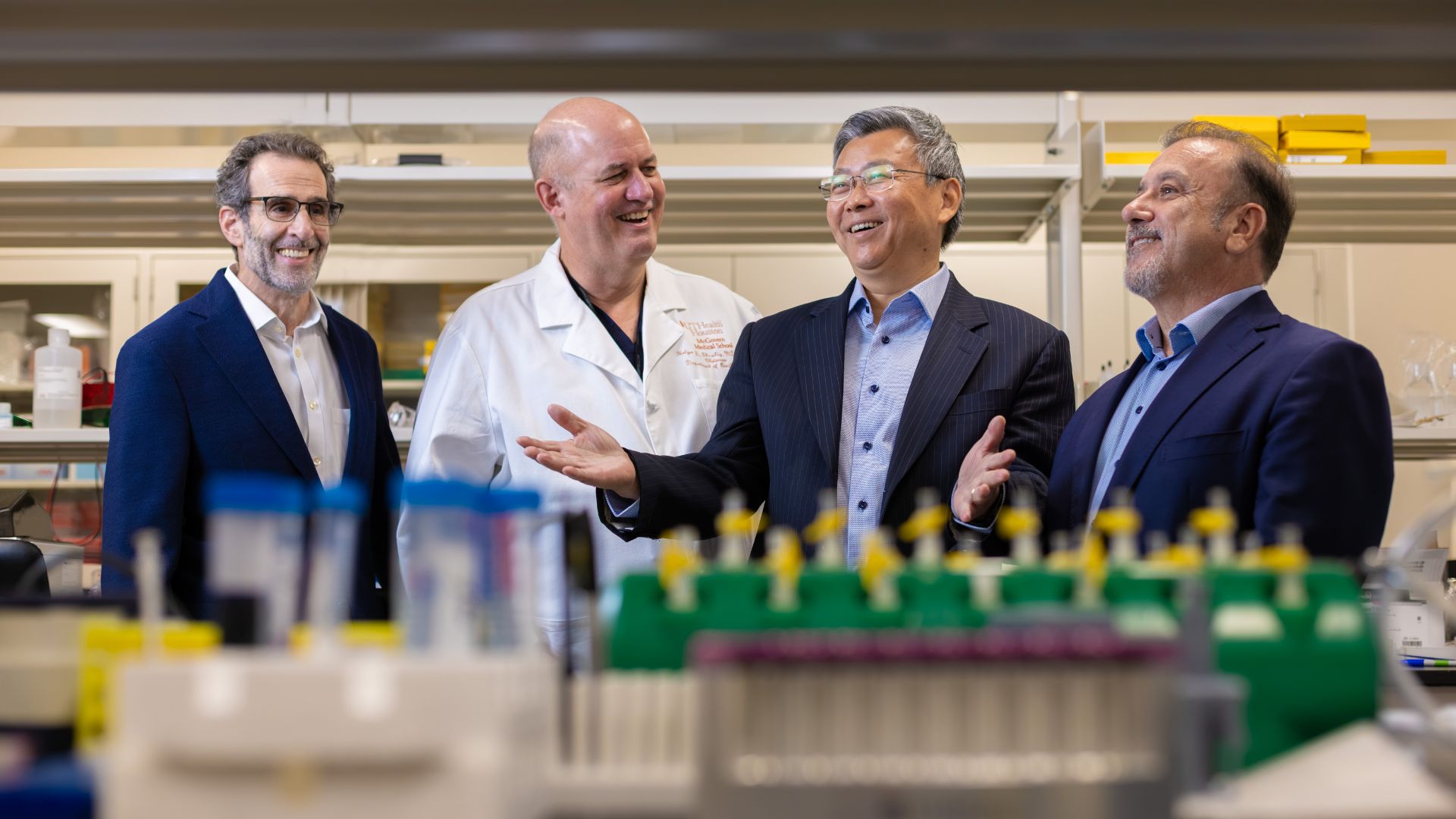
The study is led by Zhongcong Xie, MD, PhD, professor and vice president for translational perioperative research and innovation in the Department of Anesthesia, Critical Care and Pain Medicine at McGovern Medical School. Much of his prior work has used animal models to study how anesthesia and surgery affect the brain. This is his first NIH award since joining UTHealth Houston in May 2025 and brings him to five R01 grants as lead investigator.
Xie’s team will recruit 400 patients and collect blood samples and rectal swabs before and after anesthesia and surgery. Researchers will characterize the gut microbiota and measure blood levels of tau, phosphorylated tau, and metabolites produced by gut microbes. Abnormal tau species and changes in the microbiome may both contribute to neurologic disease, including dementia.
Cognitive function and delirium will be assessed before surgery, immediately afterward, at 21 days, and at six months. Findings could help clinicians identify high-risk patients before the operating room and target interventions to prevent PND.
Holger Eltzschig, MD, PhD; Dan Sessler, MD; and Alparslan Turan, MD, are key investigators on the study. Institute leadership noted that the award reflects both Xie’s science and the collaborative environment at the Institute of Perioperative Medicine and the Center for Outcomes Research.
For more details, read the full article: