Researchers harness the heart’s natural defense against heart attack damage
A review published recently in Nature Reviews Cardiology, led by Holger Eltzschig, MD, PhD, professor and director of the Institute of Perioperative Medicine at McGovern Medical School at UTHealth Houston, focuses on hypoxia-inducible factors (HIFs). These proteins act as the body’s oxygen sensors. When oxygen levels drop HIFs switch on a network of protective genes that help cells survive by changing how the heart produces energy, reducing cellular stress, and activating other protective pathways.
A heart attack occurs when blood flow to the heart muscle is blocked, creating an oxygen shortage that can kill cells and trigger inflammation. Restoring blood flow is essential, but the sudden return of oxygen can cause additional damage known as ischemia-reperfusion injury. Earlier research by Eltzschig’s team showed that the time of day a heart attack occurs influences the severity of damage. This effect is driven by an interaction between BMAL1, a key circadian rhythm protein, and HIF2A. Together, they shape how heart cells respond, with HIF2A providing greater protection in the afternoon than in the early morning hours.
The review highlights HIF1A and HIF2A as key regulators that may protect the heart through different mechanisms. HIF1A is especially important in ischemic preconditioning, in which brief, controlled periods of reduced blood flow appear to train the heart to better withstand a future attack. HIF2A may offer additional protection that varies with the body’s natural circadian rhythms. In animal and laboratory studies, drugs that boost HIF activity have consistently reduced heart damage. Although these treatments are not yet standard care for heart patients, some HIF-activating therapies are already FDA-approved for other conditions.
Researchers expect future clinical trials to test whether these drugs can reduce damage during acute heart attacks, protect the heart during major cardiac surgery, and prevent injury in other surgical procedures.
Other UTHealth Houston authors include Cong Luo, MD, PhD; Tao Li, PhD; Jihoon Tak, PhD; Matthew DeBerge, PhD; and Kuang-Lei Tsai, PhD.
To read the full article, click here (external link).
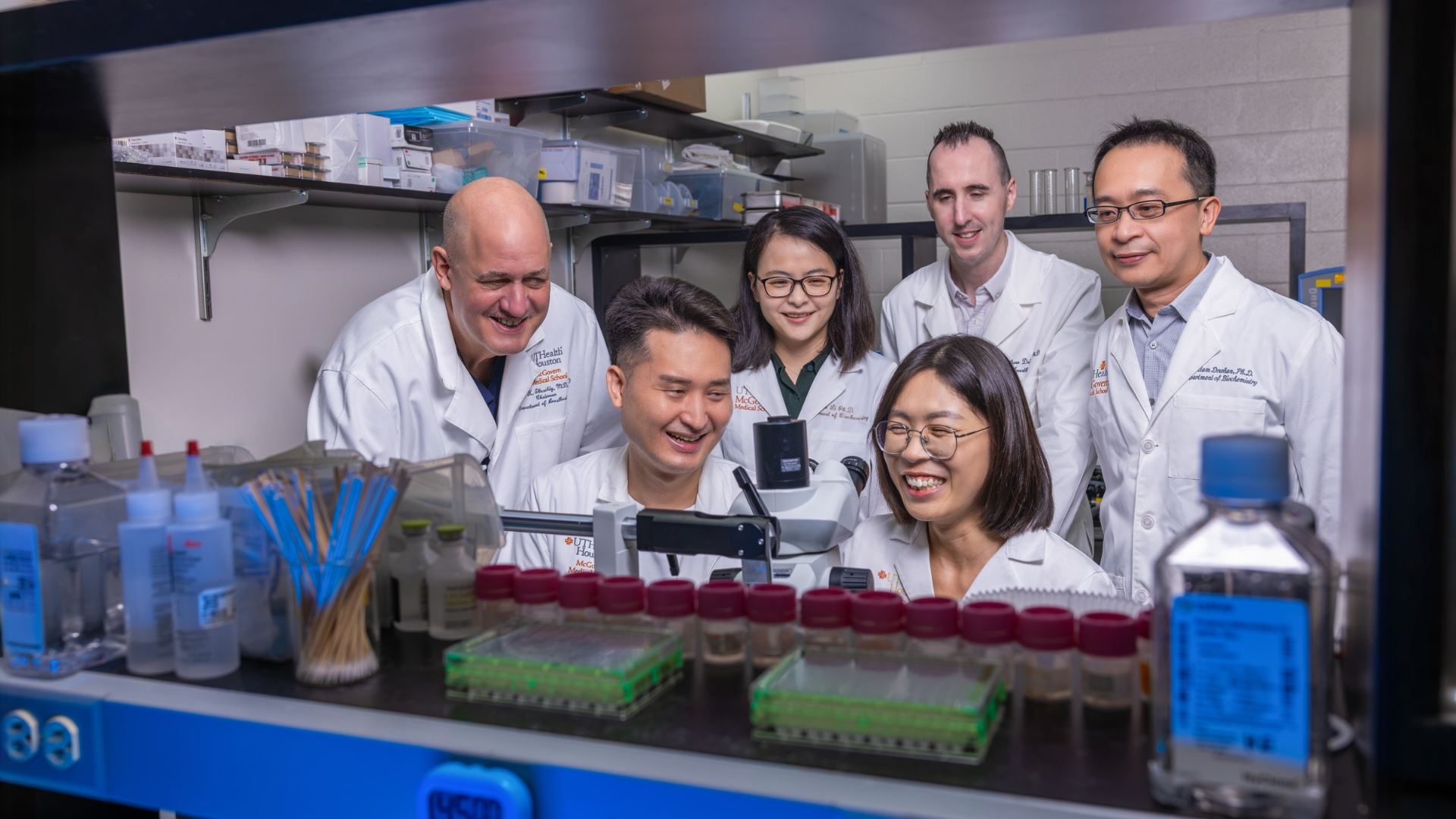
Holger Eltzschig, MD, PhD; Jihoon Tak, PhD; Cong Luo, MD, PhD; Tao Li, PhD; Matthew DeBerge, PhD; and Kuang-Lei Tsai, PhD
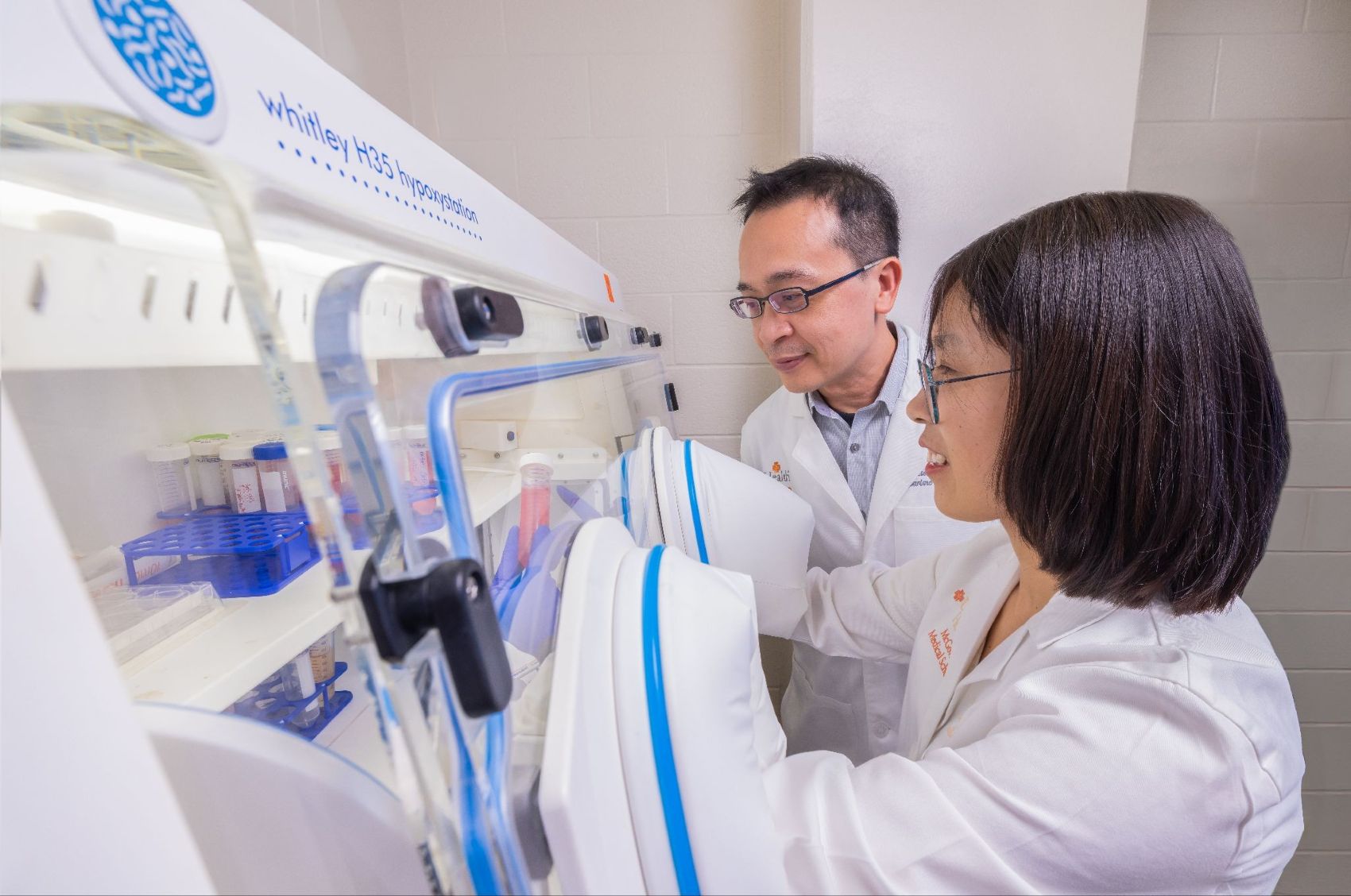
Cong Luo, MD, PhD and Kuang-Lei Tsai, PhD, performing experiments in the hypoxia station.